Insurtech Investments: US Market to Exceed $5 Billion by 2026

The insurance industry, traditionally known for its conservative approach, is undergoing a profound transformation driven by technology. This revolution, dubbed Insurtech, is attracting unprecedented levels of investment, particularly in the United States. Projections indicate that US Insurtech Investment is set to surpass an astounding $5 billion by 2026, signaling a robust and rapidly expanding market. This article will delve into the factors propelling this growth, explore the key trends shaping the future of insurance, and examine the challenges and opportunities that lie ahead for investors and innovators alike.
The Rise of Insurtech: A Paradigm Shift
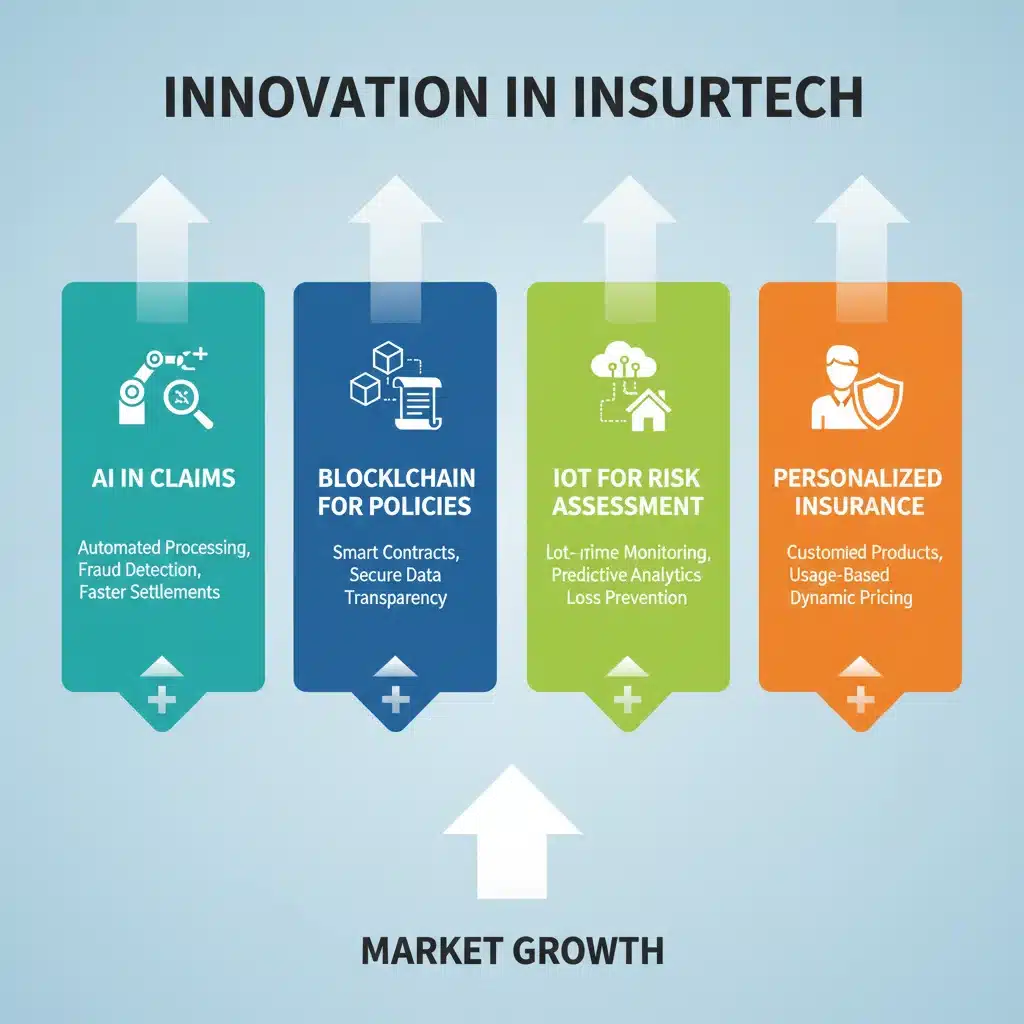
Insurtech, a portmanteau of ‘insurance’ and ‘technology,’ refers to the use of technological innovations to improve efficiency and effectiveness in the insurance industry. This includes everything from artificial intelligence (AI) and machine learning (ML) for underwriting and claims processing, to blockchain for secure data management, and the Internet of Things (IoT) for personalized risk assessment. The traditional insurance model, often characterized by manual processes, extensive paperwork, and a lack of personalization, is being disrupted by agile startups and innovative incumbents leveraging technology to offer more efficient, transparent, and customer-centric solutions.
The surge in US Insurtech Investment is not merely a fleeting trend but a fundamental shift in how insurance products are developed, distributed, and managed. Investors are increasingly recognizing the immense potential for disruption and value creation within this sector. The promise of reduced operational costs, enhanced customer experiences, and the ability to tap into previously underserved markets are significant drivers behind this capital influx.
Moreover, the COVID-19 pandemic accelerated the digital transformation across all industries, and insurance was no exception. The necessity for remote operations, digital customer interactions, and data-driven decision-making highlighted the critical role of technology, further fueling investor confidence in the insurtech space. As a result, the landscape of insurance is being reshaped, leading to a more dynamic and competitive environment.
Key Drivers Behind the $5 Billion Projection
Several factors contribute to the optimistic projection of US Insurtech Investment reaching over $5 billion by 2026. Understanding these drivers is crucial for anyone looking to navigate this evolving market.
1. Digital Transformation Imperative
Legacy systems and outdated processes have long plagued the traditional insurance industry. Insurtech offers solutions to modernize operations, streamline workflows, and reduce administrative overhead. Insurers are investing heavily in digital transformation to remain competitive, improve efficiency, and meet the evolving demands of tech-savvy consumers.
2. Enhanced Customer Experience
Modern consumers expect seamless, personalized, and on-demand services. Insurtech companies are at the forefront of delivering these experiences, from intuitive mobile apps for policy management to AI-powered chatbots for instant support and personalized insurance products tailored to individual needs. This focus on customer-centricity is a major draw for investors.
3. Data Analytics and AI
The ability to collect, analyze, and act upon vast amounts of data is a game-changer for insurance. AI and machine learning algorithms are revolutionizing underwriting by providing more accurate risk assessments, enabling dynamic pricing, and detecting fraud more effectively. Predictive analytics helps insurers anticipate customer needs and proactively offer relevant products, leading to higher customer retention and profitability. This advanced use of data is a core component of successful US Insurtech Investment strategies.
4. IoT and Telematics
The proliferation of IoT devices, such as wearables, smart home sensors, and connected cars, provides insurers with real-time data on policyholder behavior and risk exposure. This enables usage-based insurance (UBI) models, preventive services, and more accurate claims processing. For example, telematics in auto insurance allows for premiums based on actual driving behavior, fostering safer driving habits and reducing claims.
5. Blockchain for Transparency and Security
Blockchain technology offers a decentralized and immutable ledger, which can enhance transparency, security, and efficiency in various insurance processes, including claims management, policy administration, and reinsurance. Smart contracts built on blockchain can automate payouts upon the fulfillment of predefined conditions, significantly reducing processing times and disputes.
6. Strategic Partnerships and Acquisitions
Traditional insurers are increasingly recognizing the need to collaborate with or acquire insurtech startups to accelerate their innovation efforts. These partnerships provide startups with access to capital, customer bases, and regulatory expertise, while incumbents gain access to cutting-edge technology and agile methodologies. This symbiotic relationship is a significant catalyst for US Insurtech Investment growth.
Emerging Trends in US Insurtech Investment
The insurtech landscape is dynamic, with new trends constantly emerging. Investors are keenly watching these developments to identify the next big opportunities.
Embedded Insurance
Embedded insurance refers to the integration of insurance products directly into the purchase of a related product or service. Examples include travel insurance offered when booking a flight, or warranty insurance at the point of sale for electronics. This trend makes insurance more accessible and convenient, reducing friction for consumers and opening up new distribution channels for insurers. The growth of embedded insurance is a strong indicator of the innovative directions in US Insurtech Investment.
Parametric Insurance
Parametric insurance pays out a fixed amount based on the occurrence of a predefined event, rather than the actual loss suffered. For instance, a farmer might receive a payout if rainfall in their region falls below a certain threshold, without needing to prove crop damage. This simplifies the claims process and provides quicker payouts, making it particularly attractive for climate-related risks and emerging markets.
Cyber Insurance Evolution
With the increasing frequency and sophistication of cyberattacks, cyber insurance is becoming a critical component of risk management for businesses of all sizes. Insurtechs are developing more sophisticated cyber insurance products that offer proactive risk assessment, real-time threat monitoring, and rapid incident response services, making this a high-growth area for US Insurtech Investment.
Personalized and Micro-Insurance
Leveraging data analytics and AI, insurtechs are able to offer highly personalized insurance policies that cater to individual lifestyles and risk profiles. Micro-insurance, designed for low-income populations or for specific, short-term needs, is also gaining traction, providing coverage where traditional insurance models fall short.
Challenges and Opportunities for US Insurtech Investment
While the outlook for US Insurtech Investment is overwhelmingly positive, the sector is not without its challenges. Addressing these will be crucial for sustained growth.
Regulatory Hurdles
The highly regulated nature of the insurance industry can be a significant barrier for insurtech startups. Navigating complex state-by-state regulations, licensing requirements, and compliance standards requires considerable resources and expertise. However, regulatory sandboxes and increased collaboration between regulators and innovators are helping to ease some of these burdens.
Data Privacy and Security
Insurtech relies heavily on collecting and analyzing personal data, raising concerns about privacy and data security. Companies must adhere to stringent data protection regulations (e.g., CCPA, HIPAA) and invest in robust cybersecurity measures to build and maintain customer trust. Breaches can have severe financial and reputational consequences.
Talent Gap
There is a growing demand for professionals with expertise in both insurance and technology. Finding individuals who possess a deep understanding of actuarial science, risk management, and regulatory compliance, combined with skills in AI, data science, and software development, remains a challenge. This talent gap can slow down innovation and execution within the insurtech sector.
Competition and Market Saturation
As US Insurtech Investment continues to pour into the market, competition is intensifying. Startups need to differentiate themselves through unique value propositions, superior technology, or niche market focus to stand out. Established insurers are also stepping up their innovation game, further increasing the competitive pressure.
Integration with Legacy Systems
For insurtech solutions to be truly effective, they often need to integrate seamlessly with the complex and often outdated legacy systems of traditional insurers. This integration can be a time-consuming and costly process, requiring careful planning and execution.
Despite these challenges, the opportunities for growth and innovation in US Insurtech Investment are immense. Companies that can successfully navigate these obstacles will be well-positioned to capitalize on the market’s expansion.
The Role of Venture Capital and Corporate Investors
Venture capital (VC) firms and corporate venture arms of established insurers are playing a pivotal role in fueling the growth of US Insurtech Investment. These investors provide not only the necessary capital but also strategic guidance, industry connections, and mentorship to promising startups.
Venture Capital Firms
VC firms are attracted to insurtech due to its massive market potential, the opportunity for significant returns, and the sector’s resilience. They often invest in early-stage startups with disruptive technologies and scalable business models. Their expertise in scaling technology companies is invaluable to insurtech founders.
Corporate Venture Capital (CVC)
Many large insurance companies have established CVC arms to invest in and partner with insurtech startups. This allows them to gain insights into emerging technologies, test new business models, and potentially acquire innovative solutions. CVC investments often come with strategic advantages beyond just capital, such as access to existing customer bases and distribution networks. This collaborative approach is a hallmark of the current US Insurtech Investment landscape.
The synergy between traditional insurers and insurtech startups, often facilitated by these investment vehicles, is creating a powerful ecosystem for innovation. This collaborative environment is key to driving the industry forward and achieving the projected growth targets.
Impact on the Insurance Value Chain
The influx of US Insurtech Investment is transforming every aspect of the insurance value chain, from product development to claims settlement.
Product Development
Insurtech enables the creation of highly customizable, on-demand, and usage-based insurance products that better meet the needs of modern consumers. This moves away from one-size-fits-all policies towards personalized coverage.
Underwriting and Risk Assessment
Advanced analytics, AI, and external data sources (e.g., social media, public records, IoT data) are allowing for more precise risk assessment and dynamic pricing. This leads to fairer premiums, reduced fraud, and a deeper understanding of policyholder behavior.
Distribution and Sales
Digital platforms, mobile apps, and embedded insurance models are expanding distribution channels and making insurance more accessible. Direct-to-consumer models are bypassing traditional intermediaries, though many insurtechs also partner with agents and brokers to enhance their offerings.
Claims Management
AI-powered claims processing, automated fraud detection, and remote assessment tools are significantly speeding up the claims cycle, improving efficiency, and enhancing customer satisfaction. Parametric insurance further simplifies payouts by eliminating the need for extensive damage assessment.
Customer Engagement
Insurtech facilitates continuous engagement with policyholders through personalized communications, proactive risk management advice, and seamless digital interactions. This builds stronger relationships and fosters loyalty.

Future Outlook for US Insurtech Investment
The trajectory for US Insurtech Investment remains steeply upward. As technology continues to evolve, so too will the opportunities for innovation within the insurance sector.
Continued Technological Advancements
Further advancements in AI, quantum computing, blockchain, and other emerging technologies will unlock new possibilities for insurtech. Expect to see more sophisticated predictive models, highly secure and transparent platforms, and even more personalized and dynamic insurance products.
Focus on Prevention and Wellness
Insurers are increasingly shifting from a reactive ‘pay and repair’ model to a proactive ‘predict and prevent’ approach. Insurtech solutions that promote wellness, mitigate risks, and prevent losses will gain significant traction. This includes health and life insurance products integrated with fitness trackers, or property insurance offering smart home security systems.
Global Expansion and Cross-Border Collaboration
While this article focuses on US Insurtech Investment, the global nature of technology means that successful models and innovations will likely spread across borders. Increased collaboration between international insurtech hubs will accelerate development and adoption.
Regulatory Evolution
Regulators are becoming more adept at understanding and accommodating insurtech innovations. Expect to see more streamlined regulatory frameworks and sandboxes that foster responsible innovation while protecting consumers.
Consolidation and Ecosystem Building
As the market matures, there will likely be a period of consolidation, with successful startups being acquired by larger insurers or merging with other insurtechs to create more comprehensive offerings. The formation of robust insurtech ecosystems, where various players collaborate to deliver end-to-end solutions, will also become more prevalent.
Conclusion
The projection of US Insurtech Investment exceeding $5 billion by 2026 underscores the profound and irreversible transformation underway in the insurance industry. Driven by a confluence of technological advancements, evolving consumer expectations, and strategic investment, insurtech is reimagining every facet of insurance. While challenges related to regulation, data privacy, and talent persist, the opportunities for innovation and growth are substantial.
For investors, this presents a fertile ground for high-growth ventures. For traditional insurers, it’s a call to embrace digital transformation and strategic partnerships. And for consumers, it promises more personalized, efficient, and transparent insurance solutions. The future of insurance is undoubtedly digital, and the US market is leading the charge in this exciting and rapidly evolving sector.