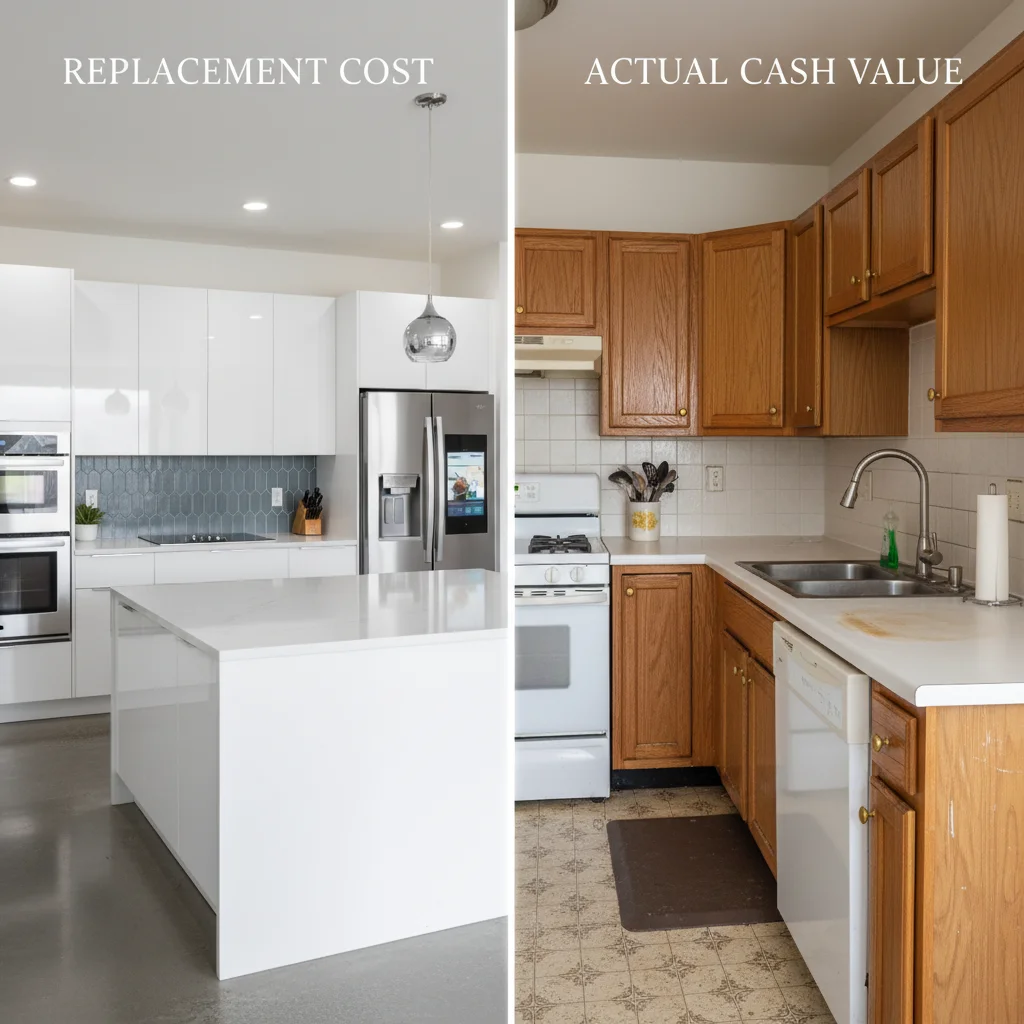
Actual Cash Value vs. Replacement Cost: Your Essential 2026 Insurance Claim Guide
Navigating the complex world of insurance can often feel like deciphering a foreign language, especially when a claim arises. Among the most critical terms you’ll encounter are Actual Cash Value (ACV) vs. Replacement Cost. These two concepts are foundational to how your insurance company calculates your payout after a loss, and understanding their differences is paramount to ensuring you receive fair compensation. As we move further into 2026, economic shifts and evolving insurance landscapes make this distinction even more significant for homeowners, vehicle owners, and business proprietors alike.
Imagine your home suffers damage, or your car is totaled. The immediate aftermath is stressful enough without the added confusion of insurance jargon. Will your policy cover the cost to replace your damaged property with brand-new items, or will it only pay out what your old items were worth at the time of the loss? The answer hinges entirely on whether your policy uses Actual Cash Value or Replacement Cost. This comprehensive guide will meticulously break down each concept, illustrate their implications with practical examples, and equip you with the knowledge to make informed decisions about your insurance coverage in 2026 and beyond.
What is Actual Cash Value (ACV)?
Actual Cash Value, often abbreviated as ACV, is a method of valuing insured property that takes into account depreciation. In simpler terms, if your property is covered by ACV, your insurance payout will be calculated based on what the item was worth immediately before it was damaged or destroyed, not what it would cost to buy a brand-new replacement. The formula typically used for ACV is:
Actual Cash Value = Replacement Cost - Depreciation
Depreciation here refers to the decrease in value of an asset over time due to wear and tear, age, obsolescence, or market conditions. For example, a five-year-old television will not be worth the same as a brand-new one, even if it performs the same function. An ACV policy would pay you the depreciated value of that five-year-old television.
How is Depreciation Calculated?
Calculating depreciation isn’t an exact science, and different insurance companies might use slightly different methods. However, common factors include:
- Age of the item: Older items typically have more depreciation.
- Expected useful life: Every item has an estimated lifespan. An item closer to the end of its useful life will have greater depreciation.
- Condition of the item: Was the item well-maintained or heavily used?
- Obsolescence: Technology, for instance, depreciates quickly as newer, more advanced models become available.
Insurance adjusters often consult depreciation schedules, industry standards, and market data to arrive at a fair ACV. This can sometimes lead to disputes, as what one person considers ‘fair wear and tear’ another might see as ‘significant depreciation.’
Examples of ACV in Action
Let’s consider a few scenarios to illustrate how ACV impacts your claim:
- Homeowner’s Policy (Roof): Your 15-year-old roof (with an expected 20-year lifespan) is damaged in a storm. If you have an ACV policy, the insurer will calculate the cost of a new roof, then subtract the depreciation for 15 years of wear and tear. You receive a check for that depreciated amount, which might not be enough to cover the full cost of a brand-new roof installation.
- Auto Insurance (Totaled Car): Your 7-year-old car is declared a total loss. Your insurer will determine its market value immediately before the accident, considering its make, model, year, mileage, condition, and any pre-existing damage. This ACV is the payout you receive, regardless of what you might owe on the car loan or what a brand-new replacement would cost.
- Personal Property (Electronics): Your 3-year-old laptop (original cost $1,500) is stolen. An ACV policy would likely pay you significantly less than $1,500, factoring in three years of technological depreciation and wear.
The primary advantage of ACV policies for insurers is lower premiums, as their potential payout is reduced. For policyholders, however, it means potentially bearing a larger out-of-pocket expense to replace damaged or lost items with new ones.
Understanding Replacement Cost (RC)
In stark contrast to ACV, Replacement Cost (RC) coverage pays to replace your damaged or destroyed property with new property of similar kind and quality, without deduction for depreciation. This means if your five-year-old television is stolen, an RC policy would pay you enough to buy a brand-new, comparable television. The goal of Replacement Cost coverage is to restore you to your pre-loss financial position, allowing you to replace old items with new ones.
How Replacement Cost Works
With RC coverage, the insurance company will typically pay the actual cost to repair or replace the damaged property, up to the policy’s limits. There are generally two ways this payout happens:
- Initial ACV Payout, then Supplement: Many insurers will first pay out the ACV amount. Once you actually purchase the replacement item or complete the repairs, you submit receipts to the insurer, and they will then pay the difference between the ACV and the actual replacement cost (up to the policy limit). This two-step process encourages policyholders to replace items rather than simply pocketing the cash.
- Direct Replacement Cost Payout: In some cases, especially for smaller claims or specific items, the insurer might pay the full replacement cost upfront.
It’s crucial to understand that Replacement Cost coverage does not mean you get a brand-new, upgraded version of your item. It means a new item of “like kind and quality.” If your old laptop was a basic model, you’ll get the cost for a new basic model, not a top-of-the-line gaming machine.
Benefits and Considerations of RC Policies
The most significant benefit of Replacement Cost coverage is the peace of mind it offers. You know that in the event of a loss, you won’t be left scrambling to cover the gap between your old item’s depreciated value and the cost of a new one. This is especially vital for major assets like your home’s structure or expensive personal belongings.
However, RC policies come with higher premiums than ACV policies. This is because the insurer’s potential liability is greater. When choosing RC, it’s also important to ensure your coverage limits are adequate. If you have $200,000 in RC coverage for your home, but rebuilding costs have soared to $250,000 due to inflation or material costs, you could still face an out-of-pocket expense. This is why many policies offer ‘Guaranteed Replacement Cost’ or ‘Extended Replacement Cost’ options, which provide an additional percentage (e.g., 20-25%) above your stated dwelling coverage limit to account for unexpected increases in construction costs.

ACV vs. Replacement Cost: The Key Distinctions for 2026
The fundamental difference between ACV vs Replacement Cost boils down to depreciation. Let’s summarize the core distinctions:
| Feature | Actual Cash Value (ACV) | Replacement Cost (RC) |
|---|---|---|
| Payout Basis | Depreciated value of the item at the time of loss. | Cost to replace the item with a new one of similar kind and quality, without depreciation. |
| Out-of-Pocket Expense | Higher, as you pay the difference between ACV and new replacement cost. | Lower, as the insurer covers the full cost of replacement (up to limits). |
| Premium Cost | Lower. | Higher. |
| Goal | Compensate for the item’s worth immediately before loss. | Restore property to its pre-loss condition with new items. |
| Common Use | Older vehicles, some personal property, mobile homes, landlord policies (for tenant’s property). | Homeowner’s policies (for dwelling and personal property), newer vehicles, business property. |
Why This Distinction Matters More in 2026
In 2026, several factors amplify the importance of understanding ACV vs Replacement Cost:
- Inflation and Material Costs: Construction materials, electronics, and even used car prices have seen significant fluctuations. What cost $10,000 to replace five years ago might cost $15,000 today. An ACV policy would leave a substantial gap, while an RC policy would absorb much of that increase (provided limits are adequate).
- Supply Chain Issues: Lingering supply chain disruptions can make finding exact replacements difficult and drive up costs, making RC coverage even more valuable.
- Technological Advancements: Rapid tech evolution means older electronics depreciate even faster. An ACV payout for a five-year-old smart home device might be minimal, while RC would allow you to replace it with a new, current model.
- Catastrophic Events: With an increase in severe weather events, the likelihood of substantial property damage rises. Having RC coverage can be the difference between a swift recovery and a prolonged financial struggle.
Which Coverage is Right for You? Making Informed Decisions
Choosing between ACV and Replacement Cost coverage isn’t a one-size-fits-all decision. Your ideal choice depends on your financial situation, risk tolerance, and the specific assets you’re insuring.
Consider ACV If:
- You’re on a tight budget: Lower premiums can be attractive if every dollar counts.
- Your property is older or has low value: For items that have depreciated significantly and would be inexpensive to replace out-of-pocket, ACV might be acceptable.
- You have a high risk tolerance: You’re comfortable with potentially paying more out of pocket after a loss.
- You’re insuring rental property (as a landlord): Sometimes landlords opt for ACV on appliances or tenant-used items, expecting tenants to have their own renter’s insurance for their personal belongings.
Opt for Replacement Cost If:
- You want maximum protection: RC offers the most comprehensive coverage, ensuring you can replace items without significant personal expense.
- You own a newer home or valuable property: For your primary residence, especially if it’s new or recently renovated, RC is almost always recommended.
- You want peace of mind: Knowing you can replace damaged items with new ones reduces financial stress during a difficult time.
- You have limited savings: If you don’t have a substantial emergency fund to cover the depreciation gap, RC is crucial.
- You want to avoid potential disputes: While not foolproof, RC can sometimes lead to fewer disagreements over depreciation values.
Hybrid Approaches and Endorsements
It’s also worth noting that some policies offer a hybrid approach. For instance, a homeowner’s policy might cover the dwelling (the structure) at Replacement Cost, but personal property (contents) at Actual Cash Value. You can often purchase an endorsement (an add-on) to upgrade your personal property coverage to Replacement Cost for an additional premium.
Another common endorsement is Extended Replacement Cost or Guaranteed Replacement Cost, which we touched on earlier. These are invaluable in today’s fluctuating economy, providing an extra cushion against rising rebuilding costs that might exceed your policy’s stated dwelling coverage limit. For example, if your home is insured for $300,000 RC, an Extended RC endorsement might provide an additional 25%, meaning you could receive up to $375,000 for rebuilding, even if your initial coverage limit was $300,000. This is particularly important for homes in areas prone to natural disasters where reconstruction costs can skyrocket after a widespread event.
The Claims Process: ACV vs. RC in Practice
Understanding how ACV vs Replacement Cost plays out during a claim can help manage your expectations and streamline the process.
Initiating the Claim
Regardless of your coverage type, the initial steps are similar:
- Report the loss: Contact your insurer as soon as safely possible.
- Document everything: Take photos and videos of the damage. Create an inventory of damaged or lost items.
- Prevent further damage: Take reasonable steps to mitigate additional loss (e.g., tarp a damaged roof, board up broken windows).
The Adjuster’s Role
An insurance adjuster will assess the damage. Their job is to determine the extent of the loss and calculate the appropriate payout based on your policy terms. If you have an ACV policy, they will focus on determining the depreciated value of your items. If you have an RC policy, they will assess the cost to repair or replace with new items.
Receiving Your Payout
For ACV policies: You will typically receive a single payment representing the depreciated value of your damaged or lost property.
For RC policies: This is where the two-step payment process often comes into play:
- First Check (ACV): The insurer will usually issue an initial payment based on the Actual Cash Value of the damaged items. They do this to prevent fraud and ensure you actually replace the items.
- Second Check (Depreciation Holdback): Once you purchase the replacement items or complete the repairs, you submit receipts and proof of expenditure to your insurer. They will then issue a second check for the ‘depreciation holdback’ – the difference between the ACV payment and the actual Replacement Cost, up to your policy limits.
It’s crucial to keep all receipts and documentation when replacing items under an RC policy to ensure you receive the full benefit.
Reviewing Your Policy in 2026
Given the economic climate and evolving risks, 2026 is an opportune time to review your insurance policies. Don’t wait until a loss occurs to understand your coverage. Here’s how to proactively manage your ACV vs Replacement Cost decisions:
1. Read Your Policy Carefully
The declarations page and the policy language itself will explicitly state whether your dwelling, other structures, and personal property are covered at ACV or RC. Pay close attention to any endorsements that modify these terms.
2. Conduct a Home Inventory
Create a detailed inventory of your personal belongings. Include purchase dates, original costs, and photos or videos. This is invaluable for any claim, especially for RC policies where you’ll need to prove what you owned and its approximate value to get a fair replacement cost payout.
3. Assess Your Coverage Limits
Ensure your dwelling coverage accurately reflects the current cost to rebuild your home, not just its market value. Market value includes land, which isn’t insured. Reconstruction costs can fluctuate significantly. For personal property, estimate the total cost to replace all your belongings with new items. This will help you determine if your RC limits are adequate.
4. Understand Your Deductibles
Your deductible is the amount you pay out of pocket before your insurance coverage kicks in. A higher deductible typically means lower premiums. Consider how your deductible interacts with your ACV or RC payout. For example, if you have an ACV policy and a high deductible, your net payout might be minimal for smaller claims.
5. Consult with Your Insurance Agent
Your insurance agent is a valuable resource. Discuss your specific needs, assets, and risk tolerance. They can explain the nuances of ACV vs Replacement Cost as it applies to your situation and recommend appropriate coverage levels and endorsements.
6. Re-evaluate Periodically
Life changes, and so do the values of your assets. Review your policies annually or whenever you make significant purchases, renovations, or experience major life events. This ensures your coverage remains aligned with your needs.
Common Misconceptions and FAQs
Let’s address some frequent questions and clear up common misunderstandings regarding ACV vs Replacement Cost.
“Isn’t ACV just ‘fair market value’?”
While similar, they’re not always identical. Fair market value often refers to what an item would sell for on the open market. ACV, as used by insurers, is specifically tied to the replacement cost minus depreciation, which can sometimes be lower than what a niche collector might pay for a unique item, for instance.
“If I have RC, will I always get a brand new, better item?”
No. RC covers replacement with an item of ‘like kind and quality.’ If your old item was a basic model, you’ll get the cost for a basic model new. If you choose to upgrade, you’ll pay the difference.
“Can I choose ACV for some items and RC for others?”
Often, yes. Many homeowner policies cover the dwelling at RC and personal property at ACV by default, with an option to upgrade personal property to RC via an endorsement. Some policies might have specific exclusions or limitations, so always check your policy language.
“What if I don’t replace the item after an RC claim?”
If you have an RC policy and choose not to replace the item, or only partially replace it, the insurer will typically only pay you the ACV amount. The ‘depreciation holdback’ is only paid out once proof of replacement is provided.
“Does ACV or RC apply to liability coverage?”
Neither. ACV and RC pertain to property damage coverage. Liability coverage, which protects you if you’re found responsible for damage to someone else’s property or injuries to another person, operates on different principles and covers legal fees, settlements, and judgments.
“What about roofs? I heard they’re often ACV.”
This is a common point of contention. Many older homeowner policies might default to ACV for roofs, especially if the roof is past a certain age (e.g., 10-15 years old). However, most modern comprehensive homeowner policies offer RC for roofs. It’s crucial to verify your specific policy’s terms regarding roof coverage, as a roof replacement is a significant expense.
Conclusion: Securing Your Future in 2026
The distinction between Actual Cash Value vs. Replacement Cost is not merely an insurance technicality; it’s a critical factor that directly impacts your financial recovery after a loss. In an unpredictable world, especially with the economic realities and potential for increased natural disasters in 2026, understanding these terms is more important than ever. While ACV policies offer lower premiums, they place a greater financial burden on you when it’s time to replace damaged property. Replacement Cost coverage, despite its higher cost, provides a more robust safety net, ensuring you can rebuild and replace with new items without significant out-of-pocket expenses.
Take the time now to review your policies, consult with your insurance professional, and ensure your coverage aligns with your assets, lifestyle, and financial comfort. Being proactive about your insurance knowledge and choices is the best way to safeguard your peace of mind and financial well-being in the years to come.