ACV vs. RCV 2026: Understanding Insurance Policy Differences
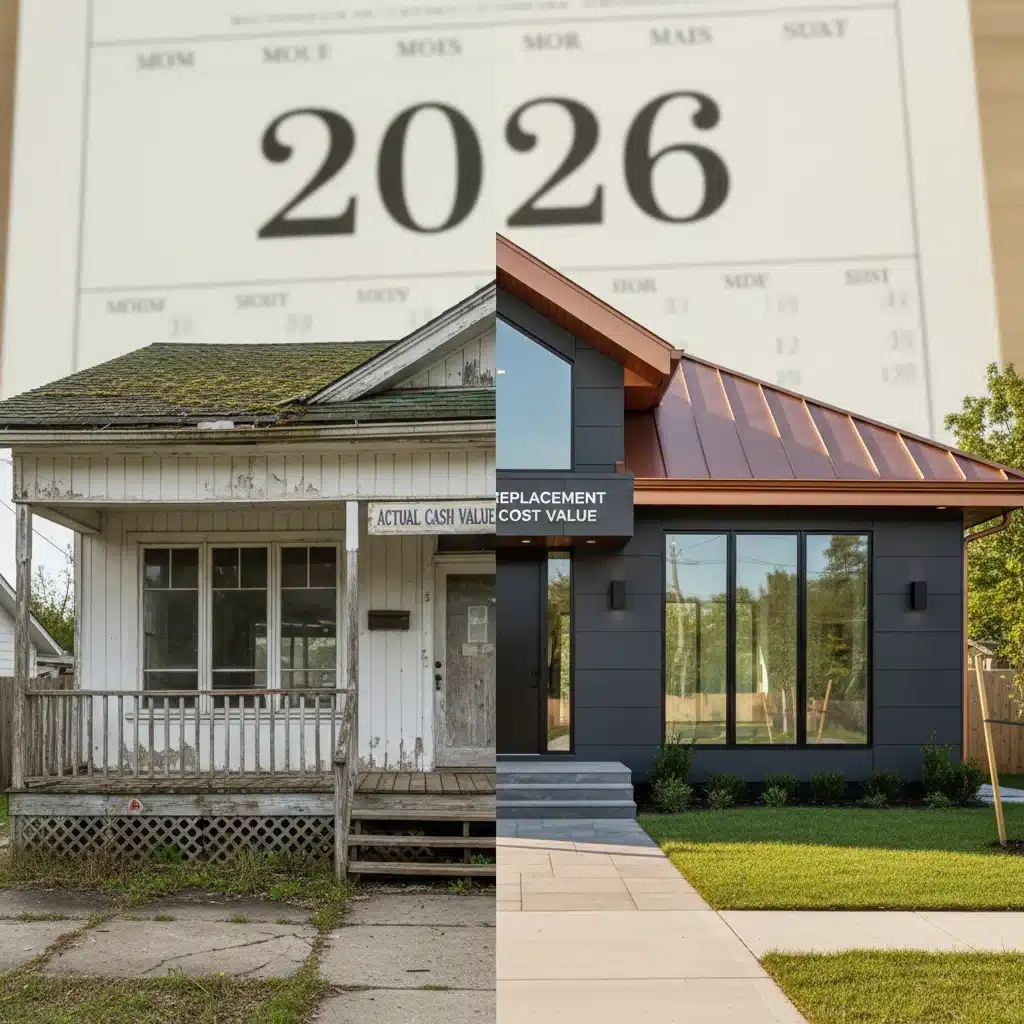
ACV vs. RCV 2026: Understanding Insurance Policy Differences
In the complex world of insurance, understanding your policy’s nuances is paramount, especially when it comes to how your claims will be paid out. For 2026, as property values fluctuate and construction costs evolve, the distinction between Actual Cash Value (ACV) and Replacement Cost Value (RCV) policies becomes even more critical. These two terms represent fundamentally different approaches to how an insurance company will reimburse you for damaged or lost property, directly impacting your financial recovery after a covered event. Choosing between an ACV vs RCV policy is not merely a matter of premium cost; it’s a strategic decision that can significantly affect your ability to repair or replace your assets without incurring substantial out-of-pocket expenses.
This comprehensive guide aims to demystify the concepts of ACV vs RCV, providing you with a thorough understanding of their definitions, how they are calculated, their respective advantages and disadvantages, and what factors you should consider when making your choice for 2026. We will delve into real-world scenarios, explore the impact of depreciation, and offer insights into how these policies function across various types of insurance, from homeowners to auto and business coverage. By the end of this article, you will be equipped with the knowledge to make an informed decision that aligns with your financial goals and risk tolerance.
The Foundation: What is Actual Cash Value (ACV)?
To truly grasp the differences between ACV vs RCV, we must first establish a clear understanding of each term. Actual Cash Value (ACV) is often described as the fair market value of an item at the time of loss, taking into account depreciation. In simpler terms, if your property is damaged or destroyed, an ACV policy will pay you what the item was worth immediately before the incident, not what it would cost to buy a brand-new replacement.
How is ACV Calculated?
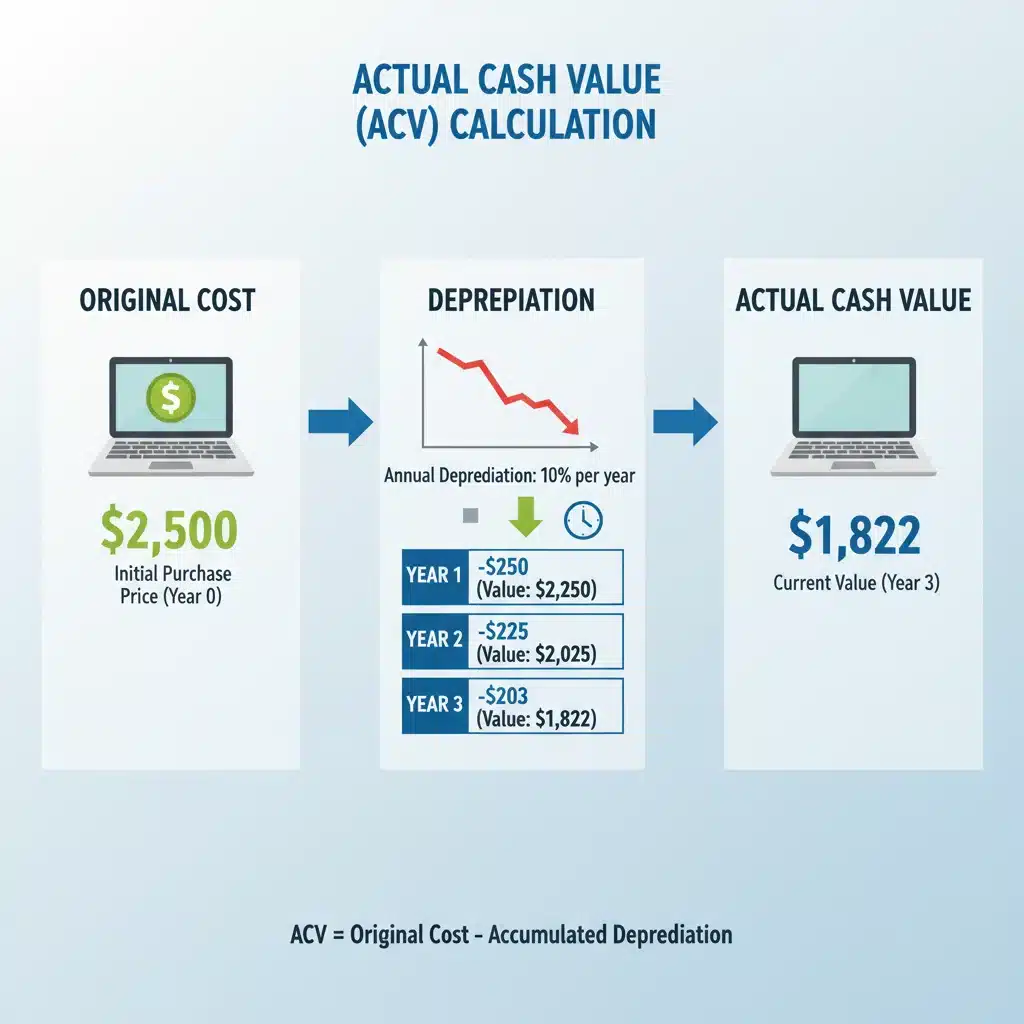
The calculation of ACV is relatively straightforward: it’s the replacement cost of an item minus depreciation. Depreciation is the reduction in value of an asset over time due to wear and tear, age, obsolescence, or other factors. For example, a 10-year-old roof will have significantly depreciated in value compared to a brand-new one. Similarly, a five-year-old television will be worth less than a new model, even if it’s still functional.
Insurance companies typically use various methods to determine depreciation, including:
- Age and Condition: The older an item is and the more wear and tear it has, the greater the depreciation.
- Useful Life Expectancy: Many items have an estimated useful life. If an item is halfway through its useful life, it might be considered to have depreciated by 50%.
- Market Value: What similar used items are selling for in the current market can also influence the ACV.
Let’s consider a practical example for 2026. Imagine your washing machine, purchased five years ago for $1,000, is destroyed in a covered event. A new washing machine of comparable quality might cost $1,200 today. However, if your insurance company determines that a washing machine has a useful life of 10 years and yours is halfway through, they might apply a 50% depreciation. In this scenario, your ACV payout would be $1,200 (replacement cost) – $600 (50% depreciation) = $600. This $600 is what you would receive from your ACV policy, leaving you to cover the remaining $600 if you wish to purchase a new washing machine.
Advantages of ACV Policies
The primary advantage of an ACV policy is its lower premium. Because the insurance company will pay out less in the event of a claim, they charge less for the coverage. This can be an attractive option for individuals or businesses looking to minimize their insurance costs, especially for older properties or items that are not particularly valuable or easily replaceable.
Another potential advantage is that ACV policies can be easier to obtain for certain types of property, particularly those that are older or have a higher risk profile. Some insurers might offer ACV as the only option for very old homes or specific types of personal property.
Disadvantages of ACV Policies
The significant drawback of ACV policies is the financial gap you’re left with after a claim. As demonstrated in the washing machine example, the payout may not be enough to fully replace your damaged property, forcing you to pay the difference out-of-pocket. This can be a substantial burden, especially for major losses like a damaged roof or a completely destroyed home.
For homeowners, relying solely on ACV for structural components like roofs can be particularly risky. A roof that is 15 years old might have significant depreciation, meaning an ACV policy would only cover a fraction of the cost to replace it, potentially leaving you with tens of thousands of dollars in expenses.
The Upgrade: What is Replacement Cost Value (RCV)?
In contrast to ACV, Replacement Cost Value (RCV) policies aim to pay you the amount it would cost to replace your damaged or lost property with a new item of similar kind and quality, without any deduction for depreciation. This means that if your washing machine is destroyed, an RCV policy would pay you the current market price of a brand-new, comparable washing machine, allowing you to replace it fully.
How is RCV Calculated?
The calculation for RCV is simpler than ACV because depreciation is not a factor. The insurance company determines the current cost to replace the item with a new one. This often involves looking at current market prices, construction costs (for structures), and labor rates. For example, if a new washing machine of similar quality costs $1,200 today, an RCV policy would pay out $1,200.
It’s important to note that RCV payouts can sometimes be structured in two parts. Initially, you might receive an ACV payout. Once you actually purchase the replacement item and submit proof of purchase, the insurance company will then pay you the remaining depreciation amount, bringing your total payout up to the full replacement cost. This two-stage payout helps prevent policyholders from receiving a full replacement cost payout without actually replacing the item, which could lead to unjust enrichment.
Advantages of RCV Policies
The most compelling advantage of an RCV policy is the peace of mind it offers. Knowing that you will be able to fully replace your damaged property without significant out-of-pocket expenses provides a crucial safety net. This is particularly valuable for high-value items, essential home components, or situations where replacing property quickly is vital.
For homeowners, RCV coverage for their dwelling and personal belongings is often considered the gold standard. It ensures that after a fire, storm, or other disaster, you can rebuild your home and replace your possessions to their pre-loss condition, or better, without financial strain. This is especially relevant in 2026, with rising construction costs and supply chain challenges potentially increasing replacement expenses.
Disadvantages of RCV Policies
The primary disadvantage of RCV policies is their higher premium. Because the insurance company assumes a greater financial risk by promising to pay the full replacement cost, they charge more for this enhanced coverage. For some, the increased premium might seem prohibitive, especially if they are on a tight budget.
Another potential drawback is the two-stage payout process mentioned earlier. While ultimately beneficial, it can sometimes require policyholders to front some of the replacement costs before receiving the full reimbursement for depreciation. This might be a temporary financial burden for some, although many policies offer advances or work with contractors directly to mitigate this.
ACV vs RCV: A Comparative Analysis for 2026
Now that we’ve explored each concept individually, let’s directly compare ACV vs RCV across several key aspects to help you understand which might be more suitable for your needs in 2026.
Cost of Premiums
- ACV: Lower premiums, as the insurer’s liability is reduced by depreciation.
- RCV: Higher premiums, reflecting the insurer’s commitment to pay the full cost of replacement without depreciation.
Claim Payout
- ACV: You receive the depreciated value of the item, potentially leaving a gap between the payout and the cost of a new replacement.
- RCV: You receive the full cost to replace the item with a new one of similar kind and quality, typically in two stages.
Financial Risk to Policyholder
- ACV: Higher financial risk, as you will likely need to pay out-of-pocket to cover the difference for new replacements.
- RCV: Lower financial risk, as the policy covers the full replacement cost, minimizing your out-of-pocket expenses.
Suitability
- ACV: May be suitable for older, less valuable items, or for those with limited budgets who are willing to accept the risk of higher out-of-pocket costs. It can also be an option for certain types of property where RCV is not available or prohibitively expensive.
- RCV: Generally recommended for most homeowners and businesses, especially for primary residences, essential assets, and valuable personal property. It offers superior protection and peace of mind, ensuring full recovery after a loss.
Impact of Inflation and Construction Costs in 2026
The economic landscape of 2026 is a significant factor in the ACV vs RCV debate. With ongoing inflation and potentially rising construction and material costs, the gap between ACV payouts and actual replacement costs could widen considerably. An ACV policy might leave you with a more substantial financial shortfall than in previous years, making the comprehensive coverage of an RCV policy even more appealing.
For instance, if a major weather event in 2026 causes widespread damage, demand for contractors and building materials will surge, driving up prices. An RCV policy would adapt to these increased costs, ensuring your home can be rebuilt to its former glory. An ACV policy, however, would still pay out based on depreciated values, leaving you to contend with the inflated market prices with a limited budget.
Specific Applications of ACV vs RCV
While the general principles of ACV vs RCV apply broadly, their application can vary depending on the type of insurance and the specific items being covered.
Homeowners Insurance
For homeowners, this is where the ACV vs RCV distinction is most critical. Most standard homeowners’ policies offer RCV for the dwelling (the structure of your home) and ACV for personal property (your belongings inside the home). However, many insurers offer an option to upgrade personal property coverage to RCV for an additional premium. This upgrade is highly recommended for most homeowners, as the cumulative value of personal belongings can be substantial.
Some policies might also offer a ‘Guaranteed Replacement Cost’ or ‘Extended Replacement Cost’ endorsement, which provides an additional layer of protection. This covers replacement costs that exceed your policy’s dwelling limit, typically by 20-25%, which can be invaluable in situations where rebuilding costs unexpectedly skyrocket.

Auto Insurance
In auto insurance, claims for total loss (when the cost to repair exceeds the car’s value) are almost always paid out on an ACV basis. This means you receive the fair market value of your vehicle at the time of the accident, considering its age, mileage, and condition. There are very few, if any, RCV options for standard auto insurance, mainly because vehicles depreciate rapidly and their primary function is transportation, not investment.
However, for new cars, some insurers offer ‘new car replacement’ coverage, which functions similarly to RCV. If your new car is totaled within a certain timeframe (e.g., the first year or 15,000 miles), this coverage allows you to replace it with a brand-new vehicle of the same make and model, rather than just its depreciated value.
Business Property Insurance
Businesses, like homeowners, often face significant losses when their property is damaged. Business property insurance can be written on either an ACV or RCV basis. For essential equipment, inventory, and structures, RCV is generally preferred to ensure business continuity and minimize financial disruption after a loss. Imagine a manufacturing plant losing critical machinery; an ACV payout might not be enough to purchase new, efficient replacements, hindering recovery.
For certain types of business property, such as older, specialized equipment that might be difficult to replace new, ACV might be a more practical or the only available option. Businesses must carefully assess the value and criticality of their assets when choosing between ACV vs RCV.
Making the Right Choice: Factors to Consider for 2026
Deciding between ACV vs RCV is a personal and financial decision that should be made after careful consideration of several factors. Here’s what to keep in mind for your 2026 insurance planning:
1. Your Budget and Financial Comfort Level
Can you comfortably afford the higher premiums associated with RCV coverage? While RCV offers better protection, it comes at a cost. If your budget is extremely tight, an ACV policy might be your only immediate option. However, weigh the potential savings in premiums against the potential financial burden of a large out-of-pocket expense after a claim.
2. The Age and Condition of Your Property
For newer homes and recently purchased personal property, the difference between ACV and RCV might not be substantial initially, as depreciation is minimal. However, as your property ages, the depreciation factor grows, making RCV increasingly valuable. If you have an older home with an aging roof or appliances, RCV is almost always the more prudent choice.
3. The Value of Your Property
How much would it truly cost to replace your home and all its contents? Conduct a thorough home inventory to estimate the replacement cost of your personal belongings. For your dwelling, consult with a contractor or use online calculators to get an accurate estimate of rebuilding costs in your area for 2026. If these values are high, the benefits of RCV protection become more pronounced.
4. Your Risk Tolerance
Are you comfortable taking on the financial risk of potentially paying a significant portion of replacement costs out of your own pocket? Or do you prefer the peace of mind that comes with knowing your insurance will cover the full cost of replacement? Your personal risk tolerance plays a crucial role in this decision.
5. The Specifics of Your Policy and Insurer
Always read your policy documents carefully and discuss your options with your insurance agent. Understand exactly what is covered under ACV vs RCV, how depreciation is calculated, and if any endorsements like guaranteed or extended replacement cost are available. Insurance companies may have different rules and calculations, so clarity is key.
6. Future Economic Outlook for 2026 and Beyond
Consider the broader economic environment. If inflation and construction costs are projected to rise, the value of RCV coverage increases. Planning for 2026 means anticipating these economic shifts and choosing a policy that will protect you against future uncertainties.
Hybrid Approaches and Endorsements
It’s also worth noting that some policies offer hybrid approaches or endorsements that can bridge the gap between pure ACV and RCV. For example:
- Broad Form Policies: These might offer RCV for the dwelling and ACV for personal property, as mentioned earlier.
- Extended Replacement Cost: This endorsement provides additional coverage beyond your dwelling limit, usually 20-25%, if rebuilding costs exceed your policy limit. This is crucial in areas prone to widespread disasters where material and labor costs can surge.
- Guaranteed Replacement Cost: An even more robust endorsement that covers the full cost to rebuild your home, even if it exceeds your policy limit. This is typically the most expensive option but offers the highest level of protection.
Discuss these options with your insurance agent to see if they are available and suitable for your specific situation. They can provide tailored advice based on your property, location, and financial circumstances.
The Importance of Regular Policy Review
Regardless of whether you choose ACV or RCV, it is imperative to review your insurance policy annually, or at least every few years. For 2026, this review should include:
- Assessing Property Values: Have local property values or construction costs increased? Your dwelling coverage limit should reflect the current cost to rebuild, not just the market value of your home.
- Updating Personal Property Inventory: Have you purchased new furniture, electronics, or other valuable items? Your personal property coverage should be updated to reflect these additions.
- Reviewing Deductibles: Does your deductible still align with your financial capacity?
- Checking for New Endorsements: Are there new coverage options or endorsements available that could provide better protection?
An outdated policy, especially one based on ACV for critical assets, can leave you severely underinsured, turning a covered loss into a significant financial hardship.
Conclusion: Navigating Your Insurance Choices in 2026
The choice between Actual Cash Value (ACV) and Replacement Cost Value (RCV) is one of the most significant decisions you’ll make when purchasing or reviewing your insurance policies. While ACV policies offer lower premiums, they come with the inherent risk of substantial out-of-pocket expenses due to depreciation. RCV policies, though more expensive upfront, provide comprehensive protection, ensuring you can fully replace your damaged property without financial strain.
For 2026 and beyond, with a dynamic economic environment and potentially fluctuating costs, the value proposition of RCV becomes even stronger, particularly for homeowners and businesses. The peace of mind and financial security it offers often outweigh the higher premium costs. However, individual circumstances vary, and a careful assessment of your budget, property value, risk tolerance, and the specifics of your policy is essential.
Don’t hesitate to consult with a qualified insurance professional. They can help you understand the intricacies of ACV vs RCV, analyze your specific needs, and guide you toward the best coverage options for your home, vehicle, or business. Making an informed decision today will ensure you are adequately protected against the unforeseen events of tomorrow, securing your financial future in 2026 and for years to come.