
Agent vs. Broker: Choosing Your 2026 Insurance Professional
As we approach 2026, navigating the complex world of insurance can feel like a daunting task. Whether you’re seeking coverage for your health, home, car, or business, one of the first and most crucial decisions you’ll face is choosing the right professional to guide you: an insurance agent or an insurance broker. While these terms are often used interchangeably, they represent distinct roles with fundamental differences that can significantly impact your insurance experience and the quality of your coverage. Understanding the nuances of an agent vs broker is paramount to making an informed decision that aligns with your specific needs and financial goals.
This comprehensive guide will delve deep into the definitions, responsibilities, advantages, and disadvantages of both insurance agents and insurance brokers. We’ll explore their relationships with insurance companies, how they get paid, and, most importantly, how their unique positions can influence the advice and options they provide to you, the consumer. By the end of this article, you’ll have a clear understanding of which professional best suits your requirements for 2026 and beyond, empowering you to secure the most suitable and cost-effective insurance solutions.
Understanding the Insurance Landscape: Agent vs Broker Defined
Before we dive into the specifics of choosing, let’s establish a clear understanding of what each term means. The distinction between an agent vs broker lies at the heart of how insurance products are sold and how consumers access them. While both are licensed professionals who facilitate the purchase of insurance, their allegiances and the scope of their offerings differ significantly.
What is an Insurance Agent?
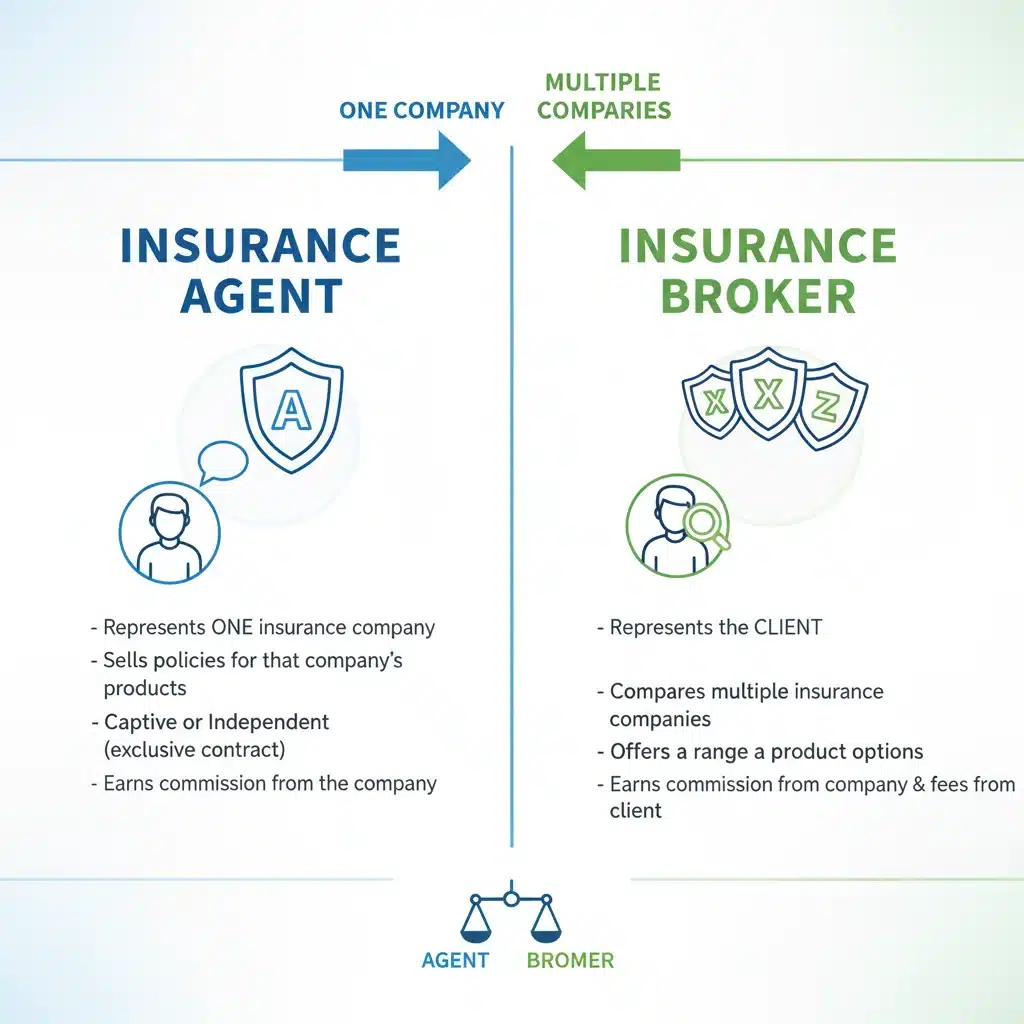
An insurance agent is a licensed professional who represents one or more specific insurance companies. Their primary role is to sell and service insurance policies on behalf of these companies. There are generally two types of insurance agents:
- Captive Agents: These agents work exclusively for one insurance company. For example, an agent working for State Farm or Allstate is a captive agent. Their loyalty and expertise are tied to that specific company’s products and services. They are well-versed in the policies, pricing structures, and underwriting guidelines of their sole employer.
- Independent Agents: While still representing specific companies, independent agents typically work with several different insurance carriers. They are not tied to just one provider, allowing them to offer a broader range of products from various insurers. However, they still act as representatives of these companies, not as an impartial intermediary for the client.
When you work with an insurance agent, their goal is to match you with a policy from the company (or companies) they represent. They are compensated through commissions paid by the insurance company for policies sold. This relationship means their primary duty is to the insurer, ensuring their products are accurately represented and sold.
What is an Insurance Broker?
In contrast, an insurance broker is an independent professional who represents the client, not a specific insurance company. Their role is to act as an intermediary between you, the policyholder, and various insurance carriers. A key differentiator in the agent vs broker discussion is that brokers are not bound to any single insurer.
When you engage an insurance broker, they will typically assess your unique insurance needs, gather quotes from multiple insurance companies, and then present you with a range of options. Their expertise lies in understanding the broader insurance market and identifying policies that best fit your requirements, often negotiating terms and prices on your behalf. Brokers are paid through commissions from the insurance companies when a policy is purchased, or in some cases, directly by the client through a fee for their services, especially for complex commercial insurance.
The fundamental difference here is allegiance: an agent’s primary loyalty is to the insurance company, whereas a broker’s primary loyalty is to the client.
Key Differences Between Agent vs Broker: A Comparative Analysis
To further clarify the distinction and help you decide for 2026, let’s break down the core differences in a comparative format.
Representation and Allegiance
- Agent: Represents one or more insurance companies. Their duty is to the insurer.
- Broker: Represents the client. Their duty is to you, the policyholder.
Product Offerings
- Agent: Offers products only from the insurance company (or companies) they represent. This can limit your options, though independent agents offer more breadth than captive ones.
- Broker: Can access a wide array of products from numerous insurance companies, providing a more comprehensive market view.
Pricing and Negotiation
- Agent: Typically presents standard rates set by their represented company. While they can explain discounts, direct negotiation on policy terms or premiums is rare.
- Broker: Often has the ability to shop around for the best rates and, in some cases, negotiate terms with insurers on your behalf to secure more favorable coverage or pricing. This is a significant advantage when considering an agent vs broker for cost-effectiveness.
Expertise and Market Knowledge
- Agent: Deep expertise in the specific products and underwriting guidelines of their represented company(ies).
- Broker: Broad knowledge of the entire insurance market, including various carriers’ strengths, weaknesses, and niche offerings. They can provide insights into industry trends and emerging products.
How They Get Paid
- Agent: Primarily earns commissions from the insurance company for policies sold.
- Broker: Primarily earns commissions from the insurance company for policies sold, but may also charge direct fees to clients, especially for specialized services or large commercial accounts.
After-Sales Service
- Agent: Provides ongoing service for policies from their represented company, including claims assistance, policy changes, and renewals.
- Broker: Offers ongoing service, often acting as your advocate during the claims process and assisting with policy adjustments across multiple carriers.
When to Choose an Insurance Agent for 2026
While brokers offer a broad market view, there are specific situations where choosing an insurance agent, particularly a captive agent, might be the right choice for your 2026 insurance needs.
Situations Favoring an Agent:
- Brand Loyalty and Trust: If you have a long-standing relationship with a particular insurance company and trust their brand, products, and customer service, sticking with their agent can be beneficial. You might already be familiar with their offerings and feel comfortable with their established reputation.
- Simple Insurance Needs: For straightforward insurance requirements, such as a basic auto policy or a standard homeowners policy, an agent can often provide efficient service and competitive rates from their specific company. If your needs are not complex, exploring multiple carriers might not yield significant additional benefits.
- Bundling Policies: Many insurance companies offer discounts for bundling multiple policies (e.g., home and auto). If you plan to get all your insurance from one carrier to maximize these discounts, a captive agent can streamline this process and ensure you get all eligible savings from their company.
- Direct Customer Service: Some individuals prefer the direct, often personalized, customer service that a captive agent can provide. They become your single point of contact for all matters related to your policies with that specific insurer.
- Specialized Products: If a particular company is renowned for a niche product or coverage that perfectly fits your unique situation (e.g., classic car insurance, specific types of commercial liability), going directly to their agent can be the most direct route.
Independent agents, while still agents, bridge some of the gaps between captive agents and brokers. They offer policies from several companies, giving you more options than a captive agent, but they still represent those companies. If you appreciate the agent model but want a bit more choice without the full market exploration of a broker, an independent agent could be a good middle ground.
When to Choose an Insurance Broker for 2026
For many individuals and businesses, especially those with complex or evolving needs, an insurance broker often presents a more advantageous path. The client-centric approach of a broker is a significant factor in the agent vs broker debate.
Situations Favoring a Broker:
- Complex or Unique Needs: If you have specialized insurance requirements, such as insuring a unique property, a complex business operation, or multiple types of assets, a broker’s ability to scour the market for tailored solutions is invaluable. They can find niche carriers or custom policies that an agent, limited to their company’s offerings, might not even be aware of.
- Seeking the Best Value and Coverage: If your primary goal is to find the absolute best combination of coverage, price, and terms, a broker is your strongest ally. They work for you, comparing options from numerous insurers to ensure you get optimal value. This is particularly important for 2026 as market conditions and policy offerings continue to evolve.
- Time-Saving: Shopping for insurance can be time-consuming. A broker handles the legwork of gathering quotes, comparing policies, and explaining the fine print from multiple companies, saving you significant time and effort.
- Unbiased Advice: Because brokers are not tied to any single insurer, they can offer more objective and impartial advice. Their recommendations are based on your best interests, not on promoting a specific company’s products. This unbiased perspective is a critical benefit of a broker in the agent vs broker discussion.
- Advocacy During Claims: In the unfortunate event of a claim, a broker can act as your advocate, helping you navigate the process, communicate with the insurer, and ensure your claim is handled fairly and efficiently. This can be a huge relief during stressful times.
- Access to Exclusive Products: Sometimes, brokers have access to exclusive insurance products or special rates that are not available directly to the public or through captive agents. This can give you an edge in securing superior coverage.
- Regular Review of Policies: A good broker will proactively review your policies at renewal time, ensuring your coverage still meets your needs and that you’re getting the best rates available in the market. They can adjust your portfolio as your life or business circumstances change.
Making Your Choice for 2026: Factors to Consider
Now that you understand the fundamental differences between an agent vs broker, how do you decide which professional is right for your 2026 insurance requirements? Consider the following factors:
Your Specific Insurance Needs
Are your needs simple or complex? Do you require standard policies or highly specialized coverage? The more unique or intricate your situation, the more a broker’s market-wide search capabilities become valuable.
Your Comfort Level with Research
Are you comfortable spending time researching different insurance companies, comparing policies, and understanding jargon? If you prefer to delegate this task to an expert who will present you with curated options, a broker is often the better choice. If you enjoy direct interaction with a single company and its offerings, an agent might suit you.
Importance of Price vs. Comprehensive Coverage
While everyone wants a good price, what is your priority? If finding the absolute lowest premium is paramount, a broker can shop around. However, if comprehensive coverage and peace of mind are your top concerns, a broker can also ensure you’re not sacrificing essential protections for a slightly lower cost.
Desire for Advocacy
How important is it to have an advocate on your side, especially during a claim? A broker’s client-first approach means they are more likely to go to bat for you when issues arise with an insurer.
Long-Term Relationship Goals
Do you prefer a long-term relationship with a single company through its agent, or with an independent advisor (broker) who can adapt your insurance portfolio as your life evolves, potentially moving you between carriers as needed?

The Role of Technology and the Future of Agent vs Broker in 2026
The insurance industry is constantly evolving, with technology playing an increasingly significant role. Online comparison websites, artificial intelligence, and digital platforms are changing how consumers interact with insurance products. However, the fundamental distinction of an agent vs broker remains relevant, albeit with some adaptations.
Online Platforms and Direct-to-Consumer Models
Many insurance companies now offer direct-to-consumer sales through their websites. This often bypasses both agents and brokers, appealing to consumers who prefer a fully digital experience and are confident in their ability to select appropriate coverage. While convenient, this model often means you’re solely responsible for understanding the policy details and may miss out on expert advice tailored to your unique situation. For complex needs, relying solely on online platforms can lead to underinsurance or unsuitable coverage.
The Rise of ‘Insurtech’ Brokers
Some new ‘insurtech’ companies are essentially digital brokers, using technology to streamline the comparison and purchasing process. They leverage algorithms and data analytics to match clients with policies from multiple carriers, offering the breadth of a traditional broker with the efficiency of a digital platform. This hybrid model blurs the lines somewhat but still maintains the core broker function of representing the client and shopping the market.
The Enduring Value of Human Expertise
Despite technological advancements, the value of human expertise in insurance remains critical, especially for complex policies or during claims. Both agents and brokers provide a human touch, offering guidance, clarifying terms, and assisting when things go wrong. For 2026, the best approach for many will likely involve leveraging technology for initial research and comparison, followed by consultation with a qualified human professional.
Questions to Ask Your Insurance Professional
Regardless of whether you choose an agent or a broker, asking the right questions is crucial. Here are some key inquiries to make to ensure you’re getting the best advice and coverage for 2026:
- For Agents:
- Which insurance companies do you represent?
- What types of policies do you specialize in?
- Can you explain the advantages of choosing your company’s policies over competitors?
- How do you assist with claims?
- What discounts are available for my specific situation?
- For Brokers:
- How many insurance companies do you work with?
- What is your process for finding the best policy for my needs?
- Do you charge any fees in addition to commissions from insurers?
- How do you handle claims support and advocacy?
- Can you provide examples of how you’ve helped clients with similar needs to mine?
- For Both:
- What is your experience and licensing?
- How often do you recommend reviewing my policy?
- What is your communication preference (phone, email, in-person)?
- Can you provide references or testimonials?
Conclusion: Making the Right Insurance Choice for 2026
The decision between an agent vs broker is a personal one, with no single right answer for everyone. Both play vital roles in the insurance ecosystem, and both can provide excellent service depending on your circumstances. The key is to understand their fundamental differences and align your choice with your specific needs, preferences, and the complexity of your insurance requirements for 2026.
If you value direct access to a specific company’s products, brand loyalty, or have relatively simple needs, an insurance agent (especially an independent one for more options) might be your preferred choice. However, if you seek comprehensive market comparison, unbiased advice, advocacy, and the best possible value for complex or evolving needs, an insurance broker will likely be your strongest asset.
Ultimately, the goal is to secure appropriate and cost-effective insurance coverage that provides peace of mind. By taking the time to understand the distinction between an agent and a broker, asking the right questions, and carefully evaluating your own situation, you can confidently choose the professional who will best serve your interests in 2026 and for years to come. Your insurance choices are too important to leave to chance; empower yourself with knowledge and make an informed decision.