Optimal Coverage Limits 2026: Securing Your Future Wisely

In an ever-evolving world, safeguarding your assets and future has never been more critical. As we approach 2026, the landscape of risks and financial necessities continues to shift, making a thorough review of your insurance coverage limits not just a recommendation, but a necessity. Understanding and setting optimal coverage limits 2026 is paramount to ensuring you are adequately protected against unforeseen events. This comprehensive guide will walk you through the intricacies of insurance coverage, help you assess your personal and business needs, and empower you to make informed decisions for the coming year.
The Shifting Sands of Risk: Why 2026 Demands a Fresh Look at Coverage Limits
The world is dynamic, and so are the risks we face. Economic fluctuations, technological advancements, climate change impacts, and even shifts in societal norms can all influence the likelihood and severity of potential losses. What was considered adequate coverage a few years ago might be woefully insufficient for 2026. For instance, the rising cost of repairs for advanced vehicles, the increasing value of homes, the escalating expenses of healthcare, and the growing threat of cyber-attacks all necessitate a proactive approach to re-evaluating your coverage limits 2026.
Economic Inflation and Asset Valuation
Inflation is a persistent force that erodes purchasing power and increases the cost of goods and services over time. This directly impacts the replacement value of your assets. A home that was insured for $300,000 five years ago might now cost $450,000 or more to rebuild due to increased material and labor costs. If your home insurance coverage limits haven’t kept pace with inflation, you could face a significant shortfall in the event of a total loss. Similarly, the value of personal property, vehicles, and even business inventory can increase, demanding higher coverage to ensure full replacement or repair.
Technological Advancements and New Risks
The rapid pace of technological innovation brings with it both opportunities and new vulnerabilities. Cyber liability, for example, has emerged as a significant concern for individuals and businesses alike. Data breaches, ransomware attacks, and online fraud can lead to substantial financial losses, reputational damage, and legal liabilities. Traditional insurance policies may not adequately cover these modern risks, necessitating specialized cyber insurance with appropriate coverage limits 2026. Furthermore, the increasing reliance on smart home devices and connected vehicles introduces new considerations for property and auto insurance policies.
Climate Change and Natural Disasters
The frequency and intensity of natural disasters are on the rise globally. From severe storms and floods to wildfires and earthquakes, these events can cause catastrophic damage. If you live in an area prone to such events, your existing property insurance might not offer sufficient protection, especially if your policy has specific exclusions or sub-limits for certain perils. Reviewing your flood, earthquake, and windstorm coverage, and adjusting your coverage limits 2026 accordingly, is crucial for resilience.
Lifestyle Changes and Life Events
Personal circumstances can also significantly impact your insurance needs. Have you recently purchased a new home, started a family, launched a business, or acquired valuable assets? Each of these life events alters your risk profile and necessitates a re-evaluation of your insurance portfolio. For example, a new home might require higher dwelling coverage and personal liability limits. Starting a business introduces commercial risks that demand specialized business insurance with adequate coverage limits 2026 to protect against property damage, liability claims, and business interruption.
Understanding the Core Components of Insurance Coverage
Before diving into setting specific limits, it’s essential to understand the fundamental components of insurance coverage. Most policies, whether auto, home, or business, share common elements that determine the extent of your protection.
Deductibles
Your deductible is the amount you pay out-of-pocket before your insurance coverage kicks in. A higher deductible typically results in lower premiums, but it also means you’ll bear more of the initial cost in the event of a claim. When considering coverage limits 2026, evaluate your financial capacity to cover a higher deductible versus the savings on premiums.
Per-Occurrence vs. Aggregate Limits
In liability policies, you’ll often encounter both per-occurrence and aggregate limits. A per-occurrence limit is the maximum amount your insurer will pay for a single claim or incident. The aggregate limit is the total maximum amount your insurer will pay for all claims within a specific policy period (usually one year). Understanding the distinction is vital, especially for business liability policies where multiple claims can arise.
Actual Cash Value (ACV) vs. Replacement Cost Value (RCV)
These terms are critical in property insurance. Actual Cash Value (ACV) pays for the cost of replacing damaged property minus depreciation. Replacement Cost Value (RCV), on the other hand, pays for the cost of replacing damaged property with new, similar property without deducting for depreciation. RCV offers superior protection, as it ensures you can fully replace your assets. When setting coverage limits 2026 for your home or personal property, always aim for RCV if possible.
Sub-limits and Exclusions
Many policies include sub-limits, which are specific caps on coverage for certain items or perils, even if your overall policy limit is higher. For example, a home insurance policy might have a sub-limit for jewelry, fine art, or collectibles. Exclusions are specific events or types of damage that your policy does not cover at all. It’s imperative to carefully read your policy to identify any sub-limits or exclusions that could leave you vulnerable, and consider supplementary coverage if necessary to optimize your coverage limits 2026.
Assessing Your Needs: A Holistic Approach to Optimal Coverage Limits 2026
Determining the right coverage limits 2026 requires a thorough assessment of your personal and financial circumstances. This isn’t a one-size-fits-all exercise; it demands introspection and a clear understanding of your assets, liabilities, and potential risks.
Personal Insurance: Home, Auto, and Umbrella
Home Insurance
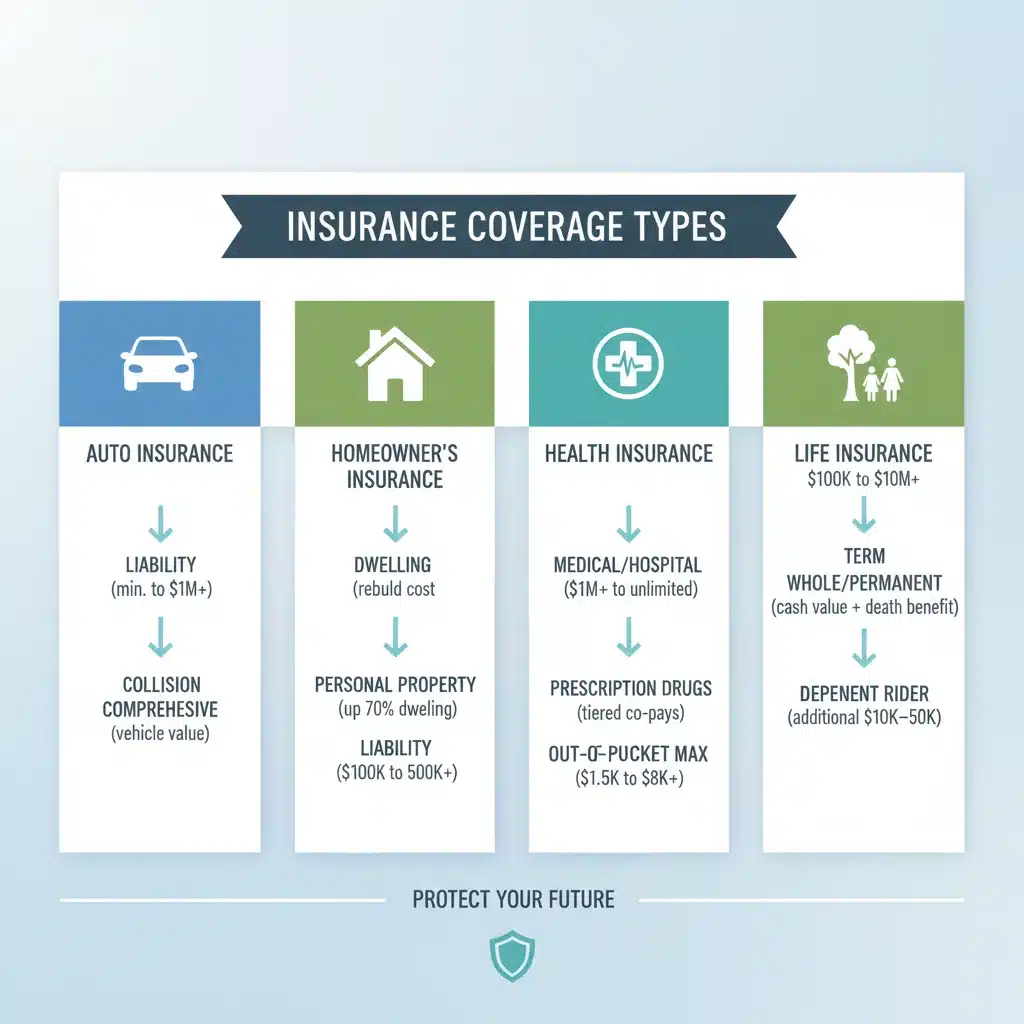
- Dwelling Coverage: This should be sufficient to rebuild your home entirely at current construction costs, not just its market value. Obtain professional appraisals or consult with contractors for accurate rebuilding costs.
- Personal Property Coverage: Inventory all your belongings, including furniture, electronics, clothing, and valuables. Consider a home inventory app or spreadsheet. Ensure high-value items like jewelry, art, or collectibles are specifically scheduled (listed individually with their appraised value) if their value exceeds standard sub-limits.
- Loss of Use/Additional Living Expenses: This covers costs if you need to live elsewhere while your home is being repaired. Ensure it’s enough to cover temporary housing, meals, and other expenses for a reasonable period.
- Personal Liability: This protects you if someone is injured on your property or if you cause damage to someone else’s property. Consider your net worth; a general rule of thumb is to have liability coverage equal to or greater than your net worth to protect your assets from lawsuits.
Auto Insurance
- Liability Coverage: This is arguably the most critical component. It covers damages and injuries you cause to others. State minimums are often insufficient. Consider how much you stand to lose in a lawsuit if you injure someone severely or damage expensive property. Aim for limits that adequately protect your assets.
- Collision and Comprehensive: These cover damage to your own vehicle. Collision covers accidents, while comprehensive covers non-collision events like theft, vandalism, or natural disasters. Ensure these limits reflect the current market value of your vehicle.
- Uninsured/Underinsured Motorist: This protects you if you’re hit by a driver without insurance or with insufficient coverage. Given the number of uninsured drivers, this is an increasingly important consideration for coverage limits 2026.
Umbrella Insurance
An umbrella policy provides an additional layer of liability protection above and beyond your primary home and auto policies. If a claim exceeds the limits of your underlying policies, your umbrella coverage kicks in. This is especially important for individuals with significant assets or those who engage in activities that carry higher liability risks (e.g., owning a pool, having a dog, serving on a non-profit board). Many financial advisors recommend umbrella policies with limits of $1 million or more to truly optimize coverage limits 2026.
Life and Health Insurance
Life Insurance
Life insurance provides financial security for your dependents in the event of your death. When determining coverage limits 2026 for life insurance, consider:
- Income Replacement: How many years of your income would your family need to replace?
- Debt Repayment: Outstanding mortgages, loans, and other debts.
- Future Expenses: College tuition, retirement for your spouse, and other long-term financial goals.
- Final Expenses: Funeral costs and other immediate expenses.
A common guideline is to have coverage equal to 7-10 times your annual salary, but a more detailed needs analysis is always recommended.
Health Insurance
While health insurance doesn’t typically have ‘coverage limits’ in the same way property or liability policies do, understanding your plan’s deductibles, out-of-pocket maximums, co-pays, and co-insurance is crucial. For 2026, evaluate your health status, anticipated medical needs, and the financial impact of potential high-cost treatments. Ensure your chosen plan provides access to necessary care within an affordable framework.
Business Insurance
For business owners, setting appropriate coverage limits 2026 is even more complex due to the multitude of risks involved.
- General Liability: Covers bodily injury, property damage, and advertising injury caused by your business operations. Limits should reflect the potential for lawsuits and the scale of your operations.
- Property Insurance: Protects your business’s physical assets, including buildings, equipment, and inventory, against perils like fire, theft, and natural disasters. Ensure RCV is used and limits are updated for current asset values.
- Business Interruption Insurance: This vital coverage replaces lost income and covers ongoing expenses if your business is forced to shut down temporarily due to a covered peril. Calculate your potential lost revenue and fixed costs for an extended period.
- Professional Liability (E&O): Essential for service-based businesses, this covers claims of negligence, errors, or omissions in your professional services. Limits should align with potential legal costs and damages from errors.
- Cyber Liability: As mentioned, this protects against data breaches, cyber-attacks, and associated legal and notification costs. Given the increasing threat landscape, consider robust coverage limits 2026 for cyber incidents.
- Workers’ Compensation: Required in most states, this covers medical expenses and lost wages for employees injured on the job.
Strategies for Optimizing Your Coverage Limits 2026
Once you’ve assessed your needs, the next step is to strategize how to implement optimal coverage limits 2026. This involves a combination of research, consultation, and proactive management.
Review Existing Policies Annually
Don’t wait for a life event or a claim to review your insurance policies. Schedule an annual review with your insurance agent to discuss any changes in your circumstances, asset values, or risk profile. This ensures your coverage limits 2026 remain relevant and adequate.
Consult with an Independent Insurance Agent
An independent agent works with multiple insurance carriers and can provide unbiased advice. They can help you compare different policies, identify gaps in coverage, and recommend appropriate coverage limits 2026 based on your unique situation. Their expertise is invaluable in navigating complex insurance products.

Perform a Home Inventory
For homeowners, a detailed home inventory is crucial for personal property coverage. Document all your possessions with photos or videos, and keep receipts for high-value items. This makes the claims process smoother and ensures you have accurate information when setting coverage limits 2026 for your personal property.
Understand Your Net Worth
Your net worth (assets minus liabilities) is a good benchmark for determining appropriate liability coverage. You want enough liability insurance to protect your current assets from being seized in a lawsuit. As your net worth grows, so too should your liability coverage limits 2026.
Consider Bundling Policies
Many insurers offer discounts for bundling multiple policies (e.g., home and auto). While saving money is a benefit, ensure that bundling doesn’t compromise the quality or adequacy of your coverage limits 2026. Discuss this with your agent to find the right balance.
Stay Informed About Market Changes
Keep an eye on economic indicators like inflation rates, construction costs, and vehicle values. Be aware of emerging risks, especially in the tech and environmental sectors. Staying informed allows you to proactively adjust your coverage limits 2026 before a loss occurs.
Read the Fine Print
It sounds tedious, but understanding the terms, conditions, exclusions, and sub-limits of your policies is critical. Don’t assume anything. If you don’t understand a clause, ask your agent for clarification. Knowing exactly what your policy covers and doesn’t cover is fundamental to setting effective coverage limits 2026.
Don’t Underestimate the Cost of Catastrophe
While it’s tempting to save on premiums by choosing lower limits, consider the worst-case scenario. What would be the financial impact of a total loss of your home, a severe car accident, or a major liability lawsuit? The goal of insurance is to protect you from catastrophic financial events. Ensure your coverage limits 2026 are robust enough to handle such scenarios without devastating your financial well-being.
Common Pitfalls to Avoid When Setting Coverage Limits 2026
Even with careful planning, it’s easy to fall into common traps that can leave you underinsured. Being aware of these pitfalls can help you avoid them.
Relying Solely on State Minimums
Many states mandate minimum insurance coverage, particularly for auto liability. However, these minimums are often woefully inadequate to cover the true costs of an accident, especially one involving serious injuries or extensive property damage. Relying on state minimums is a recipe for financial disaster, as you would be personally responsible for any costs exceeding those limits. Always aim for coverage limits 2026 that far surpass these bare minimums.
Underestimating Replacement Costs
A common mistake in home insurance is insuring your home for its market value rather than its replacement cost. Market value includes the land, which isn’t typically rebuilt after a loss. Replacement cost, on the other hand, is the actual cost to rebuild the structure from the ground up. With fluctuating construction costs, it’s easy to underestimate this figure. Regularly getting professional appraisals for rebuilding costs is crucial for accurate coverage limits 2026.
Forgetting About Inflation
As discussed, inflation erodes the value of your coverage over time. If your policy doesn’t include an inflation guard or automatically adjust limits annually, you could quickly become underinsured. Always discuss inflation adjustments with your agent when reviewing your coverage limits 2026.
Ignoring Liability Risks
Many people focus heavily on property damage but neglect liability coverage. A single lawsuit, whether from an auto accident, an incident on your property, or a professional error, can wipe out your savings and future earnings. High liability coverage limits 2026, often augmented by an umbrella policy, are essential for protecting your overall financial health.
Not Reviewing Policies After Major Life Changes
Getting married, having children, buying a new home or car, starting a business, or even acquiring significant assets are all triggers for an insurance review. Failing to update your policies after these events can lead to significant gaps in your coverage limits 2026. Make it a habit to contact your agent after any major life change.
Assuming Everything is Covered
Insurance policies are complex legal documents with specific terms, conditions, exclusions, and limitations. Never assume that a particular event or item is covered. For example, standard home insurance often excludes flood and earthquake damage, requiring separate policies. Cyber-attacks are usually not covered by general liability policies. Always clarify what is and isn’t covered to ensure your coverage limits 2026 are truly comprehensive.
Focusing Solely on Premiums
While cost is a factor, choosing the cheapest policy often means sacrificing adequate coverage. A low premium might indicate high deductibles, low limits, or numerous exclusions. The true value of insurance lies in its ability to protect you financially when a loss occurs. Prioritize sufficient coverage limits 2026 over minimal premium savings.
The Path Forward: Securing Your 2026 Protection Wisely
As you plan for 2026, take a proactive and diligent approach to your insurance coverage. It’s not merely about having insurance; it’s about having the *right* insurance with the *right* coverage limits 2026.
Actionable Steps for Your 2026 Review:
- List All Assets and Liabilities: Create a comprehensive inventory of everything you own (home, cars, valuables, investments) and all your debts (mortgages, loans). This forms the foundation of your needs assessment.
- Assess Your Risk Tolerance: How much financial risk are you comfortable bearing out-of-pocket? This will influence your deductible choices and overall coverage levels.
- Gather All Current Policies: Collect all your insurance documents – home, auto, life, health, umbrella, business.
- Schedule a Consultation: Book an appointment with an experienced independent insurance agent. Be prepared to discuss your assets, liabilities, lifestyle, and any recent changes.
- Discuss Potential Scenarios: Talk through various ‘what if’ scenarios with your agent. What if your home burns down? What if you cause a multi-car pileup? What if your business faces a cyber-attack? This helps clarify the need for specific coverage limits 2026.
- Get Multiple Quotes: Don’t settle for the first offer. Compare quotes from different reputable insurers to ensure you’re getting competitive rates for the desired coverage limits 2026.
- Understand Policy Language: Ask questions until you fully understand what each policy covers, what it excludes, and how deductibles and limits apply.
- Document Your Decisions: Keep records of your policies, discussions with your agent, and any changes made.
In conclusion, setting optimal coverage limits 2026 is a critical aspect of sound financial planning and risk management. It requires a thorough understanding of your personal and business risks, a careful review of your assets and liabilities, and ongoing vigilance. By taking the time to assess your needs, consult with professionals, and stay informed, you can ensure that your insurance portfolio provides the robust protection you need to navigate the uncertainties of the future with confidence and peace of mind. Don’t leave your financial security to chance; make informed decisions about your coverage limits for 2026 today.