Mastering Deductibles: Save Up to 15% on Your Policy in 2026 with Our 5-Step Guide

Mastering Deductibles: Your 5-Step Guide to Saving Up to 15% on Your Policy in 2026
In the intricate world of insurance, one term often stands out as both a source of confusion and a powerful tool for savings: the deductible. Understanding your insurance deductible is not merely about knowing a number; it’s about making informed financial decisions that can significantly impact your annual budget. For 2026, with the rising costs of living and services, optimizing your insurance deductible can be a game-changer, potentially saving you up to 15% on your premiums. This comprehensive guide will demystify deductibles, explain their importance, and provide you with a practical, 5-step strategy to leverage them for maximum savings. Get ready to take control of your insurance costs and become a savvy policyholder.
What Exactly is an Insurance Deductible?
Before we dive into saving strategies, let’s establish a clear understanding of what an insurance deductible is. Simply put, an insurance deductible is the amount of money you must pay out-of-pocket before your insurance company starts to cover the costs of a claim. Think of it as your agreed-upon share of the loss. For example, if you have a car insurance policy with a $500 deductible and you get into an accident that causes $2,000 in damage, you would pay the first $500, and your insurance company would cover the remaining $1,500 (minus any other policy limitations).
Deductibles apply to various types of insurance policies, including:
- Auto Insurance: Often applies to collision and comprehensive coverage.
- Homeowners Insurance: Applies to property damage claims, such as those from fire, theft, or natural disasters.
- Health Insurance: The amount you pay for medical services before your plan begins to pay.
- Renters Insurance: Similar to homeowners, for personal property claims.
- Business Insurance: Applicable to various property and liability claims.
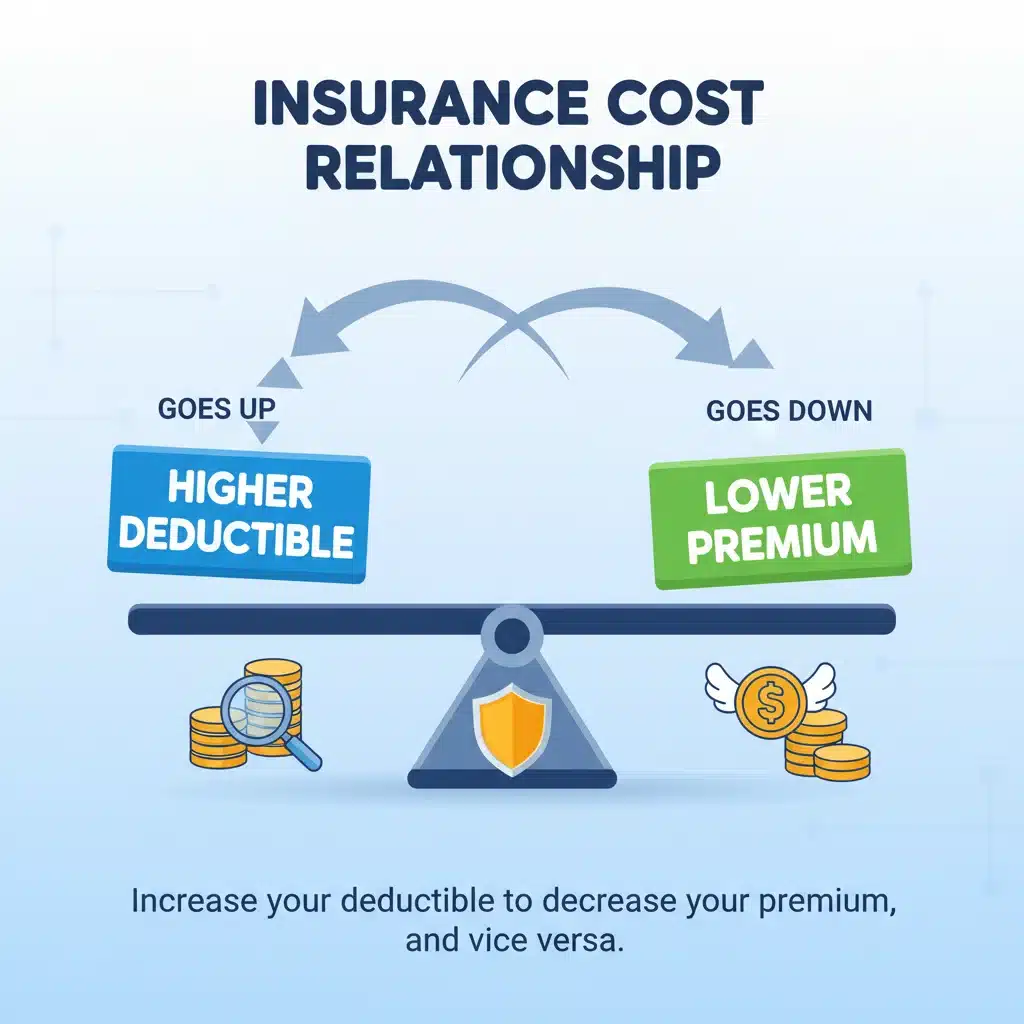
The concept is universal across these policy types: it’s your initial contribution to a covered loss. The size of your deductible directly correlates with your premium. Generally, a higher deductible means you’re taking on more financial risk in the event of a claim, and in return, your insurance company charges you a lower premium. Conversely, a lower deductible means your insurer takes on more risk, resulting in a higher premium. This fundamental relationship is key to understanding how you can achieve significant insurance deductible savings.
Why Your Deductible Matters for Your Wallet
The deductible isn’t just an obscure clause in your policy document; it’s a critical financial lever. Choosing the right deductible can have a profound impact on your annual insurance costs and your financial readiness for unexpected events. Many people simply accept the default deductible offered by their insurer without fully understanding the implications. This oversight can lead to paying hundreds, or even thousands, of dollars more in premiums over time than necessary.
Consider this: if you opt for a $1,000 deductible instead of a $500 one on your auto insurance, your annual premium could decrease by a noticeable amount. If you rarely file claims, this could mean substantial savings year after year. However, if you’re prone to minor accidents or have a higher likelihood of needing to file a claim, a lower deductible might be more suitable, even with the higher premium. The goal is to strike a balance that aligns with your financial capacity and risk tolerance.
Furthermore, understanding your deductible helps you budget for potential out-of-pocket expenses. Knowing you’ll need to cover, say, $1,000 before your homeowners insurance kicks in can prompt you to set aside an emergency fund specifically for such scenarios. This proactive financial planning is a cornerstone of effective personal finance and directly contributes to maximizing your insurance deductible savings.
Step 1: Assess Your Current Deductibles and Policies
The first step towards optimizing your insurance deductible savings is to thoroughly review your existing policies. Many people sign up for insurance and then forget about it, allowing their policies to renew year after year without scrutiny. This is a missed opportunity for savings. For each insurance policy you hold – auto, home, health, renters, etc. – locate your policy documents and identify the deductible amount for each type of coverage.
Ask yourself the following questions:
- What are my current deductible amounts for each policy type? Write them down.
- When was the last time I reviewed these amounts?
- Do these deductibles still align with my current financial situation and risk tolerance? For example, if your income has increased, you might be able to comfortably afford a higher deductible.
- Are there any specific coverages with deductibles I’m unaware of? Sometimes, certain perils (like wind or hail on home insurance) might have separate, higher deductibles.
Don’t be afraid to call your insurance agent or company directly if you have trouble finding this information. They are there to help clarify your policy details. This initial assessment is crucial because you cannot effectively plan for insurance deductible savings if you don’t know your starting point. It’s like embarking on a road trip without knowing where you currently are on the map.
Step 2: Evaluate Your Financial Readiness for Higher Deductibles
This is perhaps the most critical step in maximizing your insurance deductible savings. While a higher deductible almost always translates to lower premiums, it requires you to have sufficient funds readily available to cover that deductible if you need to file a claim. Before you consider increasing your deductible, you must honestly assess your emergency fund and overall financial stability.
The Deductible vs. Emergency Fund Balance:
Imagine you raise your auto insurance deductible from $500 to $1,500, saving you $200 per year on premiums. That’s great! But if you get into an accident and don’t have $1,500 readily available, those savings become a significant financial burden. The purpose of insurance is to protect you financially, not to create new financial stress.
Consider these points:
- Emergency Fund: Do you have a dedicated emergency fund that can comfortably cover your chosen deductible amount, plus other unexpected expenses? Financial experts often recommend having 3-6 months of living expenses saved. Your deductible should fit within this safety net.
- Income Stability: Is your income stable? If you’re in a volatile employment situation, a lower deductible might offer more peace of mind, even if it means slightly higher premiums.
- Other Debts: Do you have high-interest debts? While saving on premiums is good, diverting funds from high-interest debt repayment to cover a higher deductible might not be the best strategy in all cases.
The goal is to choose the highest deductible you can realistically afford without putting yourself in a precarious financial position. This balance is where true insurance deductible savings are realized. If you can comfortably cover a $1,000 or $2,500 deductible, the premium savings could be substantial. If not, a lower deductible, despite higher premiums, might be the more responsible choice for your current situation.
Step 3: Calculate Potential Premium Savings and Break-Even Points
Once you understand your current deductibles and your financial capacity, the next step is to quantify the potential insurance deductible savings. This involves doing a bit of math to see how different deductible levels impact your premiums and calculate the break-even point.
How to Calculate:
- Contact Your Insurer(s): Call your insurance provider(s) or use their online quote tools to get quotes for different deductible amounts on your existing policies. For example, ask for quotes with deductibles of $500, $1,000, $1,500, $2,500, and even $5,000, if applicable.
- Note the Premium Differences: For each deductible level, record the annual premium. You’ll likely see a clear inverse relationship: as the deductible goes up, the premium goes down.
- Calculate Annual Savings: Determine how much you would save annually by increasing your deductible from your current level to a higher one. For example, if your current $500 deductible costs $1,200/year and a $1,000 deductible costs $1,000/year, your annual savings are $200.
- Determine the Break-Even Point: This is a crucial calculation. The break-even point tells you how many years it would take for your premium savings to offset the increased deductible amount. Using the example above, the increased deductible is $500 ($1,000 – $500) and the annual savings are $200. The break-even point is $500 / $200 = 2.5 years. This means if you don’t file a claim for 2.5 years, you’ve effectively saved money. If you file a claim before then, you might have paid more out-of-pocket than you saved in premiums.
This calculation helps you make a data-driven decision. If the break-even point is very long (e.g., 10+ years), and you’re in a high-risk situation, a higher deductible might not be worth it. However, if the break-even point is short, and you have a low claims history, increasing your deductible presents a clear path to insurance deductible savings.
Step 4: Shop Around and Compare Offers for Optimal Deductible Choices
You’ve assessed your current policies, evaluated your financial readiness, and crunched the numbers. Now it’s time to put that knowledge to work by shopping around. Don’t assume your current insurer offers the best rates for your desired deductible levels. The insurance market is competitive, and different companies have different underwriting criteria and pricing models.

The Power of Comparison:
- Get Multiple Quotes: Contact at least three to five different insurance providers. Use online comparison tools, independent insurance agents (who can quote multiple companies), and direct insurers.
- Compare Apples to Apples: Ensure you are comparing policies with the same coverage limits, types of coverage, and, importantly, the specific deductible amounts you are considering. A lower premium might look attractive, but if it comes with significantly reduced coverage or a much higher deductible than you planned for, it’s not a true comparison.
- Inquire About Bundling Discounts: Many insurers offer discounts if you bundle multiple policies (e.g., auto and home insurance) with them. This can further enhance your insurance deductible savings, as a bundled discount might make a slightly higher deductible more palatable overall.
- Ask About Other Discounts: Beyond deductibles, inquire about other discounts you might qualify for, such as good driver discounts, home security system discounts, multi-policy discounts, professional affiliation discounts, or even discounts for paying your premium annually instead of monthly.
By diligently shopping around and comparing offers, you gain leverage. You might find that another insurer offers the same coverage with your preferred higher deductible at an even lower premium than your current provider. This step is instrumental in ensuring you’re not leaving any potential insurance deductible savings on the table for 2026.
Step 5: Implement and Monitor Your Deductible Strategy
Once you’ve made an informed decision about the optimal deductible for each of your insurance policies, it’s time to implement your strategy. This involves contacting your chosen insurer(s) to adjust your deductibles accordingly. Make sure to get confirmation of the changes in writing.
Ongoing Monitoring is Key:
Your financial situation and insurance needs are not static; they evolve over time. Therefore, your deductible strategy shouldn’t be a one-time decision. To continue maximizing your insurance deductible savings, regular monitoring is essential.
- Annual Review: Make it a habit to review your insurance policies and deductibles at least once a year, ideally before renewal. Has your income changed? Have you paid off significant debt? Has your risk profile changed (e.g., you’ve moved to a safer neighborhood, your car is older, your health status has improved)?
- Life Events: Major life events should trigger an immediate review of your insurance needs and deductibles. These include getting married, having children, buying a new home or car, changing jobs, or experiencing a significant financial windfall or setback.
- Market Changes: The insurance market is dynamic. Premiums and available deductible options can change. Keep an eye on industry trends and be prepared to shop around again if your current rates become uncompetitive.
- Maintain Your Emergency Fund: If you’ve increased your deductibles, consistently contribute to and maintain your emergency fund to ensure you can always cover those out-of-pocket expenses if a claim arises.
By actively managing and monitoring your deductibles, you ensure that your insurance policies remain aligned with your financial goals and risk tolerance, continually unlocking opportunities for insurance deductible savings year after year, well into 2026 and beyond.
Advanced Strategies for Even Greater Insurance Deductible Savings
Beyond the five core steps, there are additional strategies you can employ to further enhance your insurance deductible savings and overall financial well-being:
Consider Peril-Specific Deductibles:
For homeowners insurance, some policies offer separate deductibles for specific perils like wind, hail, or hurricanes. These can often be much higher than your standard deductible. Understand these specific deductibles and factor them into your financial readiness assessment. Sometimes, accepting a slightly higher wind deductible, for instance, in a low-risk area, can lead to significant premium reductions.
Utilize Telematics and Usage-Based Insurance:
For auto insurance, many companies now offer telematics programs that monitor your driving habits (speed, braking, mileage). Good drivers can earn significant discounts on their premiums. While not directly related to deductibles, lower overall premiums can make a higher deductible more attractive, as the combined savings become even more substantial.
Review Your Coverage Limits:
While this guide focuses on deductibles, it’s worth noting that adjusting your coverage limits can also impact your premiums. Ensure you have adequate coverage, but avoid being over-insured. For example, if your car is very old, you might consider dropping collision and comprehensive coverage altogether, effectively having an infinite deductible for those perils, but saving the full premium amount.
Improve Your Credit Score:
In many states, insurance companies use credit scores as a factor in determining premiums. A higher credit score can lead to lower rates across various insurance types, indirectly making it easier to stomach a higher deductible if the overall premium is already low.
Take Advantage of Safety Features and Home Improvements:
Installing safety features in your home (e.g., alarm systems, smart home devices, reinforced roofs) or car (e.g., advanced driver-assistance systems) can qualify you for additional discounts, further reducing your premiums and enhancing the attractiveness of a higher deductible for insurance deductible savings.
Bundle All Your Policies:
We touched on this in Step 4, but it bears repeating. Bundling multiple policies (auto, home, life, umbrella) with one provider can often lead to the largest single discount. This ‘multi-policy’ discount can be substantial, making your overall insurance costs much lower, and thus allowing you more flexibility with your deductible choices for maximum insurance deductible savings.
Common Mistakes to Avoid When Dealing with Deductibles
While the path to insurance deductible savings is clear, there are common pitfalls that policyholders often encounter. Being aware of these can help you navigate your choices more effectively:
- Choosing a Deductible You Can’t Afford: The biggest mistake. A high deductible only saves you money if you don’t file a claim or if you can comfortably pay it when you do. If you can’t, you’ve merely swapped a higher premium for a potentially devastating out-of-pocket expense.
- Not Reviewing Annually: Setting a deductible once and forgetting it means you’re likely missing out on new opportunities for savings or failing to adjust to changing circumstances.
- Ignoring the Break-Even Point: Without calculating the break-even, you’re making an emotional decision rather than a financial one. Always understand how long it will take for your premium savings to offset your increased out-of-pocket risk.
- Focusing Only on Premium: While premiums are important, they’re not the only factor. Ensure the policy still provides adequate coverage for your needs. A cheap policy with poor coverage or an unaffordable deductible is not a good deal.
- Not Shopping Around: Loyalty to one insurer is commendable, but it can be expensive. Always compare quotes from multiple providers to ensure you’re getting the best value for your chosen deductible.
- Misunderstanding Deductible Types: Be aware of different deductible types, such as aggregate deductibles (common in health insurance, where multiple claims contribute to one annual deductible) versus per-occurrence deductibles (common in auto/home, where each claim has its own deductible).
By avoiding these common mistakes, you can ensure your strategy for insurance deductible savings is robust and truly beneficial to your financial health.
Conclusion: Your Path to Significant Insurance Deductible Savings in 2026
Navigating the world of insurance deductibles doesn’t have to be daunting. By following this 5-step guide – assessing your current policies, evaluating your financial readiness, calculating potential savings, shopping around, and implementing/monitoring your strategy – you can confidently make choices that lead to substantial insurance deductible savings. For 2026, with careful planning and proactive management, saving up to 15% on your annual insurance premiums is a very achievable goal.
Remember, insurance is a critical component of your financial safety net. By intelligently managing your deductibles, you’re not just saving money; you’re also taking a proactive role in your personal risk management and financial planning. Take the time, do the research, and empower yourself to make the best decisions for your wallet and your peace of mind. Your future self, and your bank account, will thank you for mastering your insurance deductible strategy.