
High Deductible Benefits 2026: Unlock Savings on Your Insurance Premiums
In the ever-evolving landscape of insurance, finding ways to manage costs without compromising essential coverage is a top priority for individuals and families alike. As we look ahead to 2026, one strategy continues to stand out for its potential to deliver significant savings: choosing a high deductible insurance plan. This comprehensive guide will delve into the high deductible benefits, explaining how opting for a higher deductible can reduce your monthly premiums by a substantial 10-25%, and what you need to consider to make this strategy work best for you.
Understanding the Core Concept: What is a Deductible?
Before we dive into the specifics of high deductible plans and their benefits, let’s clarify what a deductible is. In the simplest terms, your deductible is the amount of money you must pay out-of-pocket for covered medical expenses before your insurance company begins to pay. For example, if you have a $3,000 deductible, you are responsible for the first $3,000 in medical costs each year before your insurer starts contributing.
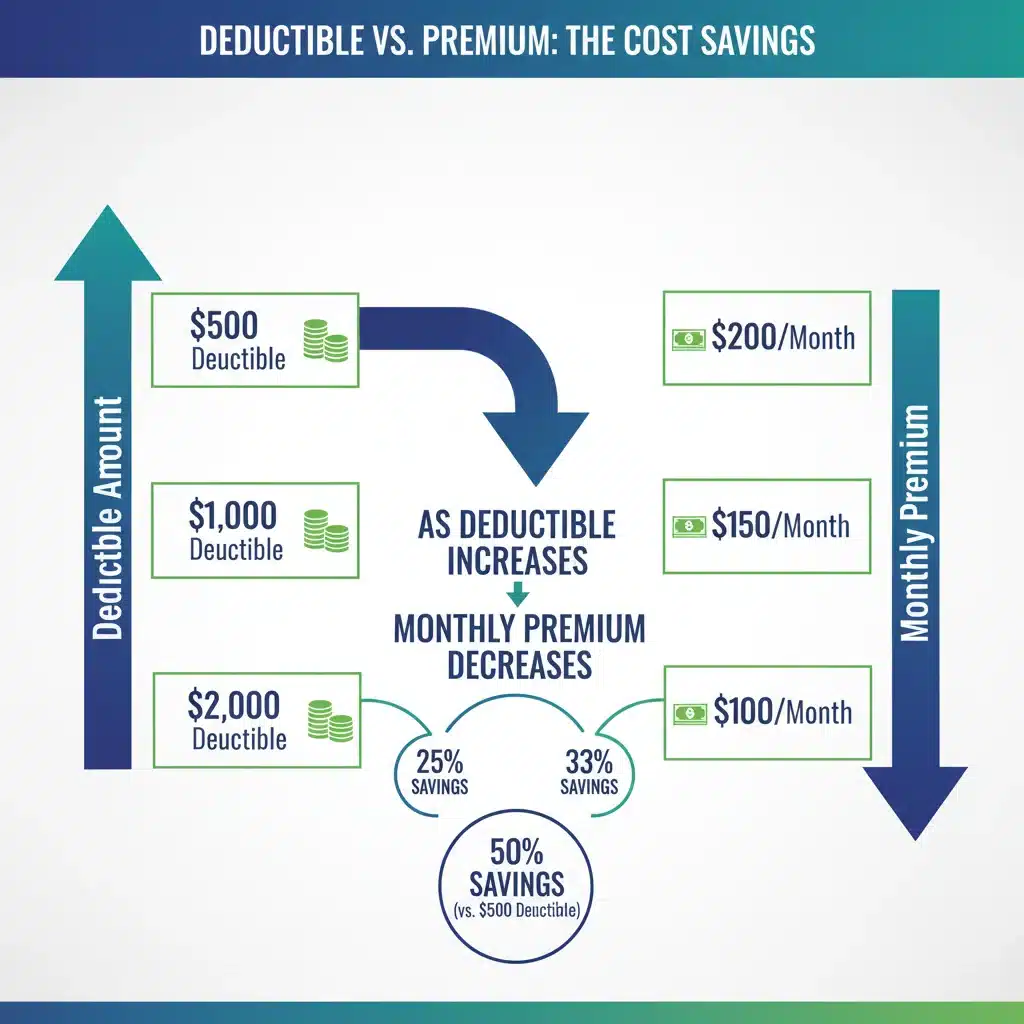
This concept is fundamental across various types of insurance, including health, auto, and home insurance. While the specific terms and conditions vary, the underlying principle remains the same: a higher deductible means you assume more initial financial risk, and in return, the insurance company charges you less for your monthly premium. This inverse relationship is the cornerstone of understanding how high deductible benefits translate into tangible savings.
The Allure of Lower Premiums: How High Deductible Plans Save You Money
The primary and most immediate benefit of choosing a high deductible plan is the significant reduction in your monthly insurance premiums. This isn’t just a minor adjustment; studies and market trends consistently show that opting for a higher deductible can slash your monthly payments by 10-25%, and sometimes even more, depending on your plan, provider, and location. For many, this translates into hundreds or even thousands of dollars in annual savings, which can be reallocated to other financial goals or simply provide much-needed relief in a tight budget.
Insurance companies offer these lower premiums because a higher deductible means they are less likely to pay out for smaller, more frequent claims. You, the policyholder, are taking on a greater share of the initial financial burden. This reduces the insurer’s risk, and they pass those savings on to you in the form of reduced monthly payments. It’s a win-win scenario for those who can manage the upfront costs associated with a higher deductible.
The Financial Mechanics: Why 10-25% Savings?
The 10-25% savings range isn’t arbitrary. It reflects the actuarial science behind insurance pricing. When you choose a higher deductible, you’re essentially telling the insurance company that you’re willing to cover a larger portion of potential claims yourself. This significantly alters the risk profile for the insurer. For instance, a plan with a $5,000 deductible versus a $1,000 deductible means the insurer is responsible for $4,000 less in potential initial payouts for each claim. This reduction in their potential liability directly impacts the premium calculation, leading to the substantial savings we observe.
Moreover, high deductible plans often discourage overuse of medical services for minor issues, as individuals are more conscious of their out-of-pocket costs. This further contributes to lower overall claim rates for the insurer, allowing them to maintain lower premiums for these types of plans. As we move into 2026, the market is expected to continue favoring these models as a way to balance affordability and coverage.
Beyond Premiums: Additional High Deductible Benefits to Consider
While lower premiums are the most obvious advantage, high deductible plans often come with other valuable perks, particularly in the realm of health insurance. Many high deductible health plans (HDHPs) are compatible with Health Savings Accounts (HSAs), which offer a triple tax advantage:
- Tax-Deductible Contributions: Money you contribute to an HSA is often tax-deductible, reducing your taxable income.
- Tax-Free Growth: The funds in your HSA grow tax-free over time.
- Tax-Free Withdrawals: When used for qualified medical expenses, withdrawals from your HSA are entirely tax-free.
This combination of lower premiums and tax-advantaged savings makes HDHPs a powerful financial tool for many. The money saved on premiums can often be directed into an HSA, effectively offsetting the higher deductible while simultaneously building a tax-free fund for future medical needs. This is a significant factor when evaluating the true high deductible benefits.
Furthermore, some high deductible plans might encourage a more proactive approach to health and wellness. Knowing that you’ll pay more out-of-pocket for routine care, you might be more inclined to seek preventive care (which is often covered 100% even with a high deductible) and make healthier lifestyle choices to avoid costly medical interventions down the line. This shift in mindset can lead to long-term health benefits and continued financial savings.
Is a High Deductible Plan Right for You? Key Considerations for 2026
While the high deductible benefits are compelling, these plans are not a one-size-fits-all solution. Determining if a high deductible plan is suitable for your situation requires careful consideration of your financial health, medical needs, and risk tolerance. Here are some critical factors to evaluate for 2026:
1. Your Financial Preparedness: Can You Afford the Deductible?
This is arguably the most crucial question. Before committing to a high deductible plan, you must be confident that you can cover the deductible amount if a significant medical event occurs. Ideally, you should have the full deductible amount saved in an emergency fund or an HSA. If you don’t have these funds readily available, a high deductible plan could leave you in a precarious financial situation during a medical crisis. The peace of mind that comes with knowing you can meet your deductible is invaluable.
2. Your Health Status and Medical Needs: How Often Do You Use Medical Services?
Individuals who are generally healthy and rarely visit the doctor or require prescription medications often benefit most from high deductible plans. Their low usage means they are less likely to meet their deductible, and thus, the lower premiums represent pure savings. However, if you have chronic conditions, require frequent specialist visits, or take expensive prescription drugs, a high deductible plan might result in higher overall out-of-pocket costs, even with lower premiums.
It’s vital to estimate your annual medical expenses. Look back at past years’ medical bills to get a realistic picture. Compare the total cost of a low-premium, high-deductible plan (premiums + estimated out-of-pocket) against a high-premium, low-deductible plan. This comparative analysis will highlight the true high deductible benefits for your specific health profile.
3. Access to an HSA: Maximizing Your Savings Potential
As mentioned, the synergy between HDHPs and HSAs is powerful. If you qualify for and can contribute to an HSA, the financial advantages of a high deductible plan are amplified. The tax benefits alone can significantly offset the higher deductible, making the plan much more attractive. Consider this a key component of the overall high deductible benefits package.
4. Your Risk Tolerance: Comfort with Out-of-Pocket Exposure
Some individuals are simply more comfortable with predictable, higher monthly payments and lower out-of-pocket costs when medical events occur. Others are willing to take on more risk in exchange for lower monthly expenses. Your personal risk tolerance plays a significant role in whether a high deductible plan feels like a smart financial move or a constant source of anxiety. Be honest with yourself about what level of financial exposure you are comfortable with.
Strategies for Thriving with a High Deductible Plan in 2026
If you decide that a high deductible plan is the right choice for you in 2026, here are some strategies to maximize the high deductible benefits and ensure financial security:
1. Build Your HSA Aggressively
Make contributing to your HSA a priority. Aim to save at least the full deductible amount in your HSA. This fund acts as your safety net for medical emergencies and allows you to take full advantage of the tax benefits. Consider setting up automatic contributions to ensure consistent savings.
2. Utilize Preventive Care
Most high deductible health plans cover preventive services (like annual physicals, screenings, and immunizations) at 100% before you meet your deductible. Take advantage of these services to stay healthy and catch potential issues early, which can prevent more expensive treatments down the road. This is a crucial, often overlooked, aspect of high deductible benefits.
3. Shop Smart for Medical Services
When you have a high deductible, you become a more engaged healthcare consumer. Don’t hesitate to ask for pricing for services before you receive them. Compare costs for labs, imaging, and even certain procedures at different facilities. Many providers are transparent about pricing, and you can often find significant differences. Websites and apps designed to compare healthcare costs can be invaluable tools.
4. Negotiate Medical Bills
If you incur a large medical bill, don’t be afraid to negotiate with the provider, especially if you’re paying out-of-pocket before your deductible is met. Hospitals and clinics often have discounted rates for uninsured patients or those paying cash. You might be surprised at how much you can save by simply asking.
5. Understand Your Plan’s Out-of-Pocket Maximum
While your deductible is the initial amount you pay, most plans also have an out-of-pocket maximum. This is the absolute most you will pay for covered medical expenses in a given year, even if you don’t meet your deductible. Once you hit this maximum, your insurance covers 100% of additional covered costs. Knowing this limit provides an ultimate financial safeguard and is an important part of understanding your overall high deductible benefits and risks.
The Economic Outlook for High Deductible Plans in 2026
As we approach 2026, the economic landscape and healthcare trends suggest that high deductible plans will continue to be a prominent and attractive option for many. Rising healthcare costs generally push insurance premiums higher across the board. In this environment, the 10-25% savings offered by high deductible plans become even more significant as a mechanism to keep insurance affordable.
Government policies and employer benefits programs are also likely to continue supporting HDHPs, particularly those linked to HSAs, due to their potential to empower consumers and manage costs. This means that access to and choices within the high deductible market will likely remain robust, offering competitive options for those seeking to capitalize on high deductible benefits.
We can anticipate a continued emphasis on consumer-driven healthcare, where individuals have more control and responsibility over their healthcare spending. High deductible plans align perfectly with this philosophy, encouraging informed decisions and financial literacy regarding medical care. The market will likely see innovations in tools and resources to help individuals manage their HDHPs and HSAs more effectively, further enhancing the appeal of these plans.

Common Myths and Misconceptions About High Deductible Plans
Despite their growing popularity, high deductible plans are often misunderstood. Let’s debunk some common myths to provide a clearer picture of high deductible benefits:
Myth 1: High Deductible Plans Are Only for the Rich or Very Healthy.
While having an emergency fund is crucial, high deductible plans are increasingly becoming a necessity for middle-income families seeking to manage rising premium costs. The key is financial preparedness, not necessarily high income. And while they suit the very healthy, savvy financial planning can make them viable for many others, especially with HSA integration.
Myth 2: You’ll Always Pay More Out-of-Pocket.
Not necessarily. If you rarely use medical services, your total annual cost (premiums + out-of-pocket) with a high deductible plan could be significantly lower than with a low deductible plan, due to the substantial premium savings. The higher deductible only comes into play if you actually incur significant medical expenses.
Myth 3: High Deductible Plans Don’t Cover Anything Until the Deductible is Met.
This is false. As mentioned, most preventive care services are covered 100% before you meet your deductible. Additionally, many plans will still cover a percentage of costs even before the deductible is met, typically after you pay a co-pay or co-insurance, though this varies by plan. It’s crucial to read your plan’s Summary of Benefits and Coverage (SBC).
Myth 4: High Deductible Plans Offer Inferior Quality of Care.
The deductible structure of a plan has no bearing on the quality of healthcare providers or services available to you. Your network of doctors and hospitals is determined by the insurance carrier and plan type, not by the deductible amount. You still have access to the same high-quality care.
Case Study: Real-World Savings in Action
Let’s consider a hypothetical scenario for 2026 to illustrate the potential high deductible benefits:
Scenario: A healthy couple, John and Jane, are evaluating their health insurance options for 2026. They typically only have annual check-ups and no chronic conditions.
Option A: Low Deductible Plan
- Monthly Premium: $800
- Deductible: $1,500
- Annual Premium Cost: $9,600
- Estimated Annual Out-of-Pocket (for check-ups, covered at 100%): $0 (assuming no other major issues)
- Total Annual Cost: $9,600
Option B: High Deductible Plan (with HSA eligibility)
- Monthly Premium: $640 (20% lower than Option A)
- Deductible: $5,000
- Annual Premium Cost: $7,680
- Estimated Annual Out-of-Pocket (for check-ups, covered at 100%): $0 (assuming no other major issues)
- Total Annual Cost: $7,680
- Annual Savings (Premiums): $1,920
In this example, by choosing the high deductible plan, John and Jane save $1,920 annually on premiums. If they funnel these savings into an HSA, they not only reduce their taxable income but also build a tax-free fund for any unexpected medical needs. Even if one of them had a minor issue that cost $1,000, their total cost would still be $7,680 (premiums) + $1,000 (out-of-pocket) = $8,680, which is still $920 less than Option A, and they’d have an HSA balance growing.
This illustrates the power of high deductible plans for those who can manage the deductible exposure.
Conclusion: Making an Informed Decision for Your 2026 Insurance
The decision to opt for a high deductible insurance plan in 2026 is a significant one, but for many, the high deductible benefits, particularly the 10-25% reduction in monthly premiums, make it a highly attractive option. By understanding the mechanics of deductibles, assessing your financial and health situation, and adopting smart strategies, you can leverage these plans to achieve substantial savings and greater financial control over your healthcare.
Remember, the key is not just to chase the lowest premium but to find the plan that offers the best balance of cost, coverage, and financial security for your unique circumstances. As you plan for 2026, take the time to compare your options, consider the long-term advantages of HSAs, and ensure you are prepared for the financial responsibilities that come with a higher deductible. With careful planning, a high deductible plan can be a powerful tool in your financial arsenal, helping you save money and gain peace of mind.
Frequently Asked Questions (FAQs)
Q1: What is the average deductible for a high deductible health plan (HDHP) in 2026?
A1: While exact averages for 2026 are still developing, typically, for an individual, an HDHP deductible is at least $1,600, and for a family, it’s at least $3,200. However, many plans offer deductibles significantly higher, ranging from $3,000 to $7,500 for individuals and even higher for families, which often correlates with greater premium savings.
Q2: Can I switch from a low deductible plan to a high deductible plan mid-year?
A2: Generally, you can only switch insurance plans during the annual open enrollment period or if you experience a qualifying life event (e.g., marriage, birth of a child, loss of other coverage). Consult your insurance provider or employer for specific rules and timelines for 2026.
Q3: Are prescription drugs covered before the deductible is met in an HDHP?
A3: This varies by plan. Some HDHPs require you to meet your deductible before prescription drug costs are covered, while others may offer some coverage for certain generic or preventive medications with a co-pay even before the deductible is met. Always check your plan’s specific benefits for prescription drug coverage.
Q4: How do I know if my plan is HSA-eligible?
A4: For a health plan to be HSA-eligible, it must meet specific IRS requirements for deductibles and out-of-pocket maximums. Your insurance provider or employer will explicitly state if a plan is HSA-eligible. Look for the term ‘HSA-qualified’ or ‘HDHP’ in the plan description.
Q5: What if I have a medical emergency and haven’t met my high deductible?
A5: In a medical emergency, you will receive necessary care regardless of your deductible status. However, you will be responsible for paying the costs up to your deductible amount. This is why having funds set aside in an HSA or emergency savings is crucial when you have a high deductible plan. Your insurance will begin to cover costs once your deductible is met, up to your out-of-pocket maximum.