Climate Change 2026: Property Insurance Market Shifts & Data Analysis

Understanding the 2026 Climate Change Impact: A Data-Driven Analysis of Property Insurance Market Shifts
The year 2026 stands as a critical juncture in the ongoing saga of climate change, particularly concerning its profound and accelerating impact on the global property insurance market. As environmental shifts become more pronounced and extreme weather events intensify, the traditional models and risk assessments that have long underpinned the insurance industry are proving increasingly inadequate. This article delves into a data-driven analysis of these impending shifts, exploring how climate change insurance will evolve, what challenges and opportunities lie ahead, and how stakeholders can prepare for a future where environmental volatility is the norm.
The Unfolding Crisis: Climate Change and Its Tangible Effects
The scientific consensus is unequivocal: climate change is not a distant threat but a present reality, with tangible effects already being felt across the globe. From unprecedented heatwaves and devastating wildfires to more frequent and intense hurricanes, floods, and droughts, the physical manifestations of a warming planet are escalating. These events, often described as ‘natural disasters,’ are increasingly influenced by human-induced climate change, leading to a significant re-evaluation of risk profiles for properties worldwide.
For the property insurance sector, this means a paradigm shift. Insurers, traditionally reliant on historical data to predict future losses, are finding that the past is no longer a reliable indicator. The frequency and severity of extreme weather events are deviating significantly from historical averages, making actuarial science more complex and uncertain. This uncertainty directly translates into higher risks, increased claims, and ultimately, a fundamental restructuring of how property insurance is priced and offered.
Key Climate Change Indicators by 2026: A Snapshot
- Rising Global Temperatures: Projections indicate a continued upward trend, leading to more intense heatwaves and prolonged periods of drought in many regions.
- Sea Level Rise Acceleration: Coastal communities face heightened risks of inundation and erosion, rendering properties in these areas increasingly vulnerable.
- Increased Frequency of Extreme Weather: Expect more powerful hurricanes, typhoons, and cyclones, alongside heavier rainfall events causing widespread flooding.
- Wildfire Proliferation: Drier conditions and higher temperatures contribute to an extended and more severe wildfire season in susceptible regions.
These indicators are not merely environmental statistics; they are direct drivers of insurance claims and a critical factor in the evolving landscape of climate change insurance. Understanding these trends is the first step in comprehending the systemic changes impacting the property insurance market.
The Property Insurance Market: A Sector Under Siege
The property insurance market, a cornerstone of economic stability, is particularly susceptible to the ravages of climate change. Insurers act as the financial shock absorbers for society, absorbing losses from unforeseen events. However, when these events become more frequent, severe, and predictable in their unpredictability, the very foundations of this system begin to crack.
Escalating Claims and Premium Hikes
One of the most immediate and visible effects of climate change on property insurance is the dramatic increase in claims. As homes and businesses are increasingly damaged or destroyed by climate-related events, insurers face mounting payouts. This surge in claims directly impacts their profitability and solvency, leading to a cascading effect:
- Higher Premiums: To offset increased losses, insurers are forced to raise premiums, making insurance less affordable, especially in high-risk areas.
- Reduced Coverage: In some cases, insurers may reduce the scope of coverage for certain perils or introduce higher deductibles, shifting more of the financial burden onto policyholders.
- Withdrawal from High-Risk Areas: Facing unsustainable losses, some insurers are beginning to withdraw from regions deemed too risky, leaving homeowners and businesses without essential protection. This phenomenon is already observable in certain wildfire-prone areas and hurricane-battered coastlines.
The Data Revolution: Predictive Analytics and AI
In response to these challenges, the property insurance industry is undergoing a significant technological transformation. Traditional models are being augmented, and in some cases replaced, by advanced data analytics, artificial intelligence (AI), and machine learning (M.L.). These tools offer the potential for more granular and dynamic risk assessment, allowing insurers to:
- Forecast Future Risks: AI models can analyze vast datasets, including climate projections, satellite imagery, and real-time weather data, to predict the likelihood and severity of future events with greater accuracy.
- Personalize Premiums: With more precise risk assessments, insurers can tailor premiums to individual properties based on their specific vulnerabilities, rather than relying on broader regional averages.
- Develop Innovative Products: This data-driven approach facilitates the creation of new insurance products that address emerging climate risks, such as parametric insurance that pays out automatically based on predefined triggers (e.g., wind speed, rainfall levels).
However, the reliance on such advanced data also raises questions about data privacy, algorithmic bias, and the potential for certain populations to be priced out of the market entirely. The ethical implications of data-driven climate change insurance are a growing area of discussion.
Geographical Hotspots and Vulnerable Regions by 2026
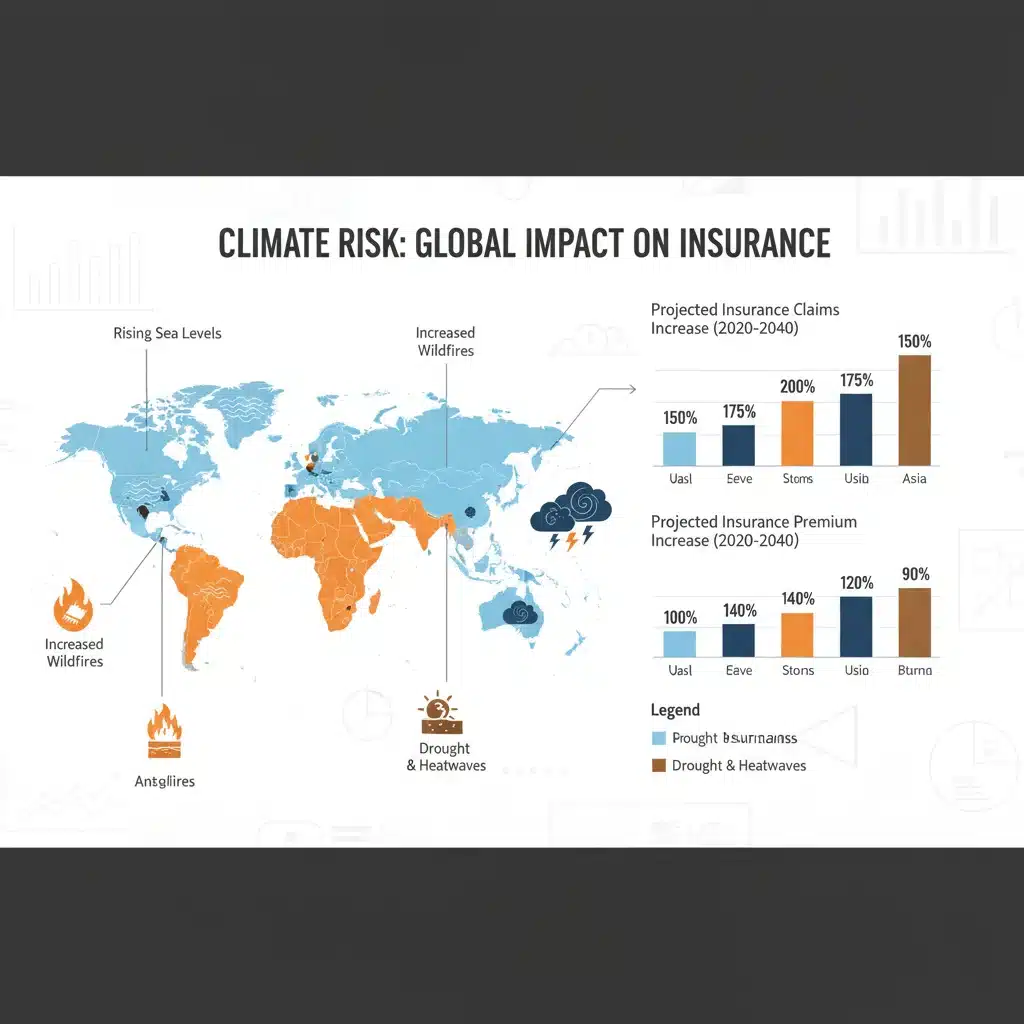
By 2026, certain geographical regions are projected to experience a disproportionately high impact from climate change, leading to significant disruptions in their property insurance markets. A data-driven analysis highlights several key hotspots:
Coastal Zones: The Rising Tide of Risk
Coastal areas globally face an existential threat from rising sea levels and increased storm surges. Cities like Miami, New Orleans, and numerous island nations are already grappling with regular inundation. By 2026, the frequency and intensity of these events are expected to significantly escalate, making property insurance in these regions increasingly expensive, if not impossible to obtain.
- Specific Risks: Chronic flooding, saltwater intrusion, coastal erosion, and damage from intensified hurricanes/typhoons.
- Insurance Market Impact: Skyrocketing premiums, widespread policy cancellations, and a potential exodus of insurers from these areas. Government-backed insurance programs or public-private partnerships may become the only viable solutions.
Arid and Semi-Arid Regions: The Wildfire Epidemic
Regions prone to wildfires, such as California, Australia, and parts of Southern Europe, are experiencing longer and more destructive fire seasons. The combination of prolonged droughts, higher temperatures, and an accumulation of dry vegetation creates a perfect storm for catastrophic blazes. By 2026, these areas will likely see an even greater escalation in wildfire activity.
- Specific Risks: Direct property destruction by fire, smoke damage, and increased risk of mudslides post-fire due to loss of vegetation.
- Insurance Market Impact: Insurers are already pulling out of high-risk wildfire zones, and this trend is expected to accelerate. Homeowners face non-renewal notices and a shrinking pool of available coverage, often turning to state-mandated FAIR plans as a last resort.
Riverine and Inland Floodplains: Deluge and Displacement
Even inland areas are not immune. Changes in precipitation patterns, including more intense rainfall events, are leading to increased riverine and flash flooding. Urban areas with inadequate drainage infrastructure are particularly vulnerable. The increasing impermeability of urban landscapes exacerbates runoff, turning minor storms into major flood events.
- Specific Risks: Property damage from floodwaters, infrastructure collapse, and business interruption.
- Insurance Market Impact: Expanding flood risk zones, higher premiums for flood insurance (often a separate policy), and a greater need for robust flood mitigation strategies at both individual and community levels.
Regulatory and Policy Responses to Climate Change Insurance
The escalating crisis in the property insurance market has not gone unnoticed by regulators and policymakers. Governments worldwide are beginning to grapple with the implications of an uninsurable future and are exploring various interventions to stabilize the market and protect citizens.
Government Intervention and Public-Private Partnerships
As private insurers retreat from high-risk areas, governments are increasingly stepping in to fill the void. This includes expanding existing state-backed insurance programs, creating new ones, or fostering public-private partnerships to share the burden of risk. The goal is to ensure that essential insurance coverage remains accessible, preventing economic collapse in vulnerable communities.
- Examples: The National Flood Insurance Program (NFIP) in the US, various state-run ‘insurers of last resort’ for windstorm or wildfire coverage.
- Challenges: These programs often face financial strain, requiring taxpayer subsidies and careful management to remain solvent and sustainable.
Mandatory Climate Risk Disclosure and Stress Testing
Regulators are also pushing for greater transparency regarding climate-related financial risks. This includes requiring insurance companies (and other financial institutions) to disclose their exposure to climate risks and conduct stress tests to assess their resilience under various climate scenarios. This aims to provide a clearer picture of systemic risk and encourage proactive adaptation.
Incentivizing Resilience and Mitigation
A crucial policy direction involves incentivizing property owners and communities to invest in resilience and mitigation measures. This can take many forms:
- Building Codes: Updating building codes to incorporate climate resilience standards (e.g., elevated foundations in flood zones, fire-resistant materials in wildfire areas).
- Grants and Subsidies: Providing financial assistance for homeowners to undertake retrofits, such as elevating homes, installing hurricane-resistant windows, or creating defensible space against wildfires.
- Community-Level Investments: Funding for large-scale infrastructure projects like seawalls, levees, and improved drainage systems.
These measures not only reduce future losses but also make properties more attractive to insurers, potentially leading to more favorable premium rates.
The Role of Data and Technology in Future-Proofing Property Insurance
The convergence of climate change and the property insurance market is accelerating the adoption of cutting-edge data science and technological innovations. By 2026, these advancements will be indispensable for accurate risk assessment, efficient claims processing, and the development of adaptive insurance solutions.
Advanced Geospatial Analytics and Remote Sensing
Geospatial data, derived from satellites, drones, and aerial imagery, is revolutionizing how insurers understand property risk. These technologies provide highly granular information about individual properties and their surrounding environment, including:
- Elevation Data: Crucial for assessing flood risk.
- Vegetation Analysis: Identifying wildfire fuel loads and defensible space.
- Building Characteristics: Determining construction materials, roof types, and other features impacting resilience.
- Real-time Monitoring: Tracking changes in land use, coastal erosion, and even post-disaster damage assessment.
Combined with M.L. algorithms, this data enables insurers to create hyper-localized risk maps and models that far surpass the capabilities of traditional methods.
Internet of Things (IoT) and Smart Home Technologies
The proliferation of IoT devices and smart home technology offers new avenues for both risk mitigation and data collection. Sensors can monitor conditions within a property, such as water leaks, smoke, or excessive temperatures, providing early warnings and potentially preventing significant damage.
- Proactive Risk Management: Homeowners can receive alerts and take action before a small issue escalates into a major claim.
- Usage-Based Insurance: Similar to telematics in auto insurance, IoT data could enable insurers to offer discounts for properties equipped with risk-reducing smart technologies.
Blockchain for Transparency and Efficiency
Blockchain technology, while still in its nascent stages for insurance, holds promise for enhancing transparency and efficiency in claims processing and policy management. Smart contracts, for instance, could automate payouts for parametric insurance policies once predefined climate triggers are met, significantly speeding up the claims process and reducing administrative costs.

Strategies for Resilience: Adapting to the New Normal
As the 2026 climate change impact on property insurance becomes clearer, proactive strategies for resilience are no longer optional but imperative for all stakeholders – homeowners, businesses, communities, and insurers alike.
For Homeowners and Businesses: Build Back Better
- Assess Your Risk: Understand your property’s specific vulnerabilities to climate hazards. Utilize online tools and local resources to get accurate flood, fire, and wind risk assessments.
- Invest in Resilience: Implement mitigation measures such as elevating utilities, installing hurricane shutters, using fire-resistant landscaping, or improving drainage. Many government programs offer financial incentives for these upgrades.
- Review Your Policy Annually: Ensure your climate change insurance coverage is adequate and understands any new exclusions or limitations. Don’t assume your policy covers all climate-related damages.
- Consider Parametric Insurance: For certain risks, explore parametric policies that offer quick payouts based on specific event triggers, providing immediate financial relief.
For Insurers: Innovation and Collaboration
- Embrace Advanced Analytics: Continuously invest in and refine AI, M.L., and geospatial analytics to improve risk modeling and pricing.
- Develop New Products: Innovate with new insurance products that address emerging climate risks and cater to the changing needs of policyholders, including parametric and microinsurance solutions.
- Foster Partnerships: Collaborate with governments, research institutions, and technology providers to develop comprehensive risk management solutions and promote community resilience.
- Advocate for Mitigation: Play an active role in advocating for and supporting climate adaptation and mitigation efforts at all levels of government and society.
For Governments and Communities: Proactive Planning
- Update Infrastructure: Invest in resilient infrastructure, including improved drainage systems, protective barriers, and early warning systems.
- Revise Land-Use Planning: Implement zoning and land-use policies that discourage development in high-risk areas and promote nature-based solutions for resilience.
- Support Research and Development: Fund climate science and technological innovations that can aid in risk assessment and mitigation.
- Educate and Empower Citizens: Provide resources and information to help citizens understand their risks and take proactive steps to protect their properties.
The Ethical Imperative and Future Outlook
The climate change impact on property insurance by 2026 presents not just an economic challenge but also an ethical imperative. As risks intensify, there is a real danger of creating an ‘uninsurable class’ of properties and people, exacerbating social inequalities. Ensuring equitable access to affordable insurance and fostering broad-based resilience will be crucial for maintaining social cohesion and economic stability.
Looking beyond 2026, the trajectory of climate change insurance will be shaped by a complex interplay of scientific advancements, technological innovation, regulatory frameworks, and societal adaptation. The property insurance market will likely become more dynamic, personalized, and deeply integrated with climate data. Success will hinge on the industry’s ability to not only adapt to new realities but also to become a proactive force in driving climate resilience and sustainable development.
The data clearly points to a future where the property insurance market is fundamentally reconfigured by climate change. By understanding these shifts, embracing innovation, and fostering collaborative action, we can work towards a more resilient and insurable future for all.