Claims Processing Automation: 30% Faster by 2026

The Future of Claims Processing: Automation Reducing Turnaround Times by 30% by 2026
The insurance industry, often perceived as traditional and slow-moving, is on the cusp of a significant transformation. The driving force behind this impending revolution is claims processing automation. In an increasingly digital world, customers expect faster, more transparent, and more efficient services. The manual, paper-intensive processes that have long characterized claims handling are becoming obsolete. Industry experts predict that by 2026, claims processing automation will lead to a remarkable 30% reduction in turnaround times, fundamentally reshaping the customer experience and operational efficiency of insurance providers worldwide.
This isn’t merely a technological upgrade; it’s a strategic imperative. As competition intensifies and customer expectations rise, insurers must embrace innovation to remain relevant and competitive. The promise of claims processing automation extends beyond speed; it encompasses enhanced accuracy, reduced costs, improved fraud detection, and a more personalized customer journey. This comprehensive article will delve into the intricacies of this transformation, exploring the technologies enabling it, the profound benefits it offers, the challenges that must be overcome, and the strategic roadmap for insurers looking to capitalize on this seismic shift.
The journey towards fully automated claims processing is multifaceted, involving a blend of artificial intelligence (AI), machine learning (ML), robotic process automation (RPA), and advanced data analytics. These technologies, when integrated effectively, create a powerful ecosystem capable of handling claims from first notification of loss (FNOL) to final settlement with minimal human intervention. The impact on turnaround times is perhaps the most tangible benefit, directly addressing one of the biggest pain points for both insurers and policyholders.
Understanding Claims Processing Automation
At its core, claims processing automation refers to the use of technology to streamline and accelerate the various stages of the insurance claims lifecycle. Historically, this process has been manual, requiring extensive human input for data entry, document review, verification, assessment, and communication. This labor-intensive approach is prone to errors, delays, and inconsistencies, leading to higher operational costs and lower customer satisfaction.
Modern claims processing automation leverages sophisticated tools to automate repetitive tasks, analyze vast amounts of data, make informed decisions, and interact with customers and third parties. This allows human adjusters to focus on more complex cases, strategic decision-making, and empathetic customer engagement, where their unique skills are most valuable.
Key Technologies Driving Automation
Several interconnected technologies are fueling the surge in claims processing automation:
- Artificial Intelligence (AI): AI, particularly in the form of natural language processing (NLP) and machine learning (ML), is crucial for understanding unstructured data from claim forms, emails, and medical reports. AI algorithms can analyze claim details, identify patterns, and even predict the likelihood of fraud.
- Machine Learning (ML): ML models learn from historical claims data to improve accuracy in risk assessment, fraud detection, and damage estimation. They can identify anomalies and flag suspicious claims for further investigation, significantly reducing human effort and improving detection rates.
- Robotic Process Automation (RPA): RPA bots are software robots configured to perform repetitive, rule-based tasks traditionally handled by humans. In claims processing, RPA can automate data entry from various sources, initiate policy verification, and trigger follow-up communications, accelerating initial processing steps.
- Optical Character Recognition (OCR) and Intelligent Document Processing (IDP): OCR technology converts scanned documents and images into machine-readable text, while IDP goes a step further by understanding the context and extracting relevant data from these documents. This is vital for processing diverse claim documents, from medical bills to accident reports.
- Blockchain Technology: While still emerging, blockchain offers a decentralized, immutable ledger for recording claims data. This can enhance transparency, reduce disputes, and speed up verification processes by providing a single source of truth for all parties involved in a claim.
- Predictive Analytics: By analyzing historical data and external factors, predictive analytics can forecast claim severity, duration, and potential costs. This empowers insurers to allocate resources more effectively and set accurate reserves.
The synergy of these technologies creates a powerful engine for claims processing automation, enabling insurers to move beyond simple task automation to intelligent, end-to-end process transformation.
The Promise: Reducing Turnaround Times by 30% by 2026
The projection of a 30% reduction in claims turnaround times by 2026 is not an arbitrary figure; it’s an achievable goal grounded in the capabilities of current and emerging technologies. This reduction is critical for several reasons:
- Enhanced Customer Satisfaction: In an age where instant gratification is the norm, prolonged claims processes are a major source of customer frustration. Faster settlements directly translate to happier policyholders, improved retention, and positive brand perception.
- Competitive Advantage: Insurers that can settle claims significantly faster than their rivals will gain a distinct competitive edge, attracting new customers and solidifying relationships with existing ones.
- Operational Efficiency and Cost Savings: Reduced turnaround times are a byproduct of streamlined processes, which inherently lead to lower operational costs. Less manual intervention means fewer errors, less rework, and optimized resource allocation.
- Improved Financial Performance: Quicker claims resolution means faster payouts, which can improve cash flow management for insurers. Additionally, more accurate fraud detection reduces financial losses.
- Better Resource Utilization: By automating mundane tasks, human adjusters can dedicate their expertise to complex, high-value claims, fostering a more engaging and productive work environment.
Consider a typical claims journey. From the moment a policyholder reports an incident, through data collection, verification, assessment, negotiation, and final payment, numerous touchpoints can introduce delays. Claims processing automation tackles each of these bottlenecks, systematically eliminating friction and accelerating the entire flow.
Impact Across the Claims Lifecycle
Let’s examine how automation impacts different stages of the claims lifecycle to achieve this 30% reduction:
- First Notification of Loss (FNOL): AI-powered chatbots and voice assistants can guide policyholders through the initial reporting process, collecting all necessary information efficiently and accurately, often outside of traditional business hours. RPA can then automatically log this data into the claims system.
- Data Collection and Verification: IDP and OCR rapidly extract data from submitted documents (e.g., photos of damage, medical reports, police reports). AI cross-references this data with policy details and external databases to verify accuracy and legitimacy, flagging discrepancies instantly.
- Damage Assessment and Estimation: AI and computer vision can analyze images and videos of damage (e.g., vehicle accidents, property damage) to provide preliminary damage estimates, significantly reducing the need for physical inspections in many cases. This can cut days or even weeks from the process.
- Fraud Detection: ML algorithms continuously analyze claims data for suspicious patterns, comparing them against historical fraud cases. This proactive approach identifies potential fraud much earlier than manual review, preventing costly payouts and speeding up legitimate claims.
- Adjudication and Decision Making: Rule-based automation and AI can make decisions on straightforward claims based on predefined criteria, leading to instant approvals for eligible cases. For more complex claims, AI provides adjusters with comprehensive data and recommendations, empowering faster, more informed decisions.
- Communication and Settlement: Automated systems can generate personalized communications to policyholders, providing real-time updates on their claim status. RPA can also initiate payment processing once a claim is approved, ensuring swift settlement.
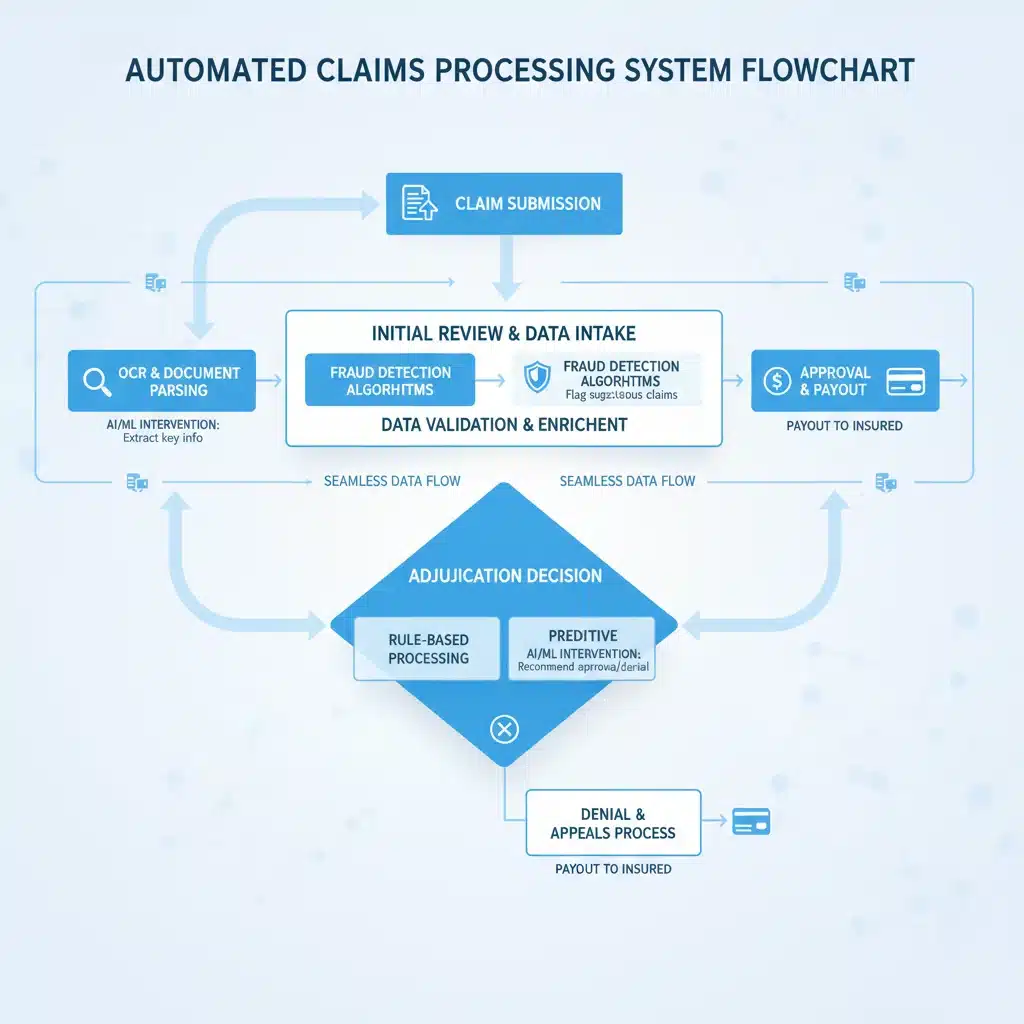
This holistic approach ensures that claims processing automation isn’t just a superficial fix but a deep, structural improvement across the entire operational chain.
Challenges and Considerations for Implementation
While the benefits of claims processing automation are compelling, its implementation is not without challenges. Insurers must navigate these hurdles strategically to realize the full potential of their investments.
Data Quality and Integration
Automation thrives on clean, structured data. Many legacy insurance systems, however, are characterized by fragmented data silos, inconsistent formats, and outdated infrastructure. Integrating these disparate systems and ensuring high data quality is a foundational challenge. Without reliable data, AI and ML models cannot function effectively, leading to inaccurate decisions and undermining the automation effort.
Regulatory Compliance and Ethical AI
The insurance industry is heavily regulated. Implementing claims processing automation must ensure strict adherence to data privacy laws (e.g., GDPR, CCPA), anti-discrimination regulations, and industry-specific compliance standards. Moreover, the ethical implications of AI – particularly concerning bias in algorithms – must be carefully managed to ensure fair and equitable treatment of all policyholders.
Change Management and Workforce Adaptation
Introducing significant automation often evokes apprehension among employees. Concerns about job displacement are natural. Successful implementation requires a robust change management strategy, focusing on upskilling and reskilling the workforce. Employees need to understand how automation will augment their roles, freeing them from mundane tasks to focus on higher-value activities that require human judgment, empathy, and strategic thinking.
Vendor Selection and Scalability
The market for insurtech solutions is burgeoning, offering a plethora of automation tools. Choosing the right vendor and technology stack that aligns with the insurer’s specific needs, existing infrastructure, and long-term strategic goals is critical. Furthermore, the chosen solutions must be scalable to accommodate future growth and evolving business requirements.
Cybersecurity Risks
As more processes become digital and interconnected, the risk of cyberattacks increases. Protecting sensitive customer data and proprietary algorithms is paramount. Insurers must invest in robust cybersecurity measures to safeguard their automated systems against breaches and data manipulation.
Strategic Roadmap for Insurers
To successfully implement claims processing automation and achieve the targeted 30% reduction in turnaround times by 2026, insurers should follow a strategic roadmap:
1. Assess Current State and Define Vision
Begin with a thorough audit of existing claims processes. Identify bottlenecks, manual touchpoints, and areas ripe for automation. Define a clear vision for the future state of claims processing, outlining specific, measurable, achievable, relevant, and time-bound (SMART) goals, including the target reduction in turnaround times.
2. Start Small, Scale Big (Pilot Programs)
Rather than attempting a massive, company-wide overhaul, start with pilot programs in specific lines of business or for particular claim types. This allows for testing, learning, and refining the automation solutions in a controlled environment before scaling them across the organization. Success in pilots builds momentum and internal buy-in.
3. Invest in Data Infrastructure and Governance
Prioritize cleaning, structuring, and integrating data from various sources. Establish strong data governance policies to ensure data quality, consistency, and security. A robust data foundation is the bedrock for effective AI and ML applications.
4. Foster a Culture of Innovation and Continuous Improvement
Encourage experimentation and a willingness to embrace new technologies. Create cross-functional teams that bring together claims adjusters, IT professionals, data scientists, and customer service representatives to collaborate on automation initiatives. Emphasize continuous improvement, regularly reviewing and optimizing automated processes.
5. Prioritize Human-Centric Automation
Design automation solutions that augment human capabilities rather than replace them entirely. Focus on empowering adjusters with better tools and insights, freeing them to handle complex cases and provide empathetic customer service. Provide comprehensive training and support to help employees adapt to new roles and technologies.
6. Partner with Insurtech Innovators
Leverage the expertise of specialized insurtech companies. These partnerships can provide access to cutting-edge technologies, accelerate deployment, and offer valuable insights into best practices without the need for extensive in-house development.
7. Emphasize Security and Compliance from Day One
Integrate cybersecurity measures and compliance checks into every stage of the automation project. Regularly audit systems to ensure they meet regulatory requirements and protect sensitive data.

Beyond Turnaround Times: Additional Benefits of Automation
While reduced turnaround times are a primary driver for claims processing automation, the ripple effects extend to numerous other areas, creating a more robust and responsive insurance enterprise:
- Enhanced Accuracy and Consistency: Automated systems follow predefined rules and algorithms, virtually eliminating human error in data entry and decision-making for routine claims. This leads to more consistent outcomes and fairer settlements.
- Improved Fraud Detection: ML algorithms can analyze vast datasets to identify subtle patterns indicative of fraudulent activity, far surpassing human capabilities. This leads to a significant reduction in fraud losses, which can be reinvested or passed on to policyholders through lower premiums.
- Personalized Customer Experience: With faster processing and more efficient communication, insurers can offer a more tailored and empathetic customer journey. Automated systems can provide real-time updates, answer FAQs, and even proactively offer support, enhancing overall satisfaction.
- Scalability and Flexibility: Automated systems can easily scale up or down to handle fluctuations in claim volumes, such as those caused by catastrophic events. This flexibility allows insurers to maintain service levels without significant increases in staffing.
- Rich Data Insights: Every automated interaction and decision generates valuable data. This data can be analyzed to gain deeper insights into claims trends, customer behavior, operational inefficiencies, and product performance, informing future business strategies.
- Reduced Operating Costs: By automating repetitive tasks, insurers can significantly reduce labor costs associated with manual claims processing. This efficiency translates directly to improved profitability.
The cumulative effect of these benefits is a more resilient, customer-centric, and financially sound insurance operation. Claims processing automation is not just about cutting costs or speeding things up; it’s about building a future-proof insurance model.
The Human Element in an Automated Future
It’s crucial to address the role of the human element in an era of claims processing automation. While machines excel at speed and precision for routine tasks, human adjusters remain indispensable for complex claims, empathetic customer interactions, and strategic decision-making.
Automation frees adjusters from the drudgery of data entry and verification, allowing them to focus on:
- Complex Case Resolution: Handling claims that require nuanced judgment, negotiation, and deep understanding of specific circumstances.
- Customer Empathy and Support: Providing compassionate assistance to policyholders during difficult times, building trust and loyalty.
- Fraud Investigation: Leveraging AI insights to conduct thorough investigations into suspicious claims, applying critical thinking and investigative skills.
- Strategic Analysis: Using data provided by automated systems to identify trends, improve processes, and contribute to product development.
- Relationship Building: Cultivating strong relationships with policyholders, brokers, and other stakeholders.
The future of claims processing isn’t about replacing humans with machines; it’s about creating a powerful synergy where humans and AI collaborate to deliver superior outcomes. This partnership will redefine the adjuster’s role, transforming it into a more strategic and rewarding profession.
Conclusion: A Faster, Smarter Future for Claims
The trajectory towards claims processing automation reducing turnaround times by 30% by 2026 is clear and undeniable. This transformative shift is being driven by a powerful confluence of advanced technologies, evolving customer expectations, and the relentless pursuit of operational excellence within the insurance industry. Insurers that embrace this change proactively will not only achieve significant gains in efficiency and cost reduction but will also forge stronger relationships with their policyholders through faster, more transparent, and more accurate service.
The path forward requires strategic investment in technology, a commitment to data quality, thoughtful change management, and a willingness to innovate. While challenges exist, the rewards – from enhanced customer satisfaction and competitive advantage to improved fraud detection and deeper data insights – are too substantial to ignore. The future of claims processing is not just about speed; it’s about intelligence, empathy, and creating a truly seamless experience for everyone involved. The era of the automated, intelligent claims journey is here, and 2026 will mark a significant milestone in its evolution.