Protect Your Policy: Avoid Common Mistakes for Coverage Denial
Protecting Your Policy: 5 Common Mistakes U.S. Policyholders Make That Can Lead to Coverage Denial
Insurance is a cornerstone of financial security, designed to provide a safety net when life throws unexpected challenges your way. From protecting your home against natural disasters to safeguarding your health and vehicle, insurance policies offer peace of mind. However, this peace of mind can quickly turn into frustration and financial strain if your claim is denied. Many U.S. policyholders inadvertently make crucial insurance policy mistakes that can jeopardize their coverage when they need it most. Understanding these pitfalls is the first step toward ensuring your policy truly protects you.
In this comprehensive guide, we will delve into five of the most common insurance policy mistakes that U.S. policyholders commit. We’ll explore why these errors occur, the potential consequences, and, most importantly, how you can avoid them. By the end of this article, you’ll be equipped with the knowledge to proactively manage your insurance policies, minimize risks, and significantly increase the likelihood of your claims being approved. Protecting your policy isn’t just about paying premiums; it’s about active engagement and informed decision-making.
Let’s dive into these critical errors and learn how to navigate the complex world of insurance with confidence.
Mistake 1: Failing to Understand Your Policy’s Terms and Conditions
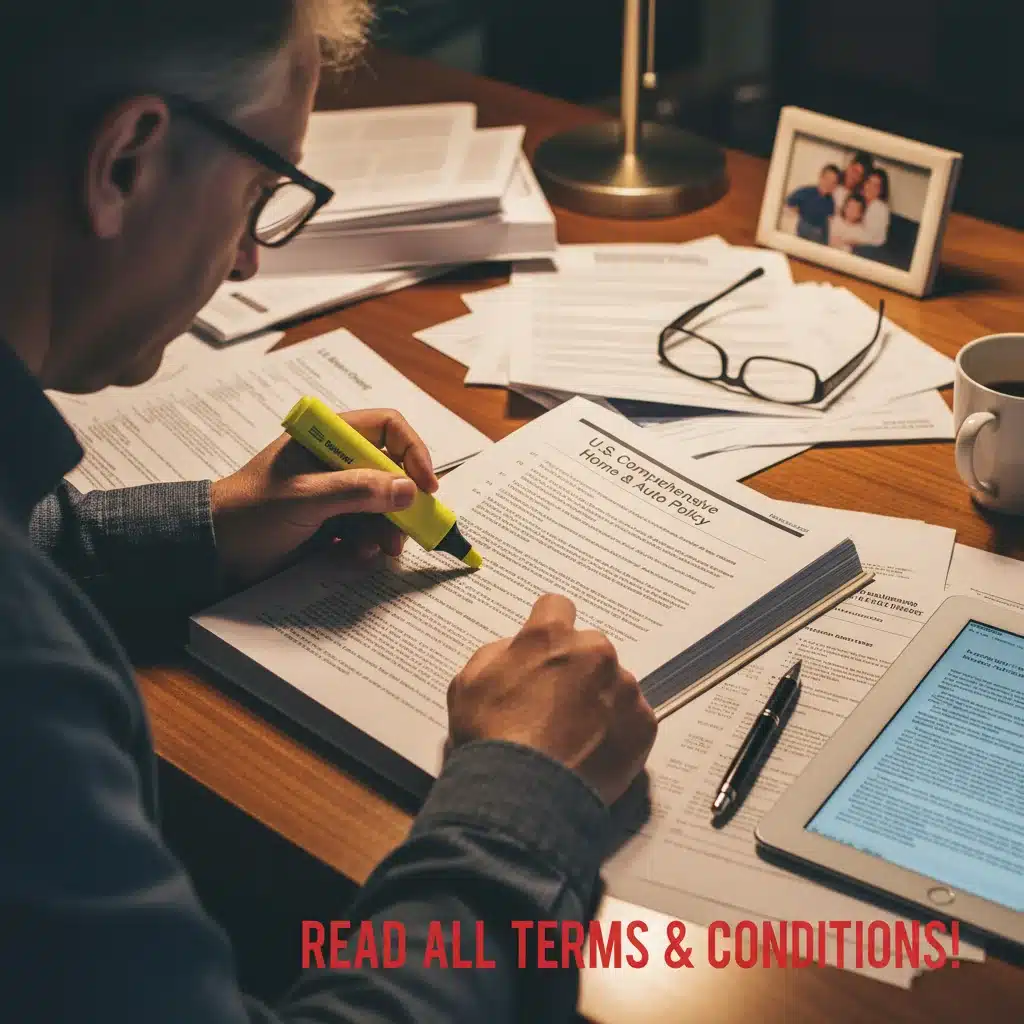
One of the most pervasive and dangerous insurance policy mistakes is the failure to thoroughly read and comprehend the terms and conditions of your policy. Many policyholders view their insurance documents as intimidating, complex legal texts and simply file them away after purchasing coverage. This oversight can have dire consequences when it comes time to file a claim.
Why This Mistake Happens
The sheer volume and legal jargon within insurance policies can be daunting. People often rely on summaries provided by agents or assume standard coverage, without verifying the specifics. In a fast-paced world, taking the time to read a lengthy document page by page seems like a luxury many can’t afford.
Consequences of Not Understanding Your Policy
- Unexpected Exclusions: Your policy might have specific exclusions that you are unaware of. For example, a homeowner’s policy might exclude damage from certain types of floods or earthquakes unless additional coverage (an endorsement) is purchased. If you haven’t read the policy, you won’t know about these gaps until it’s too late.
- Coverage Limits: You might assume you have sufficient coverage, only to find out after a loss that your limits are far lower than the actual cost of repair or replacement. This is particularly common with personal property limits in homeowner’s or renter’s insurance.
- Specific Requirements for Claims: Policies often detail specific steps or timelines for reporting claims, providing documentation, or mitigating further damage. Missing these requirements due to ignorance can lead to claim denial.
- Deductible Surprises: The deductible is the amount you must pay out-of-pocket before your insurance kicks in. Not knowing your deductible can lead to financial shock when you file a claim.
How to Avoid This Insurance Policy Mistake
To prevent this critical insurance policy mistake, make it a priority to read your policy documents in their entirety. Don’t just skim. If you encounter terms you don’t understand, ask your agent for clarification. Consider the following:
- Request a Plain Language Summary: While not a substitute for the full policy, a clear summary can help you grasp the main points.
- Ask Questions: Don’t hesitate to ask your insurance agent about anything unclear. They are there to help you understand your coverage. Ask about specific scenarios: ‘What if X happens? Am I covered?’
- Highlight Key Sections: Focus on coverage limits, deductibles, exclusions, and claims procedures.
- Annual Review: Review your policy annually, especially if there have been significant life changes (e.g., marriage, new home, new car, starting a business) or if your insurer sends updated policy language.
- Keep a Copy Accessible: Store your policy documents in a safe, easily accessible place, both physically and digitally.
Understanding your policy is your responsibility and your most powerful tool in ensuring proper coverage.
Mistake 2: Providing Inaccurate or Incomplete Information
When applying for insurance, the information you provide forms the basis of your policy. Any inaccuracy or omission, whether intentional or accidental, can be classified as a material misrepresentation and is one of the most serious insurance policy mistakes, potentially leading to policy cancellation or claim denial.
Why This Mistake Happens
Sometimes, it’s an honest oversight – forgetting a past medical condition, misremembering a vehicle’s mileage, or not updating your home’s security features. Other times, applicants might intentionally withhold information to secure lower premiums, unaware of the severe repercussions.
Consequences of Inaccurate Information
- Policy Voidance: If the insurer discovers a material misrepresentation, they can deem your policy void from its inception, meaning it’s as if you never had coverage.
- Claim Denial: Even if your policy isn’t voided, a claim related to the misrepresented information will almost certainly be denied. For instance, if you don’t disclose a pre-existing condition and then file a claim for treatment related to it, your health insurer can deny the claim.
- Legal Ramifications: In cases of intentional misrepresentation (fraud), you could face legal penalties in addition to losing coverage.
- Difficulty Obtaining Future Coverage: A history of misrepresentation can make it harder and more expensive to obtain insurance from other providers in the future.
How to Avoid This Insurance Policy Mistake
Accuracy and honesty are paramount. To avoid this critical insurance policy mistake:
- Be Thorough and Honest: When filling out applications, take your time and provide complete and accurate information. If you’re unsure about a question, ask your agent for clarification.
- Disclose All Relevant Information: Err on the side of over-disclosure. It’s better to provide information that turns out to be irrelevant than to omit something crucial.
- Update Your Insurer Promptly: Your circumstances can change. If you get a new pet, install a pool, start a home business, make significant renovations, or change your driving habits, inform your insurer. These changes can affect your risk profile and, consequently, your coverage needs and premiums.
- Review Your Application: Before signing, carefully review the application form to ensure all information is correct.
Transparency builds trust and ensures your policy is based on accurate risk assessment, which is vital for valid claims.
Mistake 3: Neglecting to Update Your Policy as Life Changes
Life is dynamic, and your insurance coverage should be too. One of the common insurance policy mistakes is failing to update your policy to reflect significant life changes. What was adequate coverage five years ago might be woefully insufficient or incorrect today.
Why This Mistake Happens
Policyholders often set up their insurance and then forget about it, assuming it will automatically adjust to their evolving needs. They might not realize that events like home renovations, new assets, or changes in family structure require policy modifications.
Consequences of Not Updating Your Policy
- Underinsurance: If you’ve made significant home improvements, purchased expensive new assets (jewelry, art, electronics), or started a home-based business, your existing coverage limits might not be enough to replace or repair them after a loss. This leads to substantial out-of-pocket expenses.
- Overinsurance (and Wasted Premiums): Conversely, if you sell a valuable item or a car, and don’t remove it from your policy, you could be paying for coverage you no longer need.
- Coverage Gaps: A new marital status, the birth of a child, or a new driver in the household all impact liability and coverage needs. Failing to add a new driver to your auto policy, for instance, could lead to a claim denial if they are involved in an accident.
- Incorrect Beneficiaries: In life insurance, outdated beneficiary information can lead to significant complications and ensure your assets don’t go to your intended recipients.
How to Avoid This Insurance Policy Mistake
Regular policy reviews are essential to prevent this insurance policy mistake. Make it a habit to:
- Schedule Annual Reviews: Set a calendar reminder to review all your insurance policies (home, auto, life, health, umbrella) with your agent at least once a year.
- Notify Your Insurer of Major Life Events: Immediately inform your insurer about:
- Property Changes: Major renovations, additions, new structures (sheds, pools), or substantial new purchases (expensive furniture, electronics, art).
- Family Changes: Marriage, divorce, birth or adoption of children, children getting their driver’s license, children moving out.
- Vehicle Changes: Purchasing a new car, selling an old one, changing primary drivers, or changing how a vehicle is used (e.g., for ride-sharing).
- Business Changes: Starting a home business, even a small one, can have implications for your homeowner’s policy and may require separate business insurance.
- Relocation: Moving to a new address significantly impacts home and auto insurance rates and coverage.
- Maintain an Inventory of Valuables: For homeowner’s insurance, keep an updated inventory of your possessions, especially high-value items, with photos and receipts. This helps ensure adequate coverage and streamlines the claims process.
Proactive communication with your insurer ensures your coverage evolves with your life.
Mistake 4: Not Documenting Damages and Communicating Effectively During a Claim
Once an incident occurs, how you handle the immediate aftermath and your communication with the insurer are critical. Poor documentation and ineffective communication are significant insurance policy mistakes that can hinder your claim.
Why This Mistake Happens
In the stress of an emergency or loss, people often overlook the importance of meticulous documentation. They might also assume the insurer will automatically understand the extent of the damage or the circumstances, leading to vague or incomplete claim reports.
Consequences of Poor Documentation and Communication- Claim Delays: Insufficient evidence or unclear communication forces the insurer to request more information, prolonging the claims process.
- Lower Settlements: Without strong evidence, the insurer might offer a lower settlement than what you’re entitled to, or deny certain aspects of your claim.
- Claim Denial: If you cannot adequately prove the extent of your loss or that it falls within your policy’s coverage, your claim could be denied entirely. For example, if you don’t report damage within the specified timeframe or fail to provide requested evidence.
- Disputes: Lack of clear communication can lead to misunderstandings and disputes between you and your insurer.
How to Avoid This Insurance Policy Mistake
When an incident occurs, act swiftly and systematically to avoid this crucial insurance policy mistake:
- Document Everything Immediately:
- Take Photos and Videos: Capture comprehensive visual evidence of the damage from multiple angles. Document both the overall scene and close-ups of specific damage.
- Create an Inventory: For damaged or lost personal property, create a detailed list including descriptions, estimated value, and, if possible, purchase dates and receipts.
- Keep Records: Save all receipts for temporary repairs, emergency lodging, or other expenses incurred due to the incident.
- Report the Claim Promptly: Contact your insurance company as soon as safely possible after an incident. Delays can be used against you.
- Be Clear and Factual: When describing the incident to your insurer, stick to the facts. Avoid speculation, exaggeration, or admitting fault.
- Maintain a Communication Log: Keep a detailed record of all communications with your insurance company, including dates, times, names of representatives, and summaries of conversations. Follow up phone calls with emails to create a paper trail.
- Cooperate with Adjusters: Be cooperative and provide all requested information to the insurance adjuster. However, remember you don’t have to accept the first offer if it seems insufficient.
- Mitigate Further Damage: Take reasonable steps to prevent further damage (e.g., covering a broken window, turning off a leaking pipe). Document these actions.
Thorough documentation and clear communication are your strongest allies in a successful claims process.
Mistake 5: Letting Your Policy Lapse Due to Non-Payment
Perhaps the most straightforward yet devastating of all insurance policy mistakes is allowing your policy to lapse because of unpaid premiums. An insurance policy is a contract, and consistent premium payment is your part of that agreement. Fail to uphold it, and your coverage vanishes.
Why This Mistake Happens
Life gets busy, and sometimes bills get overlooked. Financial difficulties, changes in banking information, or simply forgetting a payment due date are common reasons. Some policyholders might also intentionally stop paying, believing they no longer need the coverage, without realizing the risks.
Consequences of a Lapsed Policy
- No Coverage: The most immediate and severe consequence is having no coverage. If an incident occurs while your policy is lapsed, your insurer is not obligated to pay for any damages or losses. This leaves you fully exposed to financial ruin.
- Reinstatement Difficulties: While some insurers offer a grace period or allow reinstatement, it’s not guaranteed. You might have to reapply for coverage, which could involve new underwriting, higher premiums, or even denial if your risk profile has changed.
- Higher Premiums in the Future: A history of lapsed policies can be viewed negatively by insurers, potentially leading to higher premiums when you seek new coverage.
- Legal Requirements: For auto insurance, letting your policy lapse means driving uninsured, which is illegal in most U.S. states and can result in fines, license suspension, or even jail time.
- Loss of Continuity Benefits: Some policies offer loyalty discounts or continuous coverage benefits that are lost when a policy lapses.
How to Avoid This Insurance Policy Mistake
Preventing a policy lapse is simple but requires diligence:
- Set Up Automatic Payments: This is the easiest way to ensure premiums are paid on time. Link payments to a reliable bank account or credit card.
- Enable Payment Reminders: Many insurers offer email or SMS reminders before a payment is due. Utilize these services.
- Calendar Alerts: Set personal reminders on your phone or calendar for payment due dates.
- Review Bank Statements: Regularly check your bank or credit card statements to ensure automatic payments are going through correctly.
- Communicate Financial Hardship: If you are facing financial difficulties, contact your insurer immediately. They might be able to offer options like payment plans, temporary premium reductions, or adjustments to your coverage to make it more affordable. Don’t wait until after a payment is missed.
- Understand Grace Periods: Know if your policy has a grace period (a short period after the due date during which you can still pay without losing coverage) and how long it lasts. However, don’t rely on it.

Consistent payment ensures your safety net remains intact when you need it most.
Beyond the Big Five: Other Important Considerations for U.S. Policyholders
While the five mistakes outlined above are critical, successful insurance management involves a broader perspective. Here are a few additional considerations to ensure you’re fully protected:
Understanding Your Deductibles and Limits
It bears repeating: know your deductibles and coverage limits. A high deductible can lower your premium but means more out-of-pocket expense before coverage kicks in. Are you comfortable with that? Are your limits sufficient to cover a total loss? These are questions to revisit regularly.
Considering Umbrella Insurance
For many U.S. policyholders, especially those with significant assets, standard liability limits on home and auto policies might not be enough. An umbrella insurance policy provides additional liability coverage above your existing policies, offering an extra layer of protection against large lawsuits that could otherwise wipe out your savings and future earnings.
Reviewing Your Beneficiaries
For life insurance and other policies with beneficiaries, ensure these designations are current. Life events like marriage, divorce, or the birth of children should prompt an immediate review and update of your beneficiaries to ensure your wishes are honored.
Shopping Around Periodically
While loyalty can sometimes bring benefits, it’s wise to shop around for insurance quotes every few years. Your needs change, and so do the offerings and pricing of various insurers. You might find better coverage or lower premiums by comparing options, but always compare apples to apples when evaluating policies.
Keeping Records of All Communications
As mentioned in Mistake 4, a meticulous record of all interactions with your insurer – calls, emails, letters, policy documents – is invaluable. This paper trail can be crucial if a dispute arises regarding your coverage or a claim.
Seeking Professional Advice
If you find the world of insurance overwhelming, don’t hesitate to consult with an independent insurance agent or a financial advisor. They can help you understand your needs, compare policies from different carriers, and ensure you have comprehensive coverage tailored to your specific situation.
The Bottom Line: Be an Informed and Proactive Policyholder
Insurance is not a ‘set it and forget it’ product. It requires active management and a clear understanding of its complexities. By avoiding these common insurance policy mistakes, U.S. policyholders can significantly enhance their financial security and ensure their insurance truly serves its purpose when it’s needed most.
Remember, your insurance policy is a legally binding contract. The more informed and proactive you are, the better equipped you’ll be to navigate claims, understand your coverage, and ultimately protect your assets and your peace of mind. Take the time to understand your policy, keep your information updated, pay your premiums diligently, and document everything. Your financial future depends on it.