Global Economic Trends 2026: Impact on U.S. Insurance Premiums
Insider Knowledge: How Global Economic Trends in 2026 are Reshaping U.S. Insurance Premiums by 10-15%
The global economic landscape is a dynamic, interconnected web, and its shifts reverberate across industries worldwide. For individuals and businesses in the United States, understanding these shifts is not merely an academic exercise; it’s a necessity, especially when it comes to financial planning and risk management. One area poised for significant impact in the coming years is the U.S. insurance market. As we look towards 2026, a confluence of global economic trends is projected to reshape U.S. insurance premiums, with expert analyses indicating a potential increase of 10-15%. This article delves deep into the intricate relationship between global economic insurance factors and domestic policy costs, providing an insider’s perspective on what to expect and how to prepare.
The phrase ‘global economic insurance’ encapsulates a crucial concept: that the stability and pricing within national insurance markets are intrinsically linked to broader international financial health. Everything from inflation rates in major economies to geopolitical stability, supply chain disruptions, and technological advancements plays a role. These aren’t isolated incidents but rather domino effects that eventually land on your annual insurance statement. The predicted 10-15% increase is not an arbitrary figure; it’s a data-driven forecast based on the trajectory of several key indicators that demand our attention.
Understanding these dynamics is paramount for consumers, businesses, and insurance providers alike. For consumers, it means anticipating higher costs for auto, home, health, and life insurance. For businesses, it translates to increased operational expenses for liability, property, and specialized coverage. Insurance companies, on their part, must adapt their underwriting models, investment strategies, and risk assessment frameworks to navigate this evolving environment successfully. This comprehensive guide will break down the primary global economic trends influencing this shift, explore their direct and indirect impacts on various insurance sectors, and offer actionable insights for mitigating potential financial strain.
The Macroeconomic Undercurrents Driving Premium Increases
Several significant macroeconomic factors are converging to create this anticipated shift in U.S. insurance premiums. Each of these elements, while distinct, interacts with others to amplify their collective effect on the market. Let’s explore the most prominent ones:
Persistent Global Inflation
Inflation is arguably the most pervasive economic challenge currently facing the global economy. While central banks worldwide have taken measures to curb it, inflationary pressures, particularly in key sectors, are proving stubborn. For the insurance industry, inflation impacts premiums in several ways. Firstly, it increases the cost of repairs and replacements. If a car is totaled, the cost of new parts and labor for a replacement vehicle rises. Similarly, rebuilding a home after a disaster becomes more expensive due to higher material and construction labor costs. These elevated claims costs directly translate to higher premiums as insurers adjust their pricing to maintain profitability and solvency.
Moreover, inflation erodes the real value of an insurer’s investment portfolio. Insurance companies rely heavily on investment income from the premiums they collect to pay out future claims. If inflation is high, the returns on these investments might not keep pace, forcing insurers to raise premiums to compensate for the reduced purchasing power of their reserves. The global nature of supply chains means that inflationary pressures in one region can quickly cascade, affecting the cost of goods and services globally, and thus, the cost of claims for U.S. insurers.
Rising Interest Rates and Investment Returns
In response to persistent inflation, central banks globally, including the U.S. Federal Reserve, have embarked on a path of interest rate hikes. While higher interest rates can be beneficial for insurers in the long run by increasing investment returns on their reserves, there’s a delicate balance. In the short to medium term, rapidly rising rates can create volatility in bond markets, which are a cornerstone of insurer investment portfolios. Existing bond holdings might decrease in value, impacting an insurer’s balance sheet.
However, the primary impact of rising interest rates on premiums is often indirect. Higher rates can slow economic growth, potentially leading to increased unemployment or reduced consumer spending, which might affect demand for certain types of insurance. More directly, the cost of capital for insurers increases, which can be passed on to policyholders. Furthermore, for some types of insurance, such as annuities or long-term care, interest rates play a direct role in pricing models, as they determine the discount rate for future liabilities. As global economic insurance markets adjust to these new interest rate regimes, the actuarial calculations underpinning premium costs are being recalibrated.
Supply Chain Disruptions and Geopolitical Volatility
The past few years have highlighted the fragility of global supply chains. From semiconductor shortages impacting auto manufacturing to disruptions in energy markets, these issues have a direct bearing on insurance. When supply chains are disrupted, the cost of repairs and replacements for insured assets skyrockets. For instance, a shortage of specific parts can lead to longer repair times and higher labor costs, increasing the total payout for auto and property claims.
Geopolitical events, such as regional conflicts, trade disputes, and political instability, exacerbate these supply chain vulnerabilities. They can lead to increased commodity prices, shipping delays, and heightened risks for international businesses, which then translates into higher premiums for marine, cargo, political risk, and even cyber insurance. The interconnectedness of the global economy means that a conflict in one part of the world can lead to energy price spikes that affect transportation costs for every industry, including those that service insurance claims. These factors contribute significantly to the anticipated rise in global economic insurance costs.
Climate Change and Catastrophic Losses
While not purely an ‘economic’ trend in the traditional sense, the escalating impact of climate change has profound economic consequences for the insurance industry. The increasing frequency and severity of extreme weather events – hurricanes, wildfires, floods, and droughts – are leading to unprecedented catastrophic losses. Insurers are paying out more in claims than ever before, particularly in regions prone to these events.
The economic burden of rebuilding after these disasters, coupled with inflationary pressures on construction costs, creates a perfect storm for premium increases. Insurers are forced to reassess their risk models, adjust their exposure in high-risk areas, and ultimately pass on these increased costs to policyholders through higher premiums. This trend is global, with insurers around the world grappling with similar challenges, leading to a collective re-evaluation of climate-related risks and their financial implications for global economic insurance markets.
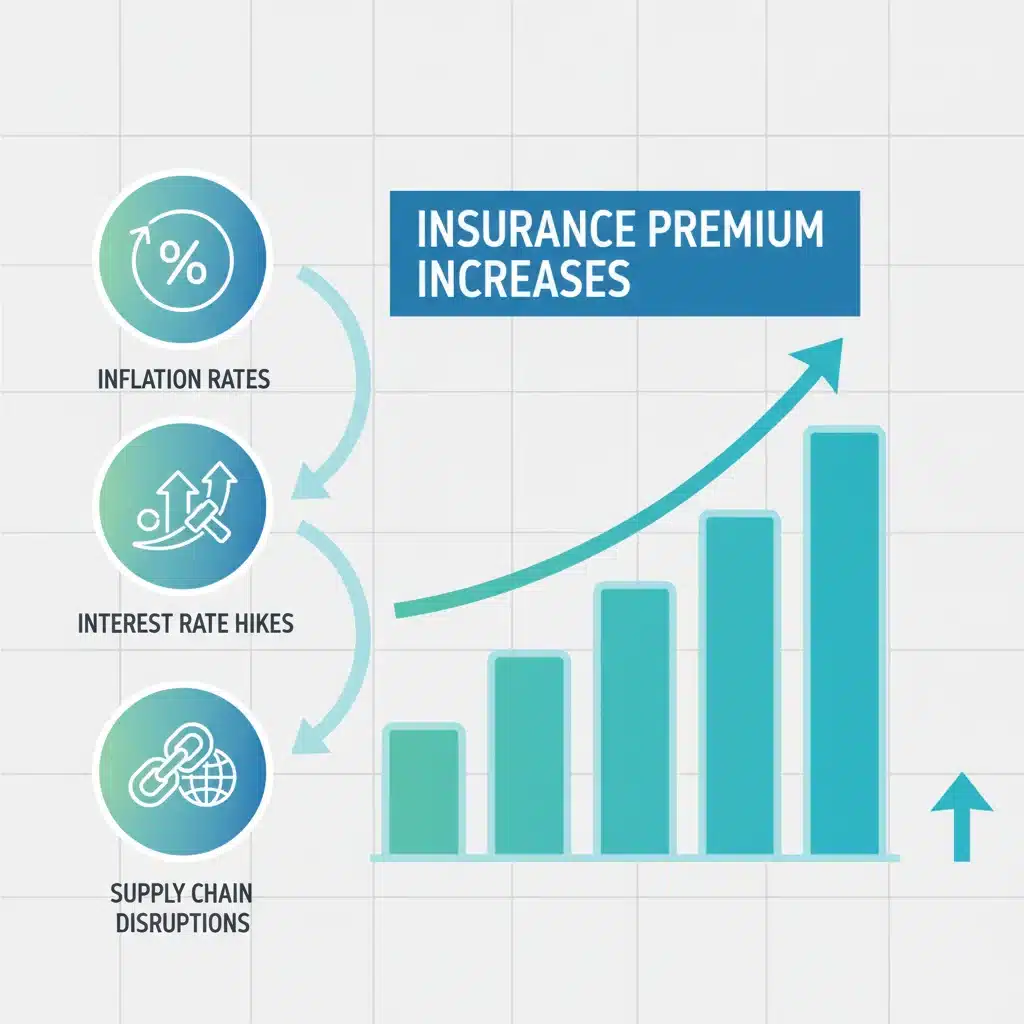
These macroeconomic undercurrents are not just abstract concepts; they are the fundamental forces that will drive the 10-15% increase in U.S. insurance premiums by 2026. Understanding their interplay is the first step toward preparing for the financial implications.
Sector-Specific Impacts: Where Will You Feel It Most?
The projected increase in premiums will not be uniform across all types of insurance. Some sectors are inherently more exposed to these global economic trends than others. Here’s a breakdown of where you might feel the impact most significantly:
Auto Insurance
Auto insurance is highly susceptible to inflation and supply chain issues. The cost of new and used vehicles has surged, and so have the costs of parts and labor for repairs. Modern vehicles, with their complex electronics and specialized components, are more expensive to repair than older models. Supply chain bottlenecks for semiconductors and other parts mean longer repair times, increasing the cost of rental car coverage and overall claim expenses. Expect a noticeable rise in auto premiums as insurers grapple with these escalating costs.
Homeowner’s Insurance
Homeowner’s insurance premiums are being hit from multiple angles. Firstly, the rising cost of construction materials and labor due to inflation means that rebuilding a home after damage is significantly more expensive. Secondly, the increasing frequency and severity of natural disasters, driven by climate change, are leading to higher payouts for insurers. Regions prone to wildfires, hurricanes, or floods are already experiencing substantial premium increases, and this trend is expected to continue and intensify. The confluence of these factors makes homeowner’s insurance a prime candidate for significant premium hikes.
Commercial Property and Business Interruption Insurance
Businesses face similar challenges to homeowners regarding property insurance, but with added complexities. Commercial properties are often larger and more complex to rebuild. Furthermore, business interruption insurance, which covers lost income due to property damage, is impacted by the duration of repairs, which can be extended by supply chain delays. Geopolitical risks can also affect businesses with international operations, increasing the cost of specialized coverage like political risk insurance. Small and large businesses alike should prepare for higher operating costs due to increased insurance expenses.
Health and Life Insurance
While not as directly tied to property repair costs, health and life insurance are still influenced by global economic trends. Inflation can drive up healthcare costs, affecting medical claims and ultimately health insurance premiums. For life insurance, interest rates play a significant role in pricing, particularly for whole life and universal life policies, which have an investment component. Volatility in financial markets due to global economic uncertainty can also impact the investment portfolios of life insurers, leading to adjustments in policy pricing. Furthermore, the cost of medical supplies and pharmaceuticals, often sourced globally, is subject to inflationary pressures and supply chain disruptions, indirectly affecting health insurance costs.
Navigating the New Landscape: Strategies for Individuals and Businesses
Given the anticipated 10-15% increase in U.S. insurance premiums by 2026, proactive measures are essential. Both individuals and businesses can implement strategies to mitigate the impact of these rising costs.
For Individuals:
- Review and Compare Policies Regularly: Don’t let your insurance policies auto-renew without reviewing them. Shop around for quotes from different providers annually. Prices can vary significantly between insurers for similar coverage.
- Increase Deductibles: A higher deductible means you pay more out-of-pocket before your insurance kicks in, but it can significantly lower your premium. Evaluate if you can comfortably cover a higher deductible in case of a claim.
- Bundle Policies: Many insurers offer discounts for bundling multiple policies (e.g., auto and home insurance) with the same provider.
- Improve Risk Profile: For auto insurance, maintain a clean driving record. For home insurance, invest in home security systems, smart home technology, and disaster mitigation measures (e.g., reinforcing roofs, installing water sensors) to potentially qualify for discounts.
- Consider Usage-Based Insurance: For auto insurance, telematics programs that monitor your driving habits can offer discounts for safe drivers.
- Maintain Good Credit: In many states, your credit score can influence your insurance premiums. A strong credit history often translates to lower rates.
- Implement Robust Risk Management: Proactive risk management can significantly reduce claims. This includes workplace safety programs, cybersecurity measures, and disaster preparedness plans. Insurers often offer lower premiums to businesses with demonstrated strong risk management practices.
- Work with an Experienced Broker: An independent insurance broker can help businesses navigate the complex market, compare quotes from multiple carriers, and find the most cost-effective coverage solutions tailored to their specific needs.
- Explore Captive Insurance: Larger businesses might consider forming a captive insurance company, which allows them to self-insure certain risks, potentially reducing reliance on traditional market insurance and gaining more control over costs.
- Review Coverage Annually: Business needs evolve. Regularly review your policies to ensure you’re not over-insured or under-insured. Adjust coverage limits and types as necessary.
- Invest in Technology for Loss Prevention: Utilizing IoT sensors for leak detection in commercial properties, advanced telematics for fleet management, or AI-driven cybersecurity solutions can reduce the likelihood of claims and potentially lead to lower premiums.
- Negotiate Terms: Don’t be afraid to negotiate with your insurer, especially if you have a strong claims history and a proactive approach to risk mitigation.
For Businesses:

The emphasis on global economic insurance factors means that businesses with international operations must also consider currency fluctuations, political stability in their operating regions, and the resilience of their global supply chains when assessing their insurance needs and costs.
The Role of Technology and Data Analytics
In the face of these escalating global economic insurance challenges, the insurance industry is increasingly turning to technology and data analytics. Advanced analytics, artificial intelligence (AI), and machine learning (ML) are being leveraged to gain deeper insights into risk, improve underwriting accuracy, and streamline claims processing. This technological shift is crucial for insurers to remain competitive and solvent in a volatile economic climate.
For instance, predictive analytics can help insurers better forecast catastrophic events, understand the impact of climate change on specific geographic areas, and price policies more accurately. Telematics in auto insurance allows for personalized pricing based on actual driving behavior, potentially rewarding safer drivers with lower premiums. In property insurance, satellite imagery and drone technology can assess property damage more efficiently, speeding up claims processing and reducing administrative costs.
Furthermore, the rise of Insurtech companies is disrupting traditional models, offering innovative solutions that leverage data to create more flexible and tailored insurance products. These advancements, while not directly offsetting the macroeconomic pressures, provide tools for insurers to manage risks more effectively and, in some cases, offer more competitive pricing to consumers who embrace these technologies. The future of global economic insurance will undoubtedly be shaped by how effectively the industry integrates these technological innovations.
Conclusion: Preparing for 2026 and Beyond
The forecast of a 10-15% increase in U.S. insurance premiums by 2026, driven by an intricate interplay of global economic trends, serves as a critical warning and a call to action. Persistent inflation, rising interest rates, fragile supply chains, geopolitical instability, and the escalating costs of climate change are not abstract concepts; they are tangible forces that will directly impact the financial well-being of individuals and the operational costs of businesses.
While these challenges are significant, they are not insurmountable. By understanding the underlying drivers, proactively reviewing existing policies, exploring mitigation strategies, and embracing technological advancements, consumers and businesses can better prepare for the evolving insurance landscape. Engaging with financial advisors and insurance professionals who possess an in-depth understanding of global economic insurance dynamics will be invaluable in making informed decisions.
The coming years will demand greater vigilance and adaptability from all stakeholders in the insurance ecosystem. By staying informed, planning strategically, and leveraging available tools, it is possible to navigate the anticipated premium increases and secure adequate protection in an increasingly complex and interconnected world. The future of U.S. insurance premiums is inextricably linked to the health of the global economy, and by understanding this connection, we can better safeguard our financial futures.