
The Financial Impact of Emerging Technologies: A 2026 Market Analysis on Insurance Cost Reductions by Up to 20%
The insurance industry, traditionally perceived as slow to adapt, is on the cusp of a profound transformation. Driven by rapid advancements in technology, the sector is bracing for significant operational shifts and, more importantly, substantial cost reductions. Our comprehensive 2026 market analysis reveals that emerging tech insurance innovations are poised to slash operational costs by up to 20% in the coming years. This isn’t merely a projection; it’s a meticulously researched forecast based on current adoption rates, technological maturity, and the inherent efficiencies these technologies introduce.
For decades, insurance operations have been burdened by manual processes, legacy systems, and a reactive approach to risk. However, the advent of Artificial Intelligence (AI), the Internet of Things (IoT), blockchain, and advanced data analytics is rewriting the rulebook. These emerging tech insurance solutions are not just incremental improvements; they are foundational changes that redefine how policies are underwritten, claims are processed, risks are managed, and customers are engaged. The financial implications are immense, promising a leaner, more efficient, and ultimately more profitable industry.
This article delves into the core technologies driving this change, provides a detailed market analysis of their expected impact by 2026, and outlines the strategies insurance companies can adopt to capitalize on these opportunities. We will explore how AI is automating complex tasks, how IoT is enabling proactive risk management, and how blockchain is enhancing transparency and security, all contributing to unprecedented cost efficiencies in the emerging tech insurance landscape.
Understanding the Drivers: Key Emerging Technologies Reshaping Insurance
The journey towards a 20% cost reduction by 2026 is paved by several critical emerging tech insurance innovations. Each technology plays a distinct yet interconnected role in streamlining operations, enhancing decision-making, and improving customer satisfaction, all while driving down expenditures.
Artificial Intelligence (AI) and Machine Learning (ML)
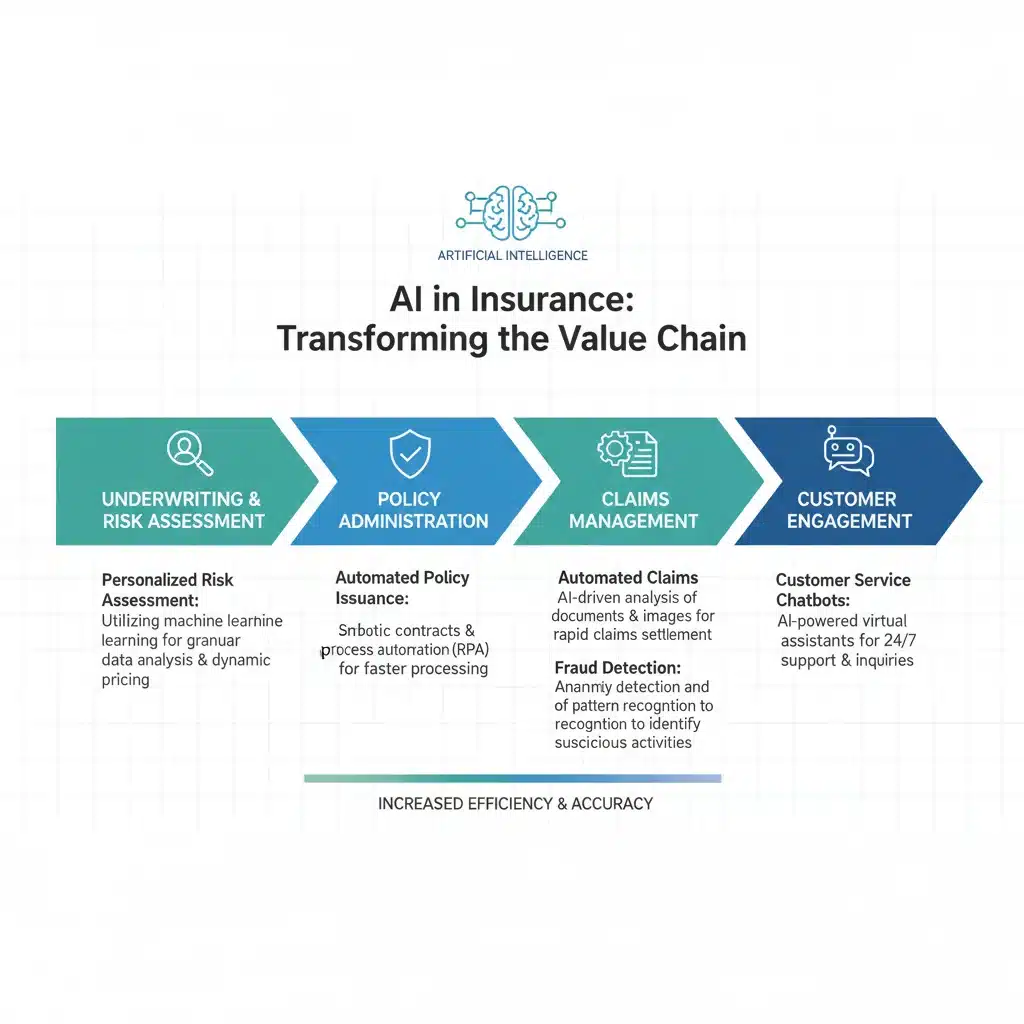
AI and ML are perhaps the most impactful technologies in the emerging tech insurance arsenal. Their ability to process vast amounts of data, identify patterns, and make predictions is revolutionizing nearly every facet of the insurance value chain. From automated underwriting to predictive analytics for claims, AI is eliminating manual effort and reducing human error.
- Automated Underwriting: AI algorithms can analyze customer data, historical claims, and external factors in seconds, generating highly accurate risk profiles and policy prices. This significantly reduces the time and resources traditionally required for underwriting, leading to faster policy issuance and lower administrative costs. The efficiency gains here are substantial, directly contributing to the projected cost savings in the emerging tech insurance sector.
- Enhanced Claims Processing: AI-powered systems can automate initial claims intake, verify information, detect fraud, and even estimate damages. This accelerates the claims lifecycle, reduces processing costs, and improves customer satisfaction. Insurers are leveraging AI to analyze images and videos for property damage assessment, further minimizing manual inspections and associated expenses.
- Personalized Customer Service: AI chatbots and virtual assistants are handling routine customer inquiries, freeing up human agents for more complex issues. This not only improves response times but also significantly lowers customer service operational costs, a key factor in emerging tech insurance efficiency.
- Fraud Detection: ML models are highly effective at identifying unusual patterns and anomalies in claims data that might indicate fraudulent activity. By flagging suspicious claims early, insurers can prevent significant financial losses, directly impacting their bottom line.
The integration of AI into insurance operations is not just about automation; it’s about intelligent automation that learns and adapts, continuously optimizing processes and uncovering new efficiencies. This intelligent approach is a cornerstone of the 20% cost reduction target for emerging tech insurance.
Internet of Things (IoT)
The IoT involves a network of physical devices embedded with sensors, software, and other technologies that connect and exchange data over the internet. In insurance, IoT is shifting the paradigm from reactive protection to proactive prevention.
- Usage-Based Insurance (UBI): Telematics devices in vehicles provide real-time data on driving behavior, allowing insurers to offer personalized premiums based on actual risk. This encourages safer driving, reduces accidents, and lowers claims payouts. Similar concepts apply to health insurance with wearables tracking activity and health metrics.
- Property Monitoring: Smart home devices (e.g., leak detectors, smart smoke alarms, security cameras) can alert homeowners and insurers to potential issues before they escalate into costly claims. This proactive approach significantly reduces property damage and associated repair costs, a major contributor to emerging tech insurance savings.
- Industrial IoT (IIoT): In commercial insurance, sensors on machinery and infrastructure can monitor performance and predict failures, enabling preventative maintenance and reducing business interruption claims. This is particularly valuable for industries with high-value assets.
IoT’s ability to provide real-time, granular data transforms risk assessment and management. Insurers can move from broad statistical models to highly individualized risk profiles, fostering fairer pricing and reducing overall claims exposure, which is paramount for achieving the projected cost savings in emerging tech insurance.
Blockchain Technology
Blockchain, a decentralized and immutable ledger technology, offers unprecedented levels of transparency, security, and efficiency for insurance processes.
- Smart Contracts: Blockchain-based smart contracts can automate policy issuance, claims payouts, and premium collections based on predefined conditions. Once conditions are met, the contract executes automatically, eliminating manual intervention and reducing administrative overhead. This automation is a key factor in improving efficiency within emerging tech insurance frameworks.
- Fraud Reduction: The immutable nature of blockchain makes it extremely difficult to alter records, significantly reducing opportunities for fraud in claims and policy management. Shared ledgers among multiple insurers can also prevent duplicate claims across different providers.
- Enhanced Data Security and Privacy: Blockchain’s cryptographic security ensures that sensitive customer data is protected, while its decentralized nature reduces single points of failure. This builds trust and streamlines data sharing among authorized parties, crucial for the secure operation of emerging tech insurance solutions.
- Reinsurance and Subrogation: Blockchain can streamline complex reinsurance processes and improve the efficiency of subrogation by providing a transparent and verifiable record of policies and claims across multiple parties.
The trustless and transparent environment fostered by blockchain is set to reduce friction and costs associated with verification, reconciliation, and dispute resolution across the insurance ecosystem, making it a powerful enabler for emerging tech insurance cost reduction.
Advanced Data Analytics and Cloud Computing
While not new, the synergy of advanced data analytics with cloud computing amplifies the power of AI, IoT, and blockchain. Cloud platforms provide the scalable infrastructure needed to store and process the massive datasets generated by these technologies, while advanced analytics tools extract actionable insights.
- Predictive Modeling: Beyond fraud detection, analytics can predict customer churn, identify cross-selling opportunities, and forecast market trends, allowing insurers to make more informed business decisions.
- Operational Optimization: By analyzing operational data, insurers can identify bottlenecks, inefficiencies, and areas for improvement, leading to streamlined workflows and reduced costs. This continuous optimization is vital for sustained cost savings in emerging tech insurance.
- Scalability and Cost-Efficiency: Cloud computing allows insurers to scale their IT infrastructure up or down as needed, paying only for the resources they consume. This eliminates the need for expensive on-premise hardware and maintenance, directly contributing to IT cost reductions.
The combination of robust data infrastructure and sophisticated analytical capabilities provides the intelligence layer necessary to fully harness the potential of other emerging tech insurance innovations.
2026 Market Analysis: Projecting the 20% Cost Reduction
Our analysis indicates that a 20% reduction in operational costs by 2026 is an achievable, albeit ambitious, goal for the insurance industry. This projection is not uniform across all types of insurance or all companies; rather, it represents an average potential for those embracing emerging tech insurance comprehensively.
Breakdown of Expected Savings
The 20% cost reduction will likely be distributed across several key areas:
- Administrative and Operational Efficiencies (8-10%): This includes savings from automated underwriting, policy administration, customer service (chatbots), and back-office processes. AI and blockchain are primary drivers here. The reduction in manual labor and error rates will be significant.
- Claims Management (5-7%): Improved fraud detection through AI/ML, faster processing via smart contracts, and proactive risk mitigation through IoT will lead to fewer, smaller, and more efficiently handled claims. This is a critical area for emerging tech insurance impact.
- Risk Management and Prevention (3-5%): IoT-enabled preventative measures will reduce the frequency and severity of incidents, lowering overall claims payouts. Better data analytics will also lead to more accurate pricing, reducing adverse selection.
- IT Infrastructure and Data Management (2-3%): Migration to cloud platforms and optimized data storage/processing will yield savings in hardware, software licenses, and IT personnel.
These figures are conservative estimates, and early adopters who fully integrate these technologies across their enterprise may see even greater efficiencies. The competitive landscape will likely compel even traditional insurers to invest heavily in emerging tech insurance to remain viable.
Factors Influencing Adoption and Impact
Several factors will dictate the pace and extent of these cost reductions:
- Regulatory Environment: Supportive regulations around data privacy, AI ethics, and digital contracts will accelerate adoption. Conversely, overly restrictive policies could slow progress.
- Talent Acquisition and Upskilling: Insurers need to invest in attracting and training talent with expertise in AI, data science, blockchain, and IoT. A skilled workforce is crucial for effective implementation of emerging tech insurance solutions.
- Legacy System Integration: Integrating new technologies with existing legacy IT infrastructure is a significant challenge. Companies that can bridge this gap effectively will gain a competitive advantage.
- Customer Acceptance: While customers generally welcome faster service and personalized products, concerns about data privacy and algorithmic bias must be addressed transparently.
- Investment Capital: Significant upfront investment is required to implement these technologies. Companies with strong financial backing or a clear ROI strategy will be better positioned.
The convergence of these factors will shape the emerging tech insurance landscape and determine which companies successfully achieve the projected cost reductions.

Case Studies and Early Successes
While the 20% reduction is a 2026 projection, many insurers are already seeing tangible benefits from adopting emerging tech insurance. These early successes provide a blueprint for broader industry adoption:
- Lemonade: This insurtech startup has built its entire model around AI and behavioral economics. Their AI chatbot, ‘Maya,’ handles policy sales and claims processing, often settling claims in minutes. This hyper-efficient, digital-first approach has dramatically reduced their operational overhead compared to traditional insurers.
- Progressive (Snapshot Program): A pioneer in UBI, Progressive’s Snapshot program uses telematics to collect driving data, offering personalized rates. This has not only attracted safer drivers but also provided valuable data to refine their risk models, leading to more accurate pricing and reduced claims.
- AXA (Fizzy): AXA launched Fizzy, a flight delay insurance product based on blockchain smart contracts. If a flight is delayed by more than two hours, the payout is automatically triggered and processed, without the customer needing to file a claim. This eliminates administrative costs and enhances customer experience, showcasing the power of emerging tech insurance.
- Zurich Insurance (AI for Claims): Zurich has implemented AI for initial claims assessment and fraud detection, significantly speeding up processing times and reducing the incidence of fraudulent claims. Their investment in machine learning models is yielding substantial returns in efficiency.
These examples underscore that the theoretical benefits of emerging tech insurance are already being realized in practice, paving the way for widespread industry transformation.
Strategies for Insurers to Capitalize on Emerging Technologies
To achieve the projected 20% cost reduction by 2026, insurers must adopt a strategic and holistic approach to technology integration. It’s not enough to simply implement individual solutions; a comprehensive digital transformation is required.
1. Develop a Clear Digital Transformation Roadmap
Companies must define a clear vision for how emerging tech insurance will integrate into their core business processes. This roadmap should prioritize initiatives based on potential ROI, ease of implementation, and strategic alignment. It should encompass not just technology deployment but also organizational change management, talent development, and cultural shifts.
2. Invest in Data Infrastructure and Analytics Capabilities
The success of AI, IoT, and blockchain hinges on high-quality data. Insurers need to invest in robust data governance frameworks, secure cloud infrastructure, and advanced analytics tools to collect, process, and derive insights from vast datasets. A strong data foundation is non-negotiable for effective emerging tech insurance implementation.
3. Foster a Culture of Innovation and Experimentation
Encourage employees to explore new technologies and ideas. Create innovation labs or partnerships with insurtech startups to test new concepts quickly and iteratively. A willingness to experiment, learn from failures, and adapt is crucial in a rapidly evolving emerging tech insurance landscape.
4. Prioritize Cybersecurity and Data Privacy
As more processes become digital and data-driven, the risk of cyberattacks increases. Insurers must implement robust cybersecurity measures and adhere to stringent data privacy regulations (e.g., GDPR, CCPA). Building customer trust in data handling is paramount for successful emerging tech insurance adoption.
5. Strategic Partnerships and Ecosystem Building
No single insurer can develop all the necessary technologies in-house. Forming strategic partnerships with tech providers, insurtech startups, and even other insurers can accelerate innovation and share the burden of investment. Participating in industry consortia for blockchain or data-sharing initiatives can also be highly beneficial for emerging tech insurance advancement.
6. Talent Upskilling and Reskilling
The workforce needs to evolve alongside technology. Invest in training programs to upskill existing employees in areas like data science, AI ethics, and cloud management. Attract new talent with specialized technical skills to drive the emerging tech insurance agenda forward.
Challenges and Considerations
While the opportunities are significant, implementing emerging tech insurance solutions comes with its own set of challenges:
- Integration with Legacy Systems: Many insurers operate on decades-old IT infrastructure. Integrating new technologies without disrupting existing operations is a complex and costly endeavor.
- Data Silos: Data is often fragmented across different departments and systems, making it difficult to create a unified view necessary for advanced analytics.
- Regulatory Hurdles: The regulatory landscape for AI and blockchain is still evolving, creating uncertainty for insurers regarding compliance and ethical use.
- Ethical Concerns and Bias: AI algorithms can perpetuate or amplify existing biases if not carefully designed and monitored, leading to unfair outcomes for certain customer segments.
- Initial Investment: The upfront costs for developing or acquiring new technologies and overhauling IT infrastructure can be substantial, requiring a strong business case and executive buy-in.
Addressing these challenges proactively will be crucial for insurers aiming to harness the full potential of emerging tech insurance and achieve their cost reduction targets.
Conclusion: The Future of Insurance is Technologically Driven
The insurance industry is at an inflection point. The convergence of AI, IoT, blockchain, and advanced analytics is not just optimizing existing processes; it is fundamentally redefining the nature of insurance itself. Our 2026 market analysis strongly indicates that companies embracing these emerging tech insurance innovations can realistically expect to see operational cost reductions of up to 20%.
This transformation promises not only financial benefits for insurers but also improved customer experiences, more personalized products, and a more resilient and responsive industry. The path to achieving these savings requires strategic vision, significant investment, a commitment to innovation, and a proactive approach to managing the associated challenges.
For insurers willing to embark on this journey, the future is bright, offering a competitive edge and a sustainable business model in an increasingly digital world. The time to invest in emerging tech insurance is now, to secure a prosperous and efficient future.