Deductible Dilemmas: Choosing the Right Amount to Save 25% Annually on Your Insurance Premiums

Deductible Dilemmas: Choosing the Right Amount to Save 25% Annually on Your Insurance Premiums
In the complex world of insurance, terms like ‘deductible’ often evoke a sense of confusion or dread. Yet, understanding and strategically managing your insurance deductible can be one of the most powerful tools in your financial arsenal, potentially saving you a significant amount – up to 25% annually – on your insurance premiums. This comprehensive guide will demystify the insurance deductible strategy, helping you make informed decisions that protect your assets without breaking the bank.
What is an Insurance Deductible and Why Does it Matter?
At its core, an insurance deductible is the amount of money you, the policyholder, must pay out-of-pocket before your insurance company begins to pay for a covered loss. Think of it as your agreed-upon share of the risk. Once you meet your deductible, your insurer will cover the remaining eligible costs up to your policy’s limits. This fundamental concept applies across various types of insurance, including auto, home, and health insurance.
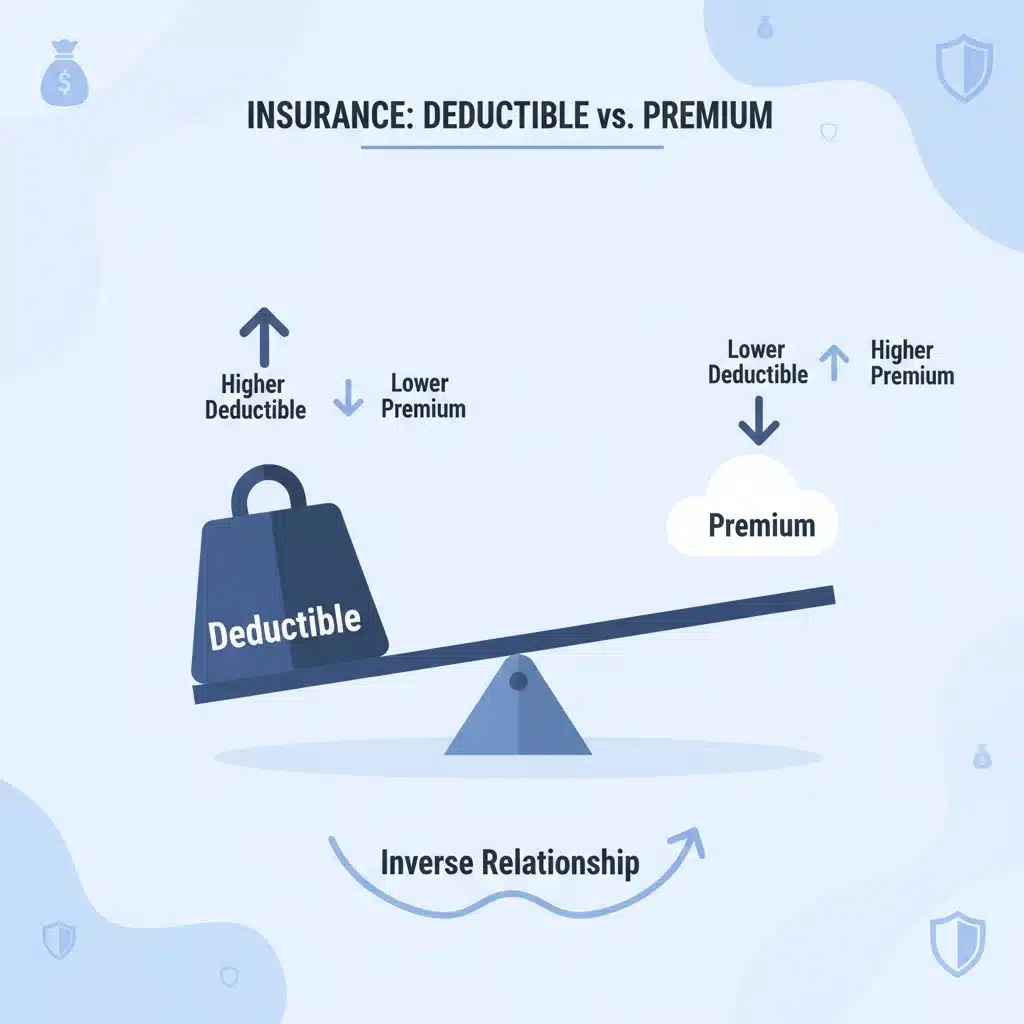
The relationship between your deductible and your premium is inverse: a higher deductible generally leads to a lower premium, and vice versa. This is because by agreeing to pay a larger portion of a potential claim yourself, you reduce the financial risk for the insurance company. In return, they reward you with a lower monthly or annual premium. This inverse relationship is the cornerstone of any effective insurance deductible strategy aimed at maximizing savings.
For many, the temptation is to opt for the lowest possible deductible, assuming it offers the best protection. However, this often results in significantly higher premiums over time. Conversely, choosing a higher deductible can drastically reduce your premiums, but requires you to have sufficient funds readily available to cover that deductible if a claim arises. The key is finding that sweet spot, the optimal balance that aligns with your financial capacity and risk tolerance.
The Power of the Right Deductible: Saving Up to 25%
The claim of saving up to 25% on your annual premiums by adjusting your deductible isn’t an exaggeration; it’s a well-documented financial reality. While the exact percentage can vary based on your insurer, policy type, location, and driving/claim history, numerous studies and insurance industry data confirm that increasing your deductible from a low amount (e.g., $250 or $500) to a higher one (e.g., $1,000 or $2,500) can yield substantial premium reductions. This makes a well-thought-out insurance deductible strategy indispensable.
Consider this common scenario: you have an auto insurance policy with a $500 deductible, and your annual premium is $1,800. If you increase your deductible to $1,000, your premium might drop to $1,400. That’s a $400 annual saving, representing over a 22% reduction. If you further increase it to $2,000, your premium could fall to $1,100, saving you $700 annually, or nearly 39%. These are hypothetical numbers, but they illustrate the potential impact.
The logic is simple: insurance companies price policies based on the likelihood and potential cost of claims. If they know you’re taking on a larger share of the initial cost, their exposure decreases, and they pass those savings on to you. This strategy is particularly effective for those who are financially stable and have an emergency fund to cover a higher deductible. It transforms your insurance from a fixed, high expense into a more flexible, cost-effective safety net.
Factors to Consider When Crafting Your Insurance Deductible Strategy
Choosing the right deductible isn’t a one-size-fits-all decision. It requires a thoughtful assessment of your personal financial situation, risk tolerance, and the specifics of your insurance needs. Here are the critical factors to weigh:
1. Your Emergency Fund and Savings
This is arguably the most crucial factor. Before you consider a higher deductible, ask yourself: ‘Do I have enough money readily available to cover this deductible if I need to file a claim today?’ If your deductible is $1,000, you should ideally have at least that amount (and preferably more for other emergencies) in an easily accessible savings account. Dipping into your retirement savings or going into debt to cover a deductible defeats the purpose of the savings strategy.
A robust emergency fund provides peace of mind and the financial flexibility to choose a higher deductible confidently. Without it, a high deductible can turn a minor incident into a major financial crisis. Your insurance deductible strategy must be anchored in your liquidity.
2. Your Claim History and Likelihood of Future Claims
Review your past claims. If you rarely file claims, or if the claims you’ve filed have been minor and below potential higher deductible amounts, then a higher deductible might be a smart move. For example, if your car insurance claims typically involve small fender benders costing $800, and you raise your deductible to $1,000, you’ll be paying for those minor repairs out-of-pocket anyway, while still benefiting from lower premiums.
Conversely, if you have a history of frequent claims, or if you live in an area prone to specific risks (e.g., hail storms for auto/home, high crime rates), a lower deductible might offer more immediate financial relief, even with higher premiums. However, be mindful that frequent claims can also lead to increased premiums or even non-renewal, regardless of your deductible.
3. The Cost of Your Premiums vs. Potential Deductible Savings
Calculate the actual savings. How much less will you pay in premiums over a year by increasing your deductible? Compare this to the increased out-of-pocket cost you’d incur if you had to file a claim. If the premium savings significantly outweigh the increased deductible amount over several years, it’s often a worthwhile trade-off. This quantitative analysis is central to an effective insurance deductible strategy.
For instance, if raising your deductible from $500 to $1,000 saves you $300 annually, it would take you just over 1.5 years to ‘break even’ on the extra $500 deductible you’d pay in a claim. If you go several years without a claim, those savings accumulate substantially.
4. Type of Insurance Policy
The optimal deductible can vary significantly by insurance type:
- Auto Insurance: For older vehicles with lower market value, a very high deductible (or even dropping comprehensive/collision coverage) might be sensible, as the cost of repairs might exceed the car’s value or the deductible amount. For newer, more valuable cars, a moderate deductible might be more appropriate.
- Homeowners Insurance: Given the potentially high cost of home repairs, a higher deductible can lead to substantial premium savings. However, ensure your emergency fund can cover it, as home claims (fire, severe weather) can be very expensive. Some homeowners policies also have separate, percentage-based deductibles for specific perils like hurricanes or wind, which can be much higher than standard deductibles.
- Health Insurance: High-deductible health plans (HDHPs) are often paired with Health Savings Accounts (HSAs), offering tax advantages. If you’re generally healthy and can afford the higher deductible, this can be a very cost-effective strategy. However, if you have chronic conditions or anticipate frequent medical needs, a lower deductible plan might be more suitable, despite higher premiums.
5. Your Risk Tolerance
How comfortable are you with taking on more financial risk? If the thought of a large out-of-pocket expense keeps you up at night, a lower deductible might be worth the higher premiums for your peace of mind. If you’re comfortable with calculated risks and have a solid financial safety net, a higher deductible will likely be more appealing. Your personal risk tolerance plays a significant role in shaping your insurance deductible strategy.
Implementing Your Optimal Insurance Deductible Strategy: A Step-by-Step Guide
Step 1: Assess Your Current Financial Situation
Before making any changes, get a clear picture of your finances. How much do you have in your emergency fund? How stable is your income? What are your monthly expenses? This assessment will help you determine how much you can realistically afford to pay as a deductible without causing financial strain.
Step 2: Review Your Existing Policies
Gather all your insurance policies (auto, home, health, etc.). Note down your current deductibles and annual premiums for each. Understand what each deductible covers and any specific conditions or limitations.
Step 3: Get Quotes for Different Deductible Levels
Contact your current insurance provider(s) and request quotes for various deductible amounts. For instance, if you currently have a $500 deductible, ask for quotes for $1,000, $1,500, $2,000, and $2,500 (or higher, depending on the policy type). Pay close attention to how much your annual premium changes with each adjustment.
Don’t stop there. Shop around with other insurance companies. You might find that another insurer offers even better rates for the same deductible levels, or that their deductible structure is more favorable for your needs. Online comparison tools can be very helpful here.
Step 4: Calculate Your Break-Even Point
For each potential deductible increase, calculate how long it would take for the premium savings to offset the increased out-of-pocket expense in case of a claim. For example, if increasing your deductible by $500 saves you $200 annually, your break-even point is 2.5 years ($500 / $200). If you anticipate going longer than 2.5 years without a claim that exceeds your current deductible, the higher deductible could be beneficial.

Step 5: Consider Your Claim Frequency and Severity
Think about how often you’ve filed claims in the past and the typical cost of those claims. If you rarely file claims for minor incidents, a higher deductible is likely a good fit. If you’re prone to frequent, small claims, a lower deductible might prevent you from paying entirely out-of-pocket repeatedly.
Also, consider the potential severity. For home insurance, a high deductible is often a good idea because claims are usually for significant damage (fire, major storm) where the total cost far exceeds even a high deductible. For auto insurance, many claims are for less severe damage, so the balance shifts.
Step 6: Make Your Decision and Adjust Your Policies
Based on your financial assessment, risk tolerance, and calculations, choose the deductible level that best suits your needs. Contact your insurance provider to make the necessary adjustments. Confirm the effective date of the changes and ensure you receive updated policy documents.
Advanced Deductible Strategies and Considerations
Multiplying Savings Through Bundling and Discounts
While optimizing your deductible is a powerful insurance deductible strategy, don’t forget other avenues for savings. Bundling multiple policies (e.g., auto and home) with the same insurer often yields significant discounts. Additionally, inquire about other discounts you might qualify for, such as good driver, home security systems, professional affiliations, or paying premiums annually instead of monthly.
Reviewing Annually
Your financial situation and insurance needs are not static. It’s crucial to review your insurance policies and deductible levels annually or whenever significant life events occur (e.g., marriage, new home, new car, job change). What was optimal last year might not be this year. Regular review ensures your insurance deductible strategy remains aligned with your current circumstances.
Understanding Deductible Waivers
Some auto insurance policies offer deductible waivers for specific situations, such as not-at-fault accidents. Understand if your policy includes such provisions, as they can impact the effective cost of a claim.
Per-Occurrence vs. Aggregate Deductibles (Health Insurance)
In health insurance, you might encounter per-occurrence deductibles (for each medical event) or aggregate deductibles (a total amount you must pay within a policy year, regardless of how many separate medical events occur). Understanding which type your plan uses is vital for your health insurance deductible strategy.
Consider the ‘Self-Insuring’ Aspect
When you choose a higher deductible, you are, in essence, ‘self-insuring’ for that initial portion of a potential loss. This means you are taking on more of the financial risk yourself. For this strategy to be effective and safe, you must have the financial capacity to cover that self-insured amount without hardship. If you consistently save the premium difference a higher deductible affords you, you are effectively building your own mini-insurance fund.
Potential Pitfalls to Avoid
While a higher deductible can be a great money-saver, there are traps to avoid:
- Choosing a Deductible You Can’t Afford: The biggest mistake is selecting a deductible that exceeds your accessible savings. This turns insurance into a liability rather than protection, as you might be unable to afford essential repairs or medical care.
- Ignoring Policy Details: Not all deductibles are created equal. Some policies have separate deductibles for different types of claims (e.g., wind/hail deductible on homeowners insurance). Always read the fine print.
- Forgetting to Re-evaluate: Life changes, and so should your insurance. A deductible that worked when you were single might not be suitable with a family, or vice versa.
- Only Focusing on Premium: While premium savings are attractive, never compromise on adequate coverage. A low premium with insufficient coverage is a false economy.
Conclusion: Master Your Deductible, Master Your Savings
Navigating your insurance deductible doesn’t have to be a guessing game. By understanding its mechanics, carefully assessing your financial situation, and proactively exploring your options, you can craft a sophisticated insurance deductible strategy that significantly reduces your annual premiums – potentially by 25% or more – while maintaining robust protection for your most valuable assets. It’s about smart financial planning, informed risk management, and taking control of your insurance costs. Don’t just accept your current deductible; optimize it and unlock substantial savings today.