Interest Rate Hikes 2026: Insurance Investment Strategies Shift
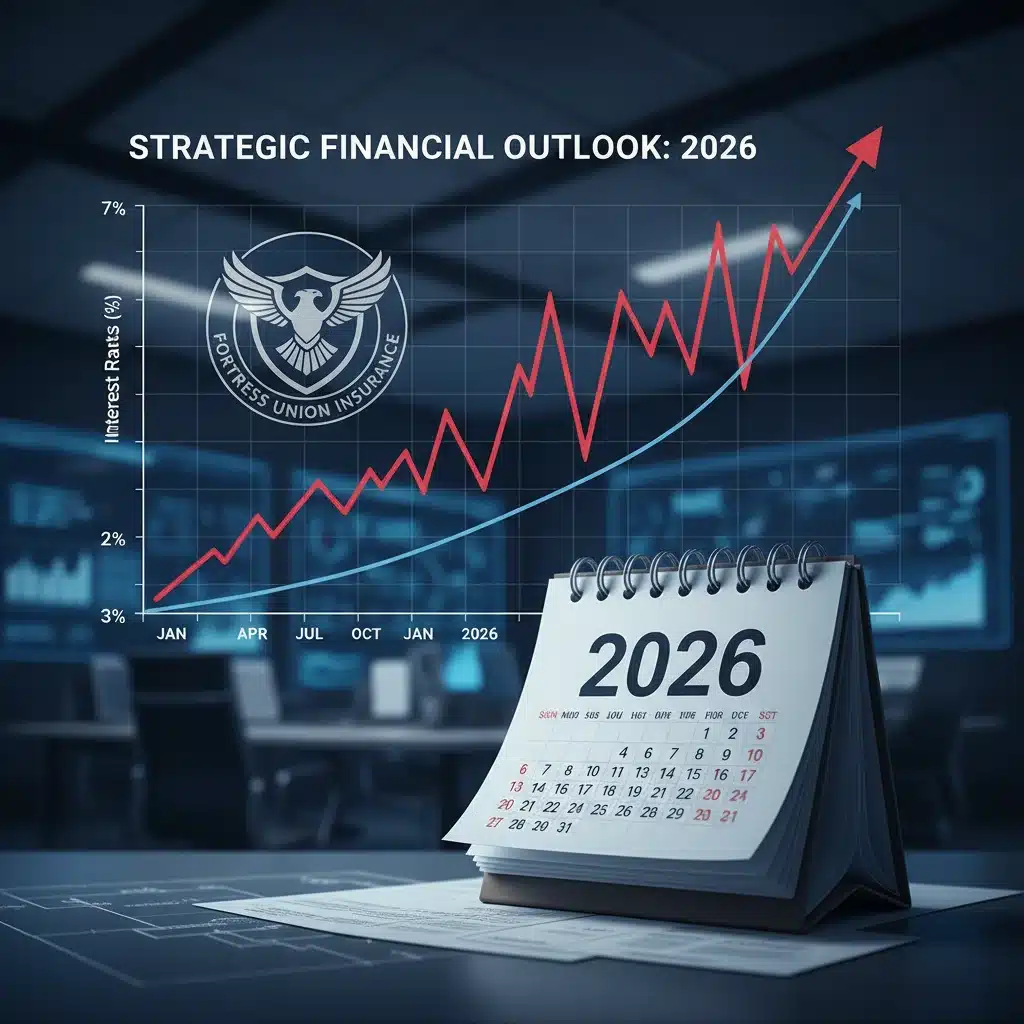
Interest Rate Hikes: A 7% Shift in Investment Strategies for Insurance Companies in 2026
The financial landscape is constantly evolving, presenting both challenges and opportunities for various industries. Among those most profoundly affected by macroeconomic shifts are insurance companies, whose business models are intricately linked to long-term investment horizons and interest rate environments. A projected 7% interest rate hike by 2026 is not merely a minor adjustment; it represents a seismic shift that will fundamentally reshape insurance investment strategies, demanding immediate attention and proactive planning from industry leaders.
For decades, insurance companies have relied heavily on fixed-income investments, primarily bonds, to generate returns that match their long-term liabilities. The prolonged period of historically low interest rates following the 2008 financial crisis forced many insurers to seek alternative, higher-yielding assets, often venturing into less liquid or more complex instruments. Now, with the prospect of a significant and sustained increase in interest rates, the pendulum is swinging back, offering both a reprieve from yield compression and a new set of complexities for insurance investment strategies.
Understanding the Impact of a 7% Interest Rate Hike on Insurance Companies
A 7% increase in interest rates by 2026, while a significant hypothetical scenario, serves as a powerful lens through which to examine the profound implications for the insurance sector. Such a dramatic rise would have a multifaceted impact, affecting everything from asset valuations and liability discounting to product pricing and overall profitability. Understanding these dynamics is crucial for developing robust insurance investment strategies.
Asset Valuation and Portfolio Rebalancing
The most immediate and direct impact of rising interest rates is on the valuation of existing fixed-income portfolios. Bond prices move inversely to interest rates. A 7% hike would lead to substantial unrealized losses on existing, lower-yielding bonds held by insurers. This necessitates a careful re-evaluation of current asset holdings and a strategic approach to portfolio rebalancing. Insurers would likely face pressure to sell off some lower-yielding assets to reinvest in newly issued, higher-yielding bonds, or to hold existing bonds to maturity to avoid crystallizing losses.
However, simply selling off assets is not without its challenges. Market liquidity, transaction costs, and the potential for a ‘dash for cash’ could exacerbate losses. Therefore, insurance investment strategies would need to incorporate sophisticated duration management techniques, hedging instruments, and a phased approach to portfolio adjustments. The goal would be to minimize short-term capital impairment while positioning the portfolio for enhanced long-term returns.
Liability Discounting and Solvency
Insurance companies hold significant long-term liabilities, such as future claims payments for life insurance policies or annuities. These liabilities are discounted to their present value using prevailing interest rates. A 7% increase in discount rates would significantly reduce the present value of these liabilities, potentially improving an insurer’s reported solvency ratios and capital adequacy. While this might appear beneficial on the surface, it also means that future payouts, when they materialize, will require a larger nominal sum, underscoring the importance of adequate reserves and robust asset-liability matching (ALM).
Regulators, keenly aware of interest rate sensitivity, will likely scrutinize ALM frameworks more closely. Insurers will need to demonstrate that their insurance investment strategies are aligned with their liability profiles, ensuring that they can meet future obligations even under varying interest rate scenarios. This could lead to a renewed focus on products with shorter durations or those that offer more flexibility in premium adjustments.
Product Pricing and Competitiveness
The pricing of insurance products, particularly those with long-term guarantees like life insurance and annuities, is highly sensitive to interest rates. In a rising rate environment, insurers can offer more attractive guaranteed returns to policyholders, making their products more competitive. This could stimulate demand for certain insurance products that have been less appealing during periods of low rates.
Conversely, for property and casualty insurers, higher rates might lead to increased investment income, which could potentially offset underwriting losses or allow for more competitive premium pricing. However, the exact impact depends on the specific product lines, the duration of liabilities, and the competitive landscape. Insurance investment strategies will need to work in tandem with actuarial and product development teams to capitalize on these new pricing opportunities while managing profitability.
Adapting Insurance Investment Strategies: Key Areas of Focus
To navigate the potential 7% interest rate hike by 2026, insurance companies must proactively adapt their investment frameworks. This involves a multi-pronged approach that touches upon asset allocation, risk management, and the integration of advanced analytical tools.
1. Re-evaluating Asset Allocation
The core of any insurance investment strategy lies in its asset allocation. With a significant rise in rates, the attractiveness of traditional fixed-income assets, particularly government and high-quality corporate bonds, will increase. Insurers will likely shift a greater portion of their portfolios back into these assets, benefiting from higher yields and reduced credit risk compared to some of the alternative investments pursued during the low-rate era.
- Increased Allocation to Core Fixed Income: Expect a move towards higher-quality, shorter-to-medium duration bonds to capitalize on rising yields while managing interest rate risk. Long-duration bonds, while offering higher yields, would be more susceptible to price declines if rates continue to climb beyond initial expectations.
- Strategic Use of Floating Rate Instruments: Floating-rate notes and loans, whose coupon payments adjust with benchmark rates, become particularly attractive. They offer a natural hedge against rising rates, as their income stream increases alongside the rate environment.
- Diversification within Alternatives: While the allure of traditional fixed income grows, a complete abandonment of alternative assets is unlikely. However, the focus within alternatives might shift. Areas like private credit, which can offer floating-rate exposure and illiquidity premiums, might remain attractive. Real estate investments, particularly those with inflation-linked leases, could also offer diversification and a hedge against inflation, which often accompanies rising rates.
- Equity Market Considerations: Rising interest rates can sometimes dampen equity market performance, as higher discount rates reduce the present value of future earnings. However, certain sectors, particularly those with strong cash flows and less reliance on debt, might fare better. Insurers will need to be selective in their equity exposures, focusing on defensive sectors or those with strong pricing power.
2. Enhancing Asset-Liability Management (ALM)
ALM is paramount for insurance companies. A 7% rate hike amplifies the importance of precisely matching the duration and cash flows of assets to those of liabilities. Effective ALM minimizes interest rate risk and ensures that insurers have sufficient liquidity to meet their obligations.

- Dynamic ALM Strategies: Static ALM approaches will be insufficient. Insurers need dynamic ALM frameworks that can rapidly adjust to changes in interest rates, market volatility, and liability profiles. This involves continuous monitoring and rebalancing.
- Scenario Analysis and Stress Testing: Robust stress testing, including scenarios with even higher interest rate increases or unexpected market dislocations, will be critical. This helps identify potential vulnerabilities in the insurance investment strategies and allows for pre-emptive measures.
- Hedging Strategies: The use of interest rate derivatives, such as swaps or options, can provide effective hedges against adverse rate movements. While these instruments introduce their own complexities and counterparty risks, they can be invaluable tools for managing interest rate exposure within an ALM framework.
3. Strengthening Risk Management Frameworks
A significant interest rate shift introduces new and amplified risks that require a robust risk management framework. Beyond interest rate risk, insurers must consider liquidity risk, credit risk, and operational risk in this new environment.
- Liquidity Management: The potential for unrealized losses on existing bond portfolios could trigger liquidity concerns if insurers are forced to sell assets in a down market. Maintaining adequate cash reserves and access to diversified funding sources will be crucial.
- Credit Risk Assessment: While higher rates generally benefit fixed-income investors, they can also put pressure on borrowers, potentially leading to increased defaults. Insurers must rigorously assess the creditworthiness of their bond holdings, especially in corporate credit and private debt portfolios.
- Operational Risk: Implementing new insurance investment strategies and adapting ALM models requires significant operational adjustments. Ensuring that systems, processes, and personnel are adequately prepared for these changes is vital to avoid operational missteps.
4. Leveraging Technology and Data Analytics
In an increasingly complex and fast-moving financial environment, technology and data analytics are no longer optional but essential components of successful insurance investment strategies.
- Advanced Portfolio Management Systems: Insurers need sophisticated systems capable of real-time portfolio monitoring, performance attribution, and risk analytics across diverse asset classes.
- Predictive Analytics: Utilizing AI and machine learning to forecast interest rate movements, market volatility, and even policyholder behavior can provide a significant competitive advantage in optimizing investment decisions.
- Data Integration: Seamless integration of investment data with actuarial, underwriting, and risk management systems will provide a holistic view of the insurer’s financial position and facilitate more informed decision-making.
The Role of Regulatory Landscape and Economic Outlook
The projected 7% interest rate hike will not occur in isolation. It will be influenced by and, in turn, influence the broader regulatory landscape and economic outlook. Insurance investment strategies must be formulated with these external factors in mind.
Regulatory Scrutiny and Capital Requirements
Regulators, such as the NAIC in the United States or EIOPA in Europe, are likely to increase their scrutiny of insurers’ capital adequacy and risk management practices in a rising rate environment. They will want to ensure that insurers are adequately prepared for potential capital impacts from asset revaluations and changes in liability discounting. This could lead to stricter capital requirements or more prescriptive guidelines for insurance investment strategies, particularly concerning exposure to illiquid assets or those with higher credit risk.
Compliance with Solvency II and other risk-based capital regimes will necessitate robust reporting and transparent disclosures of interest rate sensitivities. Insurers that can demonstrate sound ALM and risk management practices will be better positioned to navigate regulatory pressures.
Broader Economic Implications
A 7% interest rate hike signals a significant shift in monetary policy, likely in response to persistent inflation or strong economic growth. While higher rates can be beneficial for insurers’ investment income, they can also have broader economic consequences that impact the insurance business.
- Inflationary Pressures: If the rate hikes are a response to high inflation, insurers face the dual challenge of managing investment portfolios in a volatile rate environment while also coping with rising claims costs due to inflation (e.g., higher repair costs for property and casualty, increased medical costs for health insurance).
- Economic Slowdown Risk: Aggressive rate hikes can sometimes lead to an economic slowdown or even recession. This could impact demand for insurance products, increase credit defaults, and affect equity market performance, adding another layer of complexity to insurance investment strategies.
- Geopolitical Factors: Global economic and geopolitical events can significantly influence interest rate trajectories and market stability. Insurers must adopt a global perspective in their investment decisions, considering how international events might impact domestic interest rates and investment opportunities.

Strategic Imperatives for Insurance Leaders
Given the magnitude of a potential 7% interest rate hike by 2026, insurance leaders must adopt several strategic imperatives to ensure the long-term resilience and profitability of their organizations. These imperatives go beyond mere tactical adjustments and involve a fundamental rethinking of how insurance investment strategies are formulated and executed.
Foster a Culture of Agility and Adaptability
The days of static, long-term investment plans are over. Insurance companies need to cultivate an agile investment culture that can quickly respond to changing market conditions. This means empowering investment teams with the tools and authority to make timely adjustments, fostering cross-functional collaboration between investment, actuarial, and risk teams, and regularly reviewing and updating investment mandates.
Invest in Talent and Expertise
Navigating a complex interest rate environment requires specialized expertise. Insurance companies must invest in attracting, developing, and retaining top talent in areas such as fixed income analysis, derivatives trading, quantitative risk management, and data science. Training programs should focus on equipping investment professionals with the skills needed to manage portfolios in a rising rate environment, including advanced ALM techniques and hedging strategies.
Communicate Transparently with Stakeholders
As insurance investment strategies adapt, transparent communication with policyholders, shareholders, and regulators will be crucial. Explaining the rationale behind portfolio shifts, the impact on product offerings, and the measures being taken to manage risks will build trust and confidence. For policyholders, this might involve clear explanations of how higher rates could affect annuity payouts or guaranteed returns. For shareholders, it means providing a clear outlook on profitability and capital stability.
Explore New Product Opportunities
A rising interest rate environment opens doors for innovative product development. Insurers can design new products that capitalize on higher yields, offering more attractive returns to policyholders while maintaining profitability. This could include new annuity structures, interest-sensitive life insurance policies, or investment-linked products that appeal to a broader customer base seeking better returns on their savings.
Conclusion: Reshaping the Future of Insurance Investments
The prospect of a 7% interest rate hike by 2026 is a defining moment for the insurance industry. It presents a significant challenge to traditional insurance investment strategies but also offers a unique opportunity for those who are prepared to adapt. By proactively re-evaluating asset allocation, enhancing ALM, strengthening risk management frameworks, and leveraging technology, insurance companies can not only mitigate the risks associated with rising rates but also position themselves for sustained growth and profitability.
The future of insurance investments will be characterized by greater dynamism, sophistication, and a relentless focus on aligning assets with liabilities in an ever-changing economic climate. The companies that embrace these changes and innovate in their approach to investment management will be the ones that thrive in the new interest rate paradigm, ensuring their long-term solvency and ability to meet the promises made to their policyholders for generations to come.