Navigating 2026 Insurance Premium Hikes: A 10% Increase Explained

As we approach 2026, a significant shift is on the horizon for policyholders across various insurance sectors. Experts and industry analysts are forecasting an average 10% increase in insurance premiums, a figure that demands immediate attention and proactive planning. This isn’t merely an arbitrary hike; it’s a culmination of complex market dynamics, economic pressures, environmental challenges, and evolving regulatory landscapes. Understanding these underlying factors is paramount for individuals and businesses alike to navigate the impending changes effectively and mitigate their financial impact.
The Looming 10% Increase: Why 2026 Insurance Premiums Are Rising
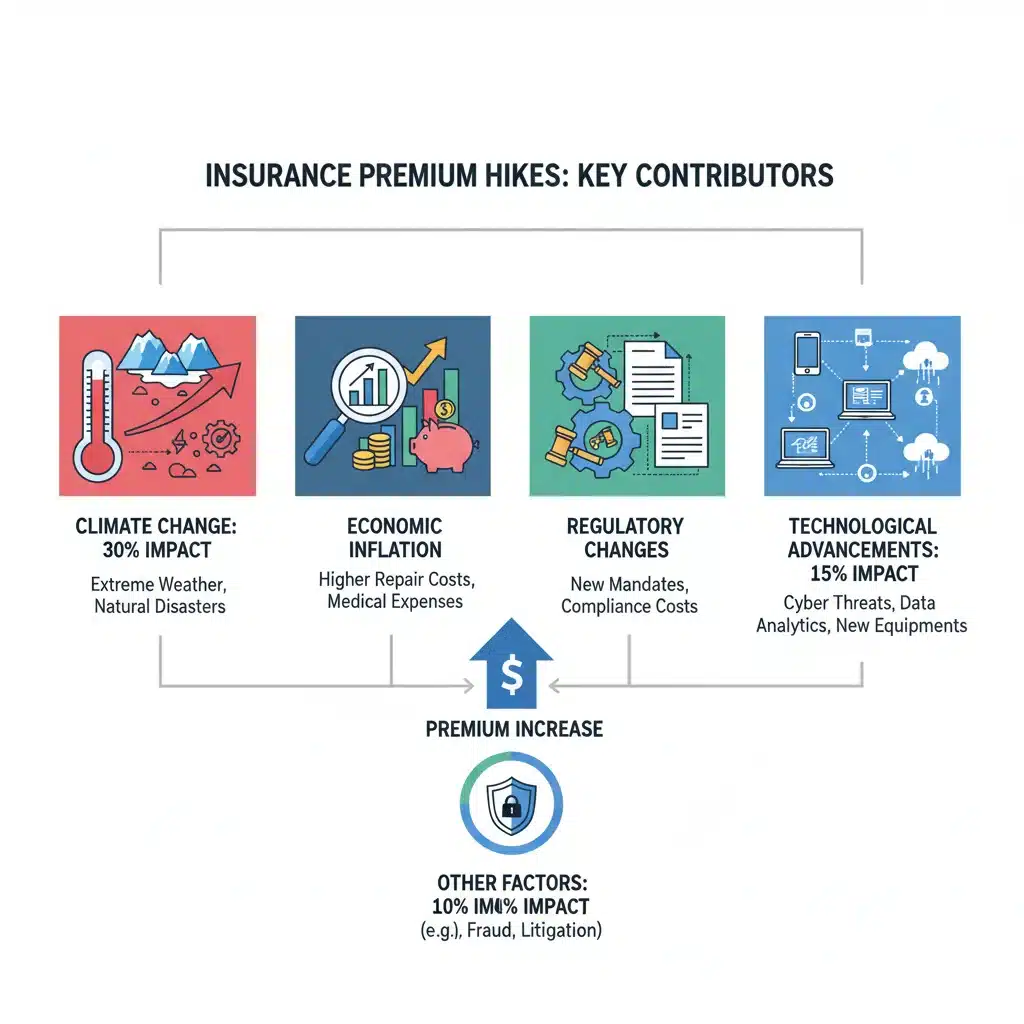
The projection of a 10% increase in 2026 insurance premiums is not a singular event but rather a symptom of a broader, interconnected web of global and local influences. Several key factors are converging to create this upward pressure on costs. Inflation, a persistent economic challenge, is perhaps the most direct contributor, increasing the cost of repairs, replacements, and medical services, which in turn elevates the payout amounts for insurers. When insurers pay more for claims, they must adjust premiums to maintain solvency and profitability.
Beyond inflation, the escalating frequency and severity of extreme weather events, driven by climate change, are significantly impacting property and casualty insurance. Hurricanes, floods, wildfires, and other natural disasters are causing unprecedented damage, leading to massive payouts and subsequently higher premiums in vulnerable regions. This phenomenon extends beyond property; it also affects business interruption insurance and even certain aspects of health insurance due to disaster-related health crises.
Regulatory changes also play a crucial role. Governments and oversight bodies are continually updating insurance laws to protect consumers, ensure fair practices, and adapt to new risks. While beneficial, these changes often come with increased compliance costs for insurers, which are then passed on to policyholders. Furthermore, the rising cost of reinsurance – the insurance that insurance companies buy to protect themselves from large losses – is another significant factor. As global risks amplify, reinsurance becomes more expensive, directly influencing primary insurance premiums.
Technological advancements, while offering potential benefits, also introduce new risks and complexities. Cybersecurity threats, for instance, are leading to a surge in demand for cyber insurance, but the increasing sophistication of attacks means higher potential losses, translating to higher premiums. Similarly, advancements in medical technology, while improving healthcare outcomes, often come with higher costs for treatments and procedures, impacting health insurance premiums.
Economic Inflation: A Primary Driver of Higher 2026 Insurance Premiums
Inflation is a silent but powerful force eroding purchasing power and increasing operational costs across all sectors, and the insurance industry is no exception. When we talk about a 10% increase in 2026 insurance premiums, a substantial portion of this can be attributed to inflationary pressures. Let’s break down how inflation specifically impacts insurance costs.
Increased Cost of Repairs and Replacements
For auto insurance and home insurance, inflation directly affects the cost of repairing or replacing damaged assets. The price of raw materials like steel, lumber, and electronic components has risen significantly. Labor costs for skilled technicians and contractors have also climbed. When a car is totaled, or a house sustains structural damage, the cost to restore it to its pre-loss condition is now considerably higher than it was a few years ago. Insurers must factor these elevated repair and replacement costs into their premium calculations to ensure they can cover future claims.
Higher Medical Expenses
In the realm of health insurance, medical inflation is a persistent challenge. The cost of prescription drugs, hospital stays, doctor visits, and advanced medical procedures continues to rise. This is driven by several factors, including research and development costs for new treatments, an aging population requiring more care, and administrative overheads within the healthcare system. As healthcare providers charge more for their services, health insurance companies must collect higher premiums to cover these increased expenses for their policyholders.
Supply Chain Disruptions
Inflation is often intertwined with supply chain disruptions. When components or finished goods are scarce, their prices naturally increase. This directly impacts the ability of insurers to quickly and affordably resolve claims. For example, a shortage of semiconductor chips can delay car repairs and increase the cost of replacement parts, leading to longer rental car periods covered by insurance and higher overall claim costs. These unpredictable supply chain issues add another layer of complexity and cost to the insurance equation.
Impact on Reinsurance Costs
As mentioned earlier, insurers themselves purchase reinsurance to protect against catastrophic losses. Inflationary environments mean that potential payouts for large-scale events (like natural disasters) are also higher. This drives up the cost of reinsurance, which then trickles down to the primary insurance premiums charged to consumers. It’s a cascading effect where increased costs at one level of the insurance ecosystem inevitably lead to higher costs at another.
Therefore, when you see a projected 10% increase in 2026 insurance premiums, understand that a significant portion is a direct reflection of the broader economic environment where everything from a gallon of milk to a new car costs more. Insurers are simply adjusting to the new economic reality to ensure they can continue to fulfill their promise of financial protection.
Climate Change and Natural Disasters: A Growing Threat to Insurance Stability
The impact of climate change on the insurance industry cannot be overstated, and it’s a critical factor contributing to the projected 10% increase in 2026 insurance premiums. We are witnessing a clear trend of more frequent and more severe weather events globally, which directly translates to higher claims and increased risk for insurers.
Increased Frequency and Severity of Events
From intensified hurricanes and tropical storms along coastal regions to devastating wildfires in the western United States and unprecedented flooding in various parts of the world, the climate crisis is manifesting in tangible, costly ways. These events lead to widespread property damage, business interruptions, and even loss of life, all of which trigger significant insurance payouts. Insurers use historical data to predict future losses and set premiums. As the historical data increasingly shows a pattern of escalating catastrophe, the models are adjusted, leading to higher premiums.
Geographical Risk Expansion
Areas previously considered low-risk for certain natural disasters are now experiencing them with greater regularity. This expansion of risk zones means that more properties and businesses are becoming exposed to perils like flooding or wildfires, leading to a broader base of policyholders facing higher premiums. Insurers are having to re-evaluate their risk maps and pricing strategies for entire regions, not just isolated pockets.
Rising Reinsurance Costs Due to Catastrophic Losses
The sheer scale of losses from recent natural disasters has put immense pressure on the global reinsurance market. Reinsurers, who act as insurers for insurance companies, have seen their own payouts skyrocket. To maintain their financial stability, reinsurers are charging higher rates to primary insurers. This cost, again, is ultimately passed down to policyholders, contributing significantly to the overall rise in 2026 insurance premiums.
Long-Term Climate-Related Damages
Beyond immediate catastrophic events, climate change also contributes to long-term, incremental damages. Rising sea levels, for example, can lead to increased coastal erosion and saltwater intrusion, slowly but surely degrading infrastructure and property values. These gradual changes may not trigger immediate large claims but represent an accumulating risk that insurers must account for in their long-term pricing strategies.
In essence, the planet’s changing climate is fundamentally altering the risk landscape for insurers. As the likelihood and impact of natural disasters grow, so too does the cost of providing protection against them, making climate change a formidable driver behind the anticipated 10% increase in 2026 insurance premiums.
Regulatory Shifts and Compliance Costs: Shaping the Insurance Landscape
The regulatory environment is a constantly evolving landscape, and significant shifts in policies and compliance requirements are another key factor contributing to the projected 10% increase in 2026 insurance premiums. While regulations are designed to protect consumers and ensure market stability, they often come with increased operational costs for insurance providers, which are then reflected in premium adjustments.
New Legislation and Mandates
Governments and regulatory bodies frequently introduce new legislation related to insurance coverage, consumer protection, data privacy, and financial solvency. For example, mandates requiring specific types of coverage (e.g., mental health parity, climate-related disclosure) or stricter capital requirements for insurers can increase the cost of doing business. Insurers must invest in new systems, training, and personnel to comply with these updated rules, and these investments are recuperated through premiums.
Increased Scrutiny and Reporting
Regulators are also increasing their scrutiny of insurance practices, demanding more detailed reporting and greater transparency. This includes everything from how premiums are calculated and justified to how claims are processed and paid. While beneficial for consumers, the administrative burden and associated costs of enhanced reporting and compliance monitoring can be substantial for insurance companies, contributing to the overall rise in 2026 insurance premiums.
Data Privacy and Cybersecurity Regulations
With the proliferation of data breaches and cyber threats, new regulations concerning data privacy (like GDPR or CCPA) and cybersecurity standards are becoming more prevalent. Insurance companies handle vast amounts of sensitive personal and financial data, making them prime targets. Compliance with these stringent data protection laws requires significant investment in IT security infrastructure, employee training, and breach response protocols. These costs are ultimately factored into the pricing of various insurance products, particularly cyber insurance but also indirectly other lines that handle personal data.
State-Specific Regulations and Market Variations
In many countries, insurance is regulated at a state or provincial level, leading to a patchwork of different rules. Changes in regulations in one major state can have ripple effects across the national market. For instance, new requirements for auto insurance coverage or medical malpractice limits in a populous state can influence the broader market’s pricing trends. Insurers operating across multiple jurisdictions must navigate this complex regulatory environment, adding to their overhead.
The interplay of these regulatory shifts means that insurers are continually adapting their operations and financial models. While the aim is often to create a safer and more equitable market, the immediate consequence can be an upward adjustment in premiums. Therefore, understanding the impact of regulatory changes is crucial when analyzing the projected 10% increase in 2026 insurance premiums.
Technological Advancements and Their Dual Impact
Technology is a double-edged sword in the insurance industry. While it offers immense potential for efficiency, personalization, and risk mitigation, it also introduces new costs and complexities that contribute to the projected 10% increase in 2026 insurance premiums.
Rising Cost of Advanced Claims
Consider the automotive industry. Modern vehicles are equipped with sophisticated sensors, cameras, and computer systems. While these technologies enhance safety, they also make repairs significantly more expensive. A minor fender bender might now require recalibration of complex sensors, leading to higher repair bills and thus, higher auto insurance claims. Similarly, in healthcare, cutting-edge diagnostic tools and treatments, while life-saving, come with a hefty price tag, pushing up health insurance costs.
Cybersecurity Risks and Cyber Insurance
The digital transformation has made businesses and individuals more vulnerable to cyberattacks. Data breaches, ransomware attacks, and other cyber threats can result in massive financial losses, reputational damage, and legal liabilities. This has fueled a surge in demand for cyber insurance. However, as the frequency and sophistication of these attacks grow, so does the risk for insurers, leading to rapidly increasing cyber insurance premiums. The cost of covering these new digital risks is a significant factor in the overall premium landscape.
Investment in Insurtech and Data Analytics
Insurance companies are heavily investing in ‘Insurtech’ – technology designed to improve efficiency, customer experience, and risk assessment. This includes AI-powered claims processing, machine learning for predictive analytics, telematics devices for personalized auto insurance, and drone technology for property inspections. While these investments promise long-term benefits and potentially lower costs in the future, the initial capital expenditure for developing and implementing these technologies is substantial. These development costs are often factored into the broader operational expenses that influence premium pricing.
Data Collection and Privacy Concerns
The ability to collect and analyze vast amounts of data allows insurers to offer more personalized policies and better assess risk. However, this also raises significant privacy concerns and necessitates robust data security measures. Compliance with data protection regulations and the cost of securing sensitive information add to the operational expenses of insurers, indirectly contributing to higher premiums.
In summary, while technology brings innovation and efficiency, its integration into insurance operations also introduces new cost structures related to advanced repairs, emerging cyber risks, and significant investment in new platforms. These factors collectively play a role in the anticipated 10% increase in 2026 insurance premiums.
Strategies to Mitigate the Impact of Rising 2026 Insurance Premiums
Facing a potential 10% increase in 2026 insurance premiums can be daunting, but there are proactive steps individuals and businesses can take to mitigate the financial impact. Strategic planning and informed decision-making are key to navigating this challenging landscape.
1. Review Your Current Policies Thoroughly
Before making any changes, take the time to understand your existing coverage. What exactly are you insured for? Are there any riders or add-ons you no longer need? Are your coverage limits still appropriate for your current assets and liabilities? An annual review ensures you’re not over-insured or under-insured, both of which can be costly.
2. Shop Around and Compare Quotes
This is perhaps the most effective strategy. Don’t simply renew your policy with your current provider. Obtain quotes from multiple insurance companies. The market is competitive, and different insurers have varying risk appetites and pricing structures. An insurance broker can be invaluable here, as they can compare multiple options on your behalf and often have access to exclusive rates.
3. Increase Your Deductibles
A deductible is the amount you pay out of pocket before your insurance coverage kicks in. Opting for a higher deductible typically results in lower monthly or annual premiums. However, ensure you have sufficient savings to cover the higher deductible if you need to make a claim. This strategy is more suitable for those with a robust emergency fund.
4. Bundle Your Policies
Many insurance providers offer discounts if you purchase multiple policies from them, such as combining home and auto insurance, or business and liability insurance. Bundling can lead to significant savings across your entire insurance portfolio. Inquire about multi-policy discounts when getting quotes.
5. Improve Your Risk Profile
For auto insurance, maintaining a clean driving record, taking defensive driving courses, and installing safety features (like anti-theft devices) can lead to discounts. For home insurance, updating your home’s safety features (smoke detectors, security systems), reinforcing against natural disasters (storm shutters), and maintaining your property can lower your risk profile and potentially your premiums. For health insurance, maintaining a healthy lifestyle can influence some policies, though this is less direct than other types of insurance.
6. Leverage Technology and Telematics
Some auto insurers offer telematics programs where a device tracks your driving habits. Safe drivers can earn significant discounts. Similarly, smart home devices that detect leaks or fires can sometimes qualify for home insurance discounts. Explore these options if available and comfortable with data sharing.
7. Inquire About All Available Discounts
Don’t be shy about asking your insurance provider about every possible discount. These can include discounts for good students, low mileage, being a loyal customer, having a good credit score, paying premiums annually, or being a member of certain professional organizations.
8. Consider a Captive Agent vs. Independent Broker
A captive agent works for a single insurance company, while an independent broker works with multiple companies. While a captive agent might offer deep knowledge of their company’s products, an independent broker can provide a broader comparison of options across the market, which can be crucial when facing rising 2026 insurance premiums.
9. Understand Policy Exclusions and Limitations
Be aware of what your policy does and does not cover. Sometimes, opting for a cheaper policy might mean sacrificing essential coverage, which could cost you more in the long run if a specific event occurs. Balance cost savings with adequate protection.
By actively engaging with your insurance needs and exploring these mitigation strategies, you can better prepare for the projected 10% increase in 2026 insurance premiums and ensure you continue to receive the necessary protection without undue financial strain.
The Future Outlook: Beyond 2026 Insurance Premiums
While our immediate focus is on the projected 10% increase in 2026 insurance premiums, it’s crucial to consider the long-term trends and what the future holds for the insurance industry. The factors driving current increases are not temporary; many are systemic and will continue to shape the market well beyond 2026.
Continued Impact of Climate Change
The effects of climate change are expected to intensify, meaning that natural disaster-related claims will likely continue to rise. This will necessitate ongoing adjustments to property and casualty insurance pricing, potentially leading to further premium increases in vulnerable regions. Insurers are also investing in climate risk modeling to better assess and price these evolving threats.
Evolution of Technology and Emerging Risks
Technological advancements will continue at a rapid pace, bringing both new efficiencies and new risks. Autonomous vehicles, for instance, will fundamentally alter auto insurance liability models. The Internet of Things (IoT) will provide insurers with more data for personalized pricing but also introduce new cybersecurity vulnerabilities. Insurers will need to be agile in adapting their products and pricing to these emerging technologies and their associated risks.
Healthcare Innovation and Costs
The healthcare sector will likely continue its trajectory of innovation, introducing more sophisticated (and often more expensive) treatments. This, coupled with an aging global population, will keep upward pressure on health insurance premiums. The debate around healthcare affordability and universal access will also continue to shape regulatory responses and insurance market structures.
Regulatory Adaptation
Regulators will likely continue to adapt to new market realities, focusing on consumer protection, data privacy, and ensuring the solvency of insurance providers in an increasingly volatile world. This could mean more stringent requirements for insurers, which, as discussed, can translate to higher operational costs and premiums.
Data-Driven Personalization
The future of insurance will be increasingly personalized, driven by vast amounts of data. This could lead to more nuanced pricing, where individuals with lower risk profiles might see more favorable rates, while those with higher risks (based on lifestyle, location, or behavior) might face higher premiums. This shift requires consumers to be more proactive in managing their risk factors and understanding how their data influences their insurance costs.
Focus on Prevention and Resilience
As claims costs rise, insurers are increasingly shifting their focus from simply paying out after a loss to actively promoting prevention and resilience. This could involve offering discounts for smart home devices, incentivizing healthy behaviors, or partnering with communities on disaster preparedness initiatives. This proactive approach could, in the long run, help stabilize or even reduce some premium growth.
The journey beyond 2026 for insurance premiums is one of continuous adaptation. Policyholders who stay informed about these trends, actively manage their risk, and regularly review their coverage will be best positioned to navigate the evolving insurance landscape effectively.

Conclusion: Preparing for the New Insurance Reality
The anticipated 10% increase in 2026 insurance premiums serves as a stark reminder of the dynamic and often unpredictable nature of the insurance market. This isn’t just a number; it’s a reflection of deep-seated economic, environmental, regulatory, and technological shifts that are fundamentally reshaping how risk is assessed and priced. From persistent inflation driving up the cost of repairs and medical care, to the undeniable impact of climate change fueling more frequent and severe natural disasters, and the ever-evolving landscape of regulatory compliance and technological advancements – each factor plays a critical role in the upward trajectory of insurance costs.
For policyholders, the message is clear: complacency is no longer an option. Proactive engagement with your insurance needs is paramount. This means more than just paying your annual bill; it requires a strategic approach that involves thoroughly reviewing your existing policies, actively shopping around for competitive quotes, and exploring every possible avenue for discounts. Increasing deductibles, bundling policies, improving your personal or property risk profile, and leveraging telematics are all tangible steps that can help mitigate the financial burden of rising premiums.
Furthermore, staying informed about broader market trends and the factors influencing insurance costs will empower you to make smarter decisions. The insurance landscape will continue to evolve beyond 2026, driven by ongoing climate challenges, technological innovation, and regulatory adjustments. By understanding these long-term forces, you can better anticipate future changes and adapt your insurance strategy accordingly.
Ultimately, while the prospect of a 10% increase in 2026 insurance premiums presents a challenge, it also offers an opportunity for greater financial literacy and resilience. By taking deliberate steps to manage your insurance portfolio, you can ensure you remain adequately protected without succumbing to unnecessary financial strain. The goal is not just to survive the premium hikes but to thrive by making informed choices that secure your financial future in an ever-changing world.