Actuarial Adjustments 2026: Understanding the Data Driving a Potential 8% Premium Increase

In the intricate world of insurance and finance, Actuarial Adjustments 2026 are already a hot topic, with experts forecasting significant shifts that could impact millions. Specifically, a potential 8% premium increase is on the horizon, driven by a confluence of complex data, economic indicators, and evolving risk landscapes. Understanding these adjustments is not just for industry insiders; it’s crucial for consumers, businesses, and policymakers alike. This comprehensive article delves into the methodologies, the underlying data, and the broader implications of these anticipated changes, providing a clear roadmap to navigate the future of insurance premiums.
Actuarial Adjustments 2026: Unpacking the 8% Premium Increase Forecast
The year 2026 might seem distant, but for actuaries and insurance companies, it’s already a focal point for meticulous planning and forecasting. The projected 8% premium increase is not an arbitrary figure; it’s the culmination of extensive data analysis, predictive modeling, and a deep understanding of market dynamics. This article aims to demystify the process, explain the factors at play, and offer insights into how individuals and organizations can prepare for these impending actuarial adjustments. We will explore the role of data in these predictions, the economic forces exerting pressure, and the societal trends that are reshaping the risk environment.
What Are Actuarial Adjustments and Why Are They Necessary?
At its core, an actuarial adjustment is a change made to insurance premiums, reserves, or other financial calculations by an actuary based on new data, updated assumptions, or changes in risk profiles. These adjustments are fundamental to the financial health and sustainability of insurance companies. Without them, insurers would struggle to accurately price risk, potentially leading to insolvency or an inability to meet future claims. The necessity of Actuarial Adjustments 2026 stems from the dynamic nature of risk. Factors such as medical advancements, technological innovations, climate change, and even geopolitical events can significantly alter the probability and severity of claims. Actuaries are essentially financial architects, using mathematical and statistical methods to assess risk in the insurance and finance industries. They analyze past events, model future probabilities, and design creative ways to manage risk.
The process of making actuarial adjustments involves several key steps. First, actuaries collect vast amounts of data, including historical claims, demographic information, economic indicators, and industry trends. This data is then analyzed using sophisticated statistical models to identify patterns and predict future outcomes. Based on these predictions, actuaries develop new assumptions about mortality rates, morbidity rates, investment returns, and other relevant variables. These assumptions are then used to recalculate premiums, ensuring that they are sufficient to cover future claims and expenses while also allowing the insurer to remain profitable. The 8% premium increase projected for 2026 is a direct output of this rigorous analytical process, signaling a significant shift in the underlying risk landscape.
The Data Driving the Potential 8% Premium Increase
The forecast of an 8% premium increase for 2026 is not pulled from thin air. It is meticulously calculated based on a multitude of data points and trends. Understanding these data drivers is key to comprehending the rationale behind the Actuarial Adjustments 2026. Several primary categories of data contribute to this projection:
1. Healthcare Cost Inflation
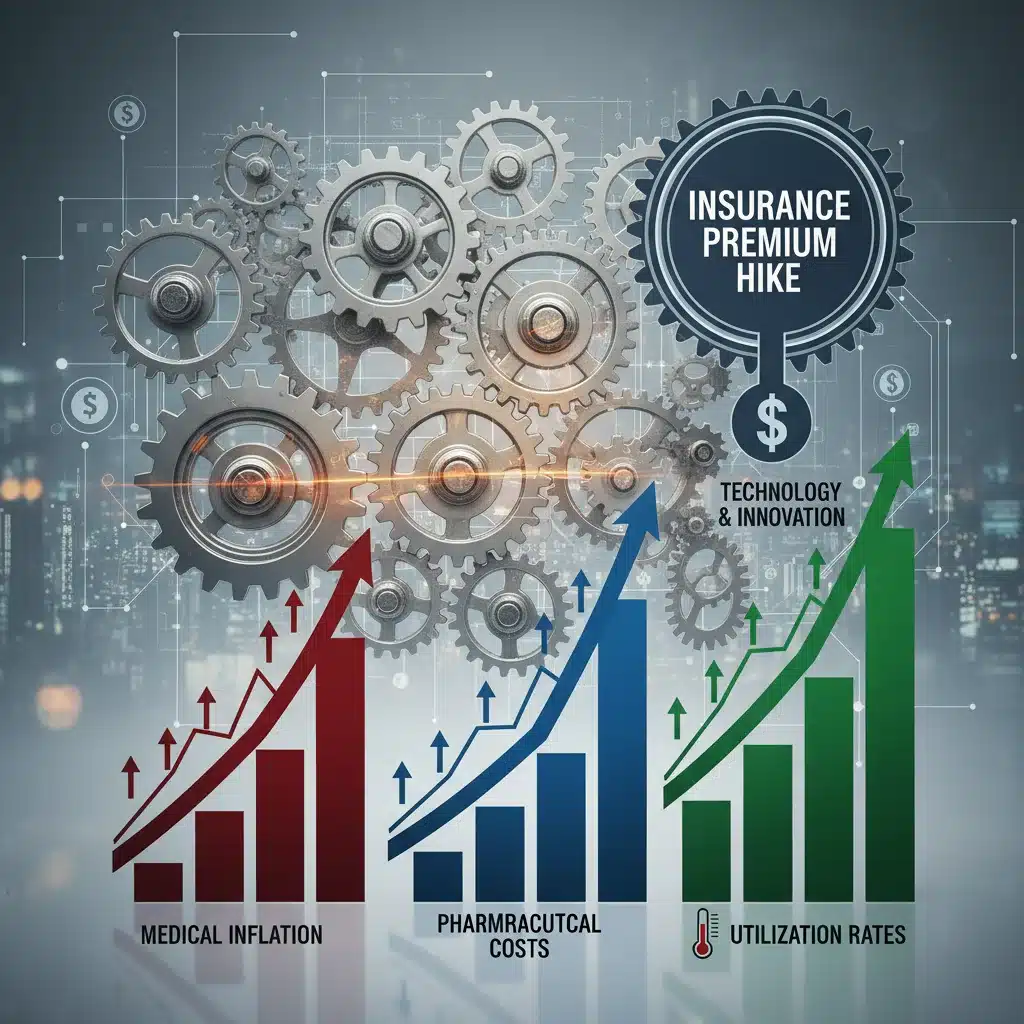
One of the most significant drivers, particularly for health insurance, is the continuous rise in healthcare costs. This includes the increasing prices of prescription drugs, advanced medical technologies, hospital services, and physician fees. Actuaries analyze historical trends in healthcare spending, project future inflation rates, and factor in the utilization of medical services. For 2026, the data suggests that healthcare cost inflation will continue its upward trajectory, necessitating higher premiums to cover these escalating expenses.
2. Increased Frequency and Severity of Claims
Beyond inflation, the actual frequency and severity of claims are critical. For property and casualty insurance, this could mean more frequent and intense natural disasters due to climate change, or an increase in car accidents linked to distracted driving. In health insurance, it could be a rise in chronic conditions or the diagnosis of more complex illnesses. Actuaries use historical claims data to model these trends, and current projections indicate an uptick in both frequency and severity across various insurance lines, contributing to the 8% increase.
3. Economic Factors and Interest Rates
The broader economic environment plays a crucial role. Inflation, beyond just healthcare, impacts the cost of repairs, replacements, and administrative expenses for insurers. Interest rates also influence an insurer’s investment income, which is a significant component of their overall financial strategy. If investment returns are lower than anticipated, insurers may need to generate more revenue from premiums to maintain solvency. The economic outlook for 2026, including potential inflation rates and interest rate movements, is a key input for these actuarial adjustments.
4. Demographic Shifts and Lifestyle Changes
Population aging, changes in lifestyle, and emerging health trends all feed into actuarial models. For instance, an aging population generally leads to higher healthcare utilization. Shifting demographics can also influence mortality rates for life insurance or the risk profiles for long-term care insurance. Lifestyle changes, such as increased sedentary behavior or new dietary trends, can impact health outcomes, which actuaries must account for in their predictions for Actuarial Adjustments 2026.
5. Regulatory Changes and Compliance Costs
New regulations can impose additional compliance costs on insurance companies, which are often passed on to policyholders through premiums. These regulations might relate to data privacy, solvency requirements, or new coverage mandates. Actuaries must factor in the anticipated impact of any legislative or regulatory changes slated for implementation by 2026.

The Actuarial Process: From Data Collection to Premium Setting
The journey from raw data to a projected premium increase is a rigorous and multi-faceted actuarial process. It begins with comprehensive data collection, which involves gathering vast datasets from internal company records, industry benchmarks, government statistics, and economic forecasts. This data is then cleaned, validated, and prepared for analysis. Data quality is paramount, as inaccuracies can lead to flawed predictions and unsustainable premium rates.
Once the data is ready, actuaries employ a range of statistical and mathematical models. These models are designed to identify trends, project future claims costs, and assess various risk factors. For example, in life insurance, actuaries use mortality tables to predict lifespans, while in property and casualty insurance, they might use catastrophe models to estimate losses from natural disasters. The models are constantly refined and updated to reflect the latest information and emerging risks. This continuous refinement is crucial for accurate Actuarial Adjustments 2026.
A critical step in the process is setting assumptions. Actuaries make informed assumptions about future events, such as interest rates, inflation, healthcare utilization, and claim frequency. These assumptions are based on historical data, expert judgment, and an understanding of current market conditions. The sensitivity of these assumptions to various outcomes is also tested through scenario analysis, allowing actuaries to understand the potential range of premium adjustments under different circumstances.
Finally, based on the models and assumptions, actuaries calculate the appropriate premium rates. These rates must be sufficient to cover expected claims, administrative expenses, and provide a reasonable profit margin for the insurer, all while remaining competitive in the market. The projected 8% premium increase for 2026 is the result of these detailed calculations, indicating that current rates are likely insufficient to meet future obligations given the anticipated changes in risk and cost.
Impact of the 8% Premium Increase on Consumers and Businesses
A potential 8% increase in insurance premiums, as suggested by Actuarial Adjustments 2026, will have far-reaching implications for both individual consumers and businesses. For consumers, this could mean higher monthly or annual costs for health, auto, home, or life insurance. This increase could strain household budgets, especially for those already struggling with rising living costs. It may force some individuals to reconsider their coverage levels or even drop certain policies, potentially leaving them vulnerable to financial risks.
Businesses, particularly small and medium-sized enterprises (SMEs), will also feel the pinch. Increased insurance costs can impact their operational budgets, potentially leading to higher prices for goods and services, reduced investments, or even job cuts. Companies offering employee benefits, such as health insurance, will face higher expenses, which could affect their ability to attract and retain talent. The cumulative effect of these increases across various sectors could have a noticeable impact on the broader economy.
Furthermore, the increase could exacerbate issues of insurance affordability and access. Vulnerable populations, who already face challenges in securing adequate coverage, might find it even harder to afford essential insurance products. This could lead to a widening gap in protection, with significant societal consequences. Policymakers will need to consider strategies to mitigate these impacts, potentially through subsidies, regulatory reforms, or public education campaigns to help consumers understand their options.
Mitigating the Impact: Strategies for Preparation
While the prospect of an 8% premium increase due to Actuarial Adjustments 2026 might seem daunting, there are proactive steps that both individuals and businesses can take to prepare and potentially mitigate the impact.
For Individuals:
- Review Your Policies Annually: Don’t wait until 2026. Regularly review your insurance policies to ensure they still meet your needs and budget. Look for opportunities to adjust coverage or switch providers.
- Improve Your Risk Profile: For auto insurance, maintain a clean driving record. For health insurance, focus on wellness and preventive care. For home insurance, invest in home security and maintenance to reduce risks.
- Shop Around: Compare quotes from multiple insurance providers. The market is competitive, and different insurers may offer varying rates for similar coverage.
- Consider Higher Deductibles: While this means higher out-of-pocket costs in case of a claim, it can significantly lower your premium. Assess your financial capacity to handle a higher deductible.
- Bundle Policies: Many insurers offer discounts for bundling multiple policies (e.g., auto and home insurance) with the same provider.
For Businesses:
- Implement Robust Risk Management: Proactive risk management strategies can lead to lower claims and, consequently, lower premiums. This could include workplace safety programs, cybersecurity measures, or fleet management improvements.
- Work with an Insurance Broker: Brokers can help businesses navigate the complex insurance market, identify cost-saving opportunities, and negotiate better rates with insurers.
- Explore Self-Insurance or Captives: Larger businesses might consider self-insuring certain risks or forming a captive insurance company to gain more control over their insurance costs.
- Invest in Employee Wellness Programs: For health insurance, promoting employee health can reduce healthcare costs and claims, potentially leading to more favorable premium rates.
- Regularly Review Contracts and Coverage: Ensure that your business insurance policies are aligned with your current operations and risk exposures. Avoid over-insuring or under-insuring.
The Role of Technology and Innovation in Future Actuarial Adjustments
The field of actuarial science is not static; it is constantly evolving, driven by advancements in technology and data analytics. For Actuarial Adjustments 2026 and beyond, technology will play an even more critical role in shaping how premiums are calculated and managed. Big data analytics, artificial intelligence (AI), and machine learning (ML) are revolutionizing the way actuaries collect, process, and interpret information. These technologies allow for more granular risk assessments, predictive modeling with greater accuracy, and the identification of subtle trends that might otherwise go unnoticed.
For instance, telematics in auto insurance can provide real-time data on driving behavior, allowing for personalized premiums based on actual risk. Wearable devices in health insurance can monitor activity levels and health metrics, enabling insurers to offer incentives for healthy lifestyles. AI-powered algorithms can analyze vast amounts of claims data to detect fraud more efficiently, reducing overall costs for insurers. These innovations, while promising, also raise questions about data privacy, ethical considerations, and the potential for increased personalization to create new forms of discrimination.
Furthermore, blockchain technology could streamline claims processing and improve data security, while sophisticated simulation tools can model complex scenarios, such as the impact of pandemics or large-scale cyberattacks, with greater precision. As these technologies mature, they will undoubtedly influence the frequency and magnitude of future actuarial adjustments, potentially leading to more dynamic and responsive premium structures. However, the initial investment in these technologies and the ongoing costs of data management and cybersecurity could also contribute to premium pressures in the short term.
Navigating the Regulatory Landscape for 2026
Regulatory bodies play a pivotal role in overseeing the insurance industry, ensuring fairness, solvency, and consumer protection. The anticipated 8% premium increase for Actuarial Adjustments 2026 will undoubtedly draw scrutiny from regulators. Their primary concern will be to ensure that these adjustments are actuarially sound, justified by data, and not unfairly discriminatory. Regulators often require insurers to submit detailed rate filings, demonstrating the rationale behind any proposed premium increases.
The regulatory landscape is diverse, with different rules and oversight mechanisms across various jurisdictions. Some regions may have stricter controls on premium increases, while others might allow for greater market flexibility. Insurers must navigate this complex environment, ensuring compliance with all applicable laws and regulations. Changes in government policies, such as shifts in healthcare legislation or new mandates for climate-related risk disclosures, can also directly influence actuarial calculations and premium levels.
Moreover, there’s a growing focus on transparency in the insurance industry. Regulators and consumer advocacy groups are increasingly pushing for clearer communication regarding premium changes and the factors driving them. This means insurers will likely need to provide more detailed explanations to policyholders regarding the 2026 adjustments, fostering greater trust and understanding. The balance between allowing insurers to remain financially viable and protecting consumers from excessive costs will be a central challenge for regulators in the lead-up to and during 2026.
Conclusion: Preparing for the Future of Insurance Premiums
The projected 8% premium increase, stemming from Actuarial Adjustments 2026, is a clear signal that the insurance landscape is continually evolving. This adjustment is a testament to the rigorous data analysis and predictive modeling performed by actuaries, reflecting real-world changes in healthcare costs, economic conditions, demographic shifts, and risk profiles. While the prospect of higher premiums can be concerning, understanding the underlying drivers empowers individuals and businesses to take proactive steps.
By reviewing policies, implementing risk mitigation strategies, and exploring various market options, consumers and organizations can better prepare for these impending changes. Furthermore, the ongoing integration of technology and the vigilant oversight of regulatory bodies will continue to shape the future of insurance. As we move towards 2026, staying informed and adaptable will be key to navigating the complexities of insurance premiums and ensuring adequate protection in an ever-changing world. The conversation around actuarial adjustments is not just about numbers; it’s about financial security, risk management, and the collective ability to adapt to future challenges.