Economic Outlook 2026: Recession Impact on Insurance Growth
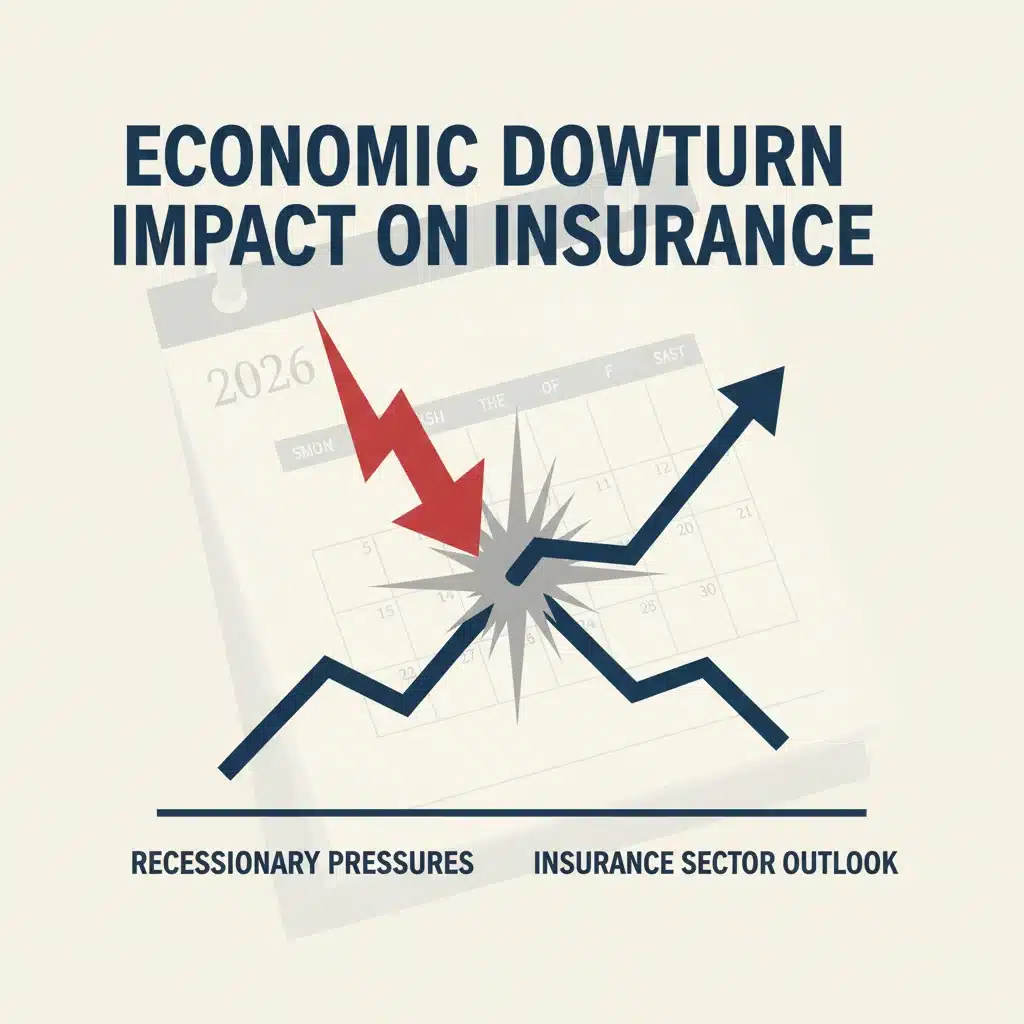
The global economy stands at a critical juncture as we approach 2026. While some sectors anticipate continued expansion, the specter of a potential recession looms large, casting a shadow of uncertainty over various industries. Among these, the insurance sector, a cornerstone of economic stability, faces a unique set of challenges and opportunities. This comprehensive analysis delves into the economic outlook for 2026, specifically examining how a potential recession could impact insurance sector growth, potentially reducing it by 5%.
Understanding the interplay between macroeconomic forces and the highly regulated, capital-intensive insurance industry is paramount for stakeholders, policymakers, and consumers alike. The insurance sector’s resilience has been tested repeatedly throughout history, but the nature of modern economic downturns, coupled with evolving global risks, demands a forward-looking perspective and proactive strategies.
Our exploration begins with an overview of the current economic landscape, identifying key indicators that point towards a possible downturn. We then transition into a detailed examination of how these economic shifts directly influence the demand for insurance products, underwriting profitability, investment returns, and regulatory pressures. The goal is to provide a clear, actionable understanding of the potential 5% reduction in growth and to highlight the strategic imperatives for the industry to navigate these turbulent waters successfully.
The Economic Horizon: Recessionary Signals for 2026
Forecasting economic conditions is inherently complex, yet several indicators suggest that a recession in 2026 is a plausible, if not probable, scenario. Inflationary pressures, rising interest rates, geopolitical instability, and supply chain disruptions continue to create a volatile economic environment. Central banks worldwide have been aggressively tightening monetary policy to combat persistent inflation, a move that, while necessary, often carries the risk of dampening economic activity and triggering a slowdown.
Consumer spending, a significant driver of economic growth, is showing signs of weakening as households grapple with higher living costs and increased borrowing expenses. Business investment, another critical component, may also decelerate as companies become more cautious in the face of uncertain demand and tighter credit conditions. Furthermore, global trade tensions and the ongoing energy crisis add layers of complexity, making a synchronized global slowdown a distinct possibility.
Historically, economic recessions have a profound impact on financial markets, leading to reduced asset values and increased market volatility. For the insurance industry, which relies heavily on investment income to supplement underwriting profits, such market conditions can significantly impair financial performance. The intricate web of global financial interdependence means that a downturn in one major economy can quickly ripple across the world, creating a challenging environment for all sectors, including insurance.
Key Economic Indicators to Watch:
- Inflation Rates: Persistent high inflation erodes purchasing power and can lead to aggressive monetary policy tightening.
- Interest Rate Hikes: While beneficial for some aspects of insurance (e.g., higher returns on fixed-income investments), rapid increases can stifle economic growth and increase default risks.
- Consumer Confidence: A decline in consumer confidence often precedes a reduction in spending and investment.
- Manufacturing PMIs: Purchasing Managers’ Index (PMI) for manufacturing can signal contraction or expansion in industrial activity.
- Unemployment Rates: A significant rise in unemployment typically indicates a weakening economy.
- Geopolitical Events: Conflicts and political instability can disrupt supply chains, energy markets, and global trade, contributing to economic uncertainty.
Monitoring these indicators will be crucial for insurance companies as they formulate their strategies for 2026. The potential for a recession underscores the need for robust risk management frameworks and agile business models that can adapt to rapid economic shifts. The impact on recession insurance growth is a central theme that demands careful consideration.
Direct Impacts of Recession on Insurance Sector Growth
A 5% reduction in insurance sector growth during a recessionary period is a significant concern, reflecting a confluence of factors. The primary channels through which a recession affects insurance include reduced demand for certain products, increased claims in specific lines, pressure on investment income, and heightened regulatory scrutiny.
Reduced Demand for Insurance Products
During an economic downturn, both individuals and businesses tend to cut back on discretionary spending and re-evaluate their financial commitments. This often translates into reduced demand for certain insurance products. For instance, in personal lines, consumers might opt for lower coverage limits, increase deductibles, or even drop non-mandatory policies to save money. This directly impacts the premium volume, a key metric for growth.
In commercial lines, businesses facing reduced revenues and profit margins may scale back their operations, leading to lower demand for property, casualty, and liability insurance. New business formation also tends to slow down during recessions, further limiting the potential for new policy sales. Industries particularly vulnerable to economic cycles, such as construction, automotive, and retail, will likely see a more pronounced reduction in their insurance needs.
Pressure on Investment Income
Insurance companies hold vast investment portfolios to back their liabilities. These portfolios typically consist of a mix of bonds, stocks, and other assets. A recession often leads to declines in equity markets and credit market stress, impacting the value of these investments and reducing investment income. Lower interest rates (if central banks respond to a recession by easing monetary policy) can also reduce returns on fixed-income investments, which form a significant portion of many insurers’ portfolios.
A reduction in investment income directly impacts an insurer’s profitability and capital position, potentially limiting its ability to invest in growth initiatives, innovation, or even maintain current operations without adjusting underwriting strategies. This pressure on investment income is a critical factor in the potential 5% slowdown in recession insurance growth.
Increased Claims in Specific Lines
While overall demand might decrease, some insurance lines could experience an increase in claims during a recession. For example:
- Credit Insurance: Businesses facing financial distress are more likely to default on payments, leading to higher claims for credit insurance providers.
- Unemployment Insurance (though often government-run): While not typically underwritten by private insurers, the broader economic impact can strain social safety nets, indirectly affecting consumer behavior towards private insurance.
- Property & Casualty (P&C) Claims: Economic hardship can sometimes correlate with an increase in certain types of claims, such as theft or even arson, though this is not always a direct causal link.
- Cyber Insurance: In a downturn, some companies might reduce cybersecurity investments, potentially increasing their vulnerability to attacks and subsequent claims.
Understanding these shifts in claims patterns is vital for insurers to adequately price their products and manage their reserves.
Heightened Regulatory Scrutiny and Capital Requirements
Economic downturns often lead to increased regulatory scrutiny of financial institutions, including insurance companies. Regulators may impose stricter capital requirements to ensure solvency and protect policyholders, especially if investment losses erode capital buffers. This can limit an insurer’s capacity for growth, as more capital needs to be held in reserve rather than deployed for expansion or product development. Compliance costs can also increase, further impacting profitability.
Strategic Responses to Mitigate Recession Impact
To navigate the challenges of a potential recession and mitigate the projected 5% impact on recession insurance growth, insurers must adopt proactive and adaptive strategies. Resilience, innovation, and a strong focus on customer value will be key.
Diversification of Products and Markets
Reducing reliance on economically sensitive lines of business and exploring new, more resilient markets can help stabilize growth. This could involve expanding into niche markets, developing products tailored to emerging risks (e.g., climate change, pandemic-related coverages), or increasing presence in regions with more stable economic outlooks. Diversification across geographies and customer segments can buffer the impact of localized economic downturns.
For instance, while automotive insurance might see reduced new policy sales, a focus on telematics-driven policies that reward safe driving could retain existing customers and attract new ones looking for cost savings. Similarly, for businesses, offering risk mitigation services alongside traditional policies can create additional value and revenue streams.
Enhanced Risk Management and Underwriting Discipline
A recession necessitates a sharpening of risk assessment and underwriting practices. Insurers should re-evaluate their portfolios for concentrations of risk in vulnerable sectors, adjust pricing models to reflect increased claims potential and reduced investment income, and tighten underwriting standards. This might involve more rigorous credit checks for commercial clients or more detailed assessments of property risks.
The use of advanced analytics and artificial intelligence can play a crucial role in identifying emerging risks, predicting claims patterns, and optimizing pricing. By leveraging data, insurers can make more informed decisions, ensuring that their policies are adequately priced for the evolving risk landscape. This discipline is essential to protect profitability in a challenging economic climate.

Furthermore, robust enterprise risk management (ERM) frameworks become even more critical. These frameworks should encompass scenario planning, stress testing, and capital adequacy assessments to ensure the company can withstand severe economic shocks. Regular reviews of investment strategies are also paramount to align with changing market conditions and liquidity needs.
Operational Efficiency and Cost Optimization
In a period of slower growth, controlling costs becomes paramount. Insurers can achieve operational efficiencies through digital transformation, automation of processes, and optimization of distribution channels. Streamlining claims processing, reducing administrative overheads, and leveraging technology to enhance customer self-service can significantly lower operating expenses.
Investing in InsurTech solutions can yield substantial returns by improving efficiency, reducing fraud, and enhancing the customer experience. Cloud computing, robotic process automation (RPA), and AI-driven chatbots can free up human resources to focus on more complex tasks and strategic initiatives. These efficiencies contribute directly to maintaining profitability even with reduced premium growth.
Focus on Customer Retention and Value Proposition
During a recession, customer loyalty can be tested as individuals and businesses seek ways to cut costs. Insurers must redouble their efforts to retain existing customers by demonstrating superior value and service. This includes clear communication, transparent pricing, and personalized offerings.
Offering flexible payment options, premium deferrals, or tailored coverage adjustments can help policyholders manage their finances during difficult times. Moreover, strengthening customer relationships through proactive communication and excellent claims service can turn a challenging period into an opportunity to build long-term loyalty. Focusing on the inherent value of protection that insurance provides, especially during uncertain times, can reinforce its necessity.
Capital Management and Liquidity
Maintaining a strong capital position and ample liquidity is non-negotiable during an economic downturn. Insurers should stress-test their balance sheets against various recessionary scenarios to ensure they can meet policyholder obligations and regulatory requirements. This might involve conserving capital, reducing dividend payouts, or even raising additional capital if necessary.
A well-diversified investment portfolio with sufficient liquid assets will provide flexibility to respond to market volatility and unexpected claims. Careful monitoring of credit risk in investment portfolios is also crucial, especially in corporate bonds and other fixed-income instruments that can be affected by increased default rates during a recession.
Long-Term Implications and Future Outlook
While the immediate focus is on mitigating the 5% impact on recession insurance growth, the industry must also consider the long-term implications of a potential downturn. Recessions often accelerate existing trends and can fundamentally reshape market dynamics.
Acceleration of Digital Transformation
Economic pressures often compel businesses to embrace digital transformation more rapidly. For the insurance sector, this means a faster adoption of online sales channels, digital claims processing, and data analytics. Companies that have already invested in these areas will be better positioned to weather the storm and emerge stronger.
The shift towards digital engagement can also lead to more personalized insurance products, leveraging data from IoT devices, wearable technology, and other sources. This allows for dynamic pricing and risk assessment, creating a more efficient and customer-centric insurance model.
Shifts in Risk Landscape
A recession can also alter the risk landscape itself. New types of risks may emerge, or existing risks may become more pronounced. For example, increased unemployment could lead to social unrest, impacting property and liability lines. Cyber threats often intensify during periods of economic instability as organizations become more vulnerable.
Insurers must continuously monitor these evolving risks and innovate their product offerings to address them. This includes developing new parametric insurance solutions for climate-related events, expanding cyber insurance coverages, and exploring products that address systemic risks like pandemics.
Consolidation and M&A Activity
Economic downturns often lead to consolidation within industries as weaker players struggle and stronger ones seek to acquire market share or distressed assets. The insurance sector could see an increase in mergers and acquisitions (M&A) activity as companies look to achieve economies of scale, diversify portfolios, or gain access to new technologies and talent.
While M&A can be a growth strategy, it also comes with integration challenges and the need for careful due diligence, especially in a volatile economic environment. The strategic rationale behind any consolidation must be robust to ensure long-term value creation.

The long-term outlook for the insurance sector, despite the potential for a 5% reduction in growth due to a 2026 recession, remains fundamentally strong. The essential nature of insurance – providing financial protection against unforeseen events – ensures its enduring relevance. However, the industry’s ability to adapt, innovate, and strategically manage risk will determine which companies thrive in the post-recessionary landscape.
Conclusion: Navigating the Headwinds for Sustainable Insurance Growth
The economic outlook for 2026 presents a complex picture, with a significant possibility of a recession that could impact recession insurance growth by as much as 5%. This projection underscores the need for vigilance, strategic foresight, and proactive measures across the insurance industry. From re-evaluating underwriting practices to optimizing operational efficiencies and fostering customer loyalty, every facet of an insurer’s business model will be tested.
The challenges, while substantial, are not insurmountable. By embracing digital transformation, diversifying product offerings, strengthening risk management frameworks, and maintaining robust capital positions, insurance companies can not only mitigate the adverse effects of a downturn but also position themselves for long-term sustainable growth. The resilience of the insurance sector has been proven time and again, and with a strategic approach, it can emerge from a potential 2026 recession stronger and more agile than before.
Ultimately, the industry’s ability to adapt to changing economic realities, innovate in its product development, and continue to provide essential protection to individuals and businesses will be the defining factors in its success. The conversation around recession insurance growth is not just about survival, but about strategic evolution and seizing opportunities in a dynamic global economy.