US Insurance Market Consolidation: 10-15 Major M&A by 2026

US Insurance Market Consolidation: Expect 10-15 Major Mergers and Acquisitions by 2026
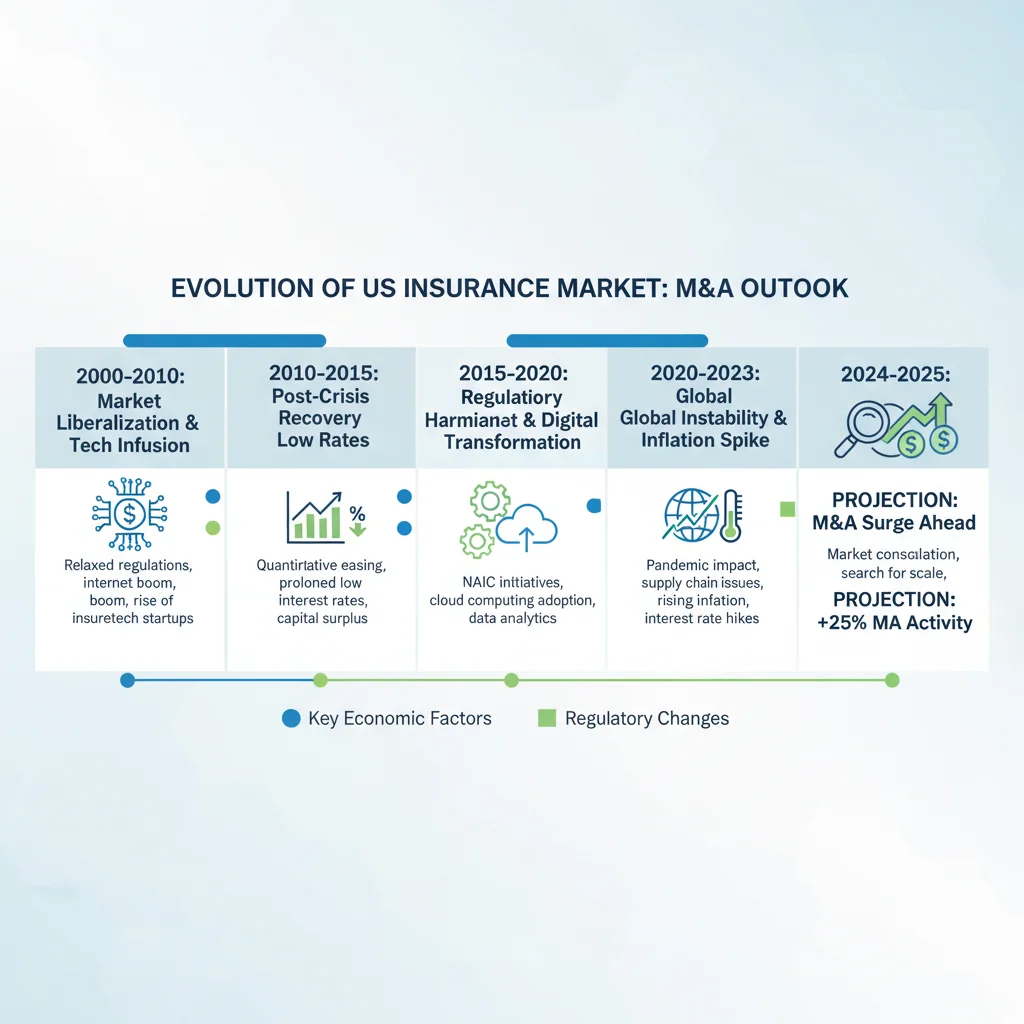
The landscape of the US insurance sector is on the brink of a transformative period, marked by an anticipated surge in mergers and acquisitions (M&A). Industry experts and analysts are projecting a significant wave of consolidation, with forecasts indicating that the market could witness between 10 and 15 major M&A deals by 2026. This prediction signals a pivotal shift, reshaping the competitive environment, operational efficiencies, and service offerings across the insurance value chain. Understanding the drivers behind this trend, its potential impacts, and strategic implications is crucial for stakeholders, from insurance executives and investors to policyholders and regulators.
The US insurance market, a behemoth in the global financial services industry, has always been dynamic. However, the current confluence of economic pressures, technological advancements, evolving customer expectations, and regulatory shifts is creating a unique environment ripe for consolidation. This article will delve deep into the multifaceted factors fueling this M&A frenzy, explore the likely consequences for various market participants, and offer insights into how companies can navigate this evolving terrain to emerge stronger and more resilient.
Understanding the Drivers of Insurance Market Consolidation
Several powerful forces are converging to accelerate insurance market consolidation. These drivers are not isolated but rather interconnected, creating a positive feedback loop that encourages strategic alliances and acquisitions.
Economic Pressures and Capital Efficiency
The prevailing low-interest-rate environment, while showing signs of shift, has historically put pressure on insurers’ investment income, a crucial component of their profitability. This has forced companies to seek alternative avenues for growth and efficiency. Mergers and acquisitions offer a compelling solution by enabling firms to achieve economies of scale, reduce operational costs, and optimize capital allocation. Larger entities can often negotiate better terms with reinsurers, invest more heavily in technology, and spread fixed costs across a broader revenue base, thereby improving overall capital efficiency and profitability in a challenging economic climate. Furthermore, the rising cost of capital and increased scrutiny from investors are pushing companies to demonstrate stronger returns, often achievable through strategic consolidation.
Technological Transformation and Digitalization
The insurance industry is undergoing a rapid digital transformation. Insurtech startups are disrupting traditional business models with innovative technologies like AI, machine learning, big data analytics, and blockchain. Established insurers are recognizing the imperative to invest heavily in these technologies to remain competitive, enhance customer experience, and streamline operations. However, building these capabilities in-house can be time-consuming and expensive. Acquiring smaller, agile insurtech companies or rivals with advanced technological platforms can be a faster and more efficient way to gain access to cutting-edge tools, talent, and data capabilities. This drive for technological superiority is a significant catalyst for insurance market consolidation.
Regulatory Landscape and Compliance Costs
The regulatory environment for insurance companies is complex and constantly evolving. Stricter compliance requirements, particularly in areas like data privacy (e.g., CCPA, state-specific regulations), cybersecurity, and financial reporting, impose substantial costs on insurers. Smaller and mid-sized firms often struggle to bear these escalating compliance burdens. Larger organizations, through economies of scale, can more effectively manage these costs by centralizing compliance functions and leveraging greater resources. This regulatory pressure can incentivize smaller players to seek larger partners or be acquired, contributing directly to insurance market consolidation.
Evolving Customer Expectations and Product Innovation
Modern consumers expect personalized, seamless, and digital experiences across all industries, and insurance is no exception. They demand more transparency, flexibility, and innovative products tailored to their specific needs. To meet these evolving demands, insurers need to invest in data analytics to understand customer behavior better, develop new product offerings, and enhance their distribution channels. M&A can facilitate this by combining diverse product portfolios, expanding geographic reach, and integrating customer engagement platforms. Companies with a strong customer focus and robust digital capabilities will be attractive targets or strategic acquirers in this era of insurance market consolidation.
Talent Acquisition and Retention
The insurance industry faces a significant talent gap, particularly in specialized areas like data science, AI engineering, cybersecurity, and advanced underwriting. Acquiring companies can be an effective strategy to onboard critical talent quickly and address these skill shortages. Mergers and acquisitions allow firms to gain access to specialized teams, experienced leadership, and a broader pool of skilled professionals, which is crucial for driving innovation and maintaining a competitive edge. This pursuit of talent is an understated yet powerful force behind the current wave of insurance market consolidation.
Anticipated Impacts of Major M&A Deals
The expected 10-15 major M&A deals by 2026 will undoubtedly have far-reaching impacts across the entire US insurance ecosystem. These impacts will touch upon market structure, competitive dynamics, product offerings, pricing, and the overall customer experience.
Market Concentration and Competition
The most immediate and apparent impact of significant insurance market consolidation will be an increase in market concentration. Fewer, larger players will dominate the landscape, potentially leading to reduced competition in certain segments. While proponents argue that larger firms can offer more stable pricing and broader product ranges due to economies of scale, critics fear that reduced competition could lead to higher premiums, fewer choices, and less innovation over the long term. Regulators will be closely monitoring these deals to ensure they do not unduly harm consumer interests or create anti-competitive environments.
Enhanced Product Offerings and Innovation
On the positive side, consolidation can lead to enhanced product offerings. Acquired companies often bring specialized expertise or innovative products that can be scaled across the larger entity’s customer base. The combined resources of merged companies can also fuel greater investment in research and development, leading to the creation of more sophisticated and tailored insurance solutions. For example, a traditional insurer acquiring an insurtech firm specializing in telematics might rapidly expand its usage-based insurance offerings, benefiting consumers with more personalized pricing and risk management tools. This drives innovation within the insurance market consolidation trend.
Operational Efficiencies and Cost Savings
A primary motivation for M&A is the pursuit of operational efficiencies and cost savings. By integrating back-office functions, streamlining IT systems, consolidating procurement, and optimizing distribution networks, merged entities can significantly reduce their operating expenses. These savings can, in theory, be passed on to consumers through more competitive pricing or reinvested into product development and technology. However, achieving these synergies is often challenging and requires careful planning and execution to avoid disruptions.
Impact on Employment and Talent Landscape
Insurance market consolidation often results in job redundancies, particularly in overlapping administrative and support functions. While some roles may be eliminated, new opportunities can also emerge in areas like data analytics, cybersecurity, and digital transformation as companies invest in future capabilities. The talent landscape will shift, with a greater demand for specialized skills and a potential for increased competition for top talent among the larger, consolidated firms. Companies undergoing M&A will need robust strategies for talent integration and retention to mitigate negative impacts.
Changes in Customer Experience
For policyholders, the impact of insurance market consolidation can be mixed. On one hand, larger insurers might offer more comprehensive product bundles, greater financial stability, and more advanced digital platforms for claims processing and customer service. On the other hand, a loss of personalized service from smaller, local providers or disruptions during the integration phase could lead to temporary dissatisfaction. Clear communication and seamless integration of customer-facing operations will be crucial for successful M&A deals to maintain and improve customer experience.
Navigating the Future: Strategies for Insurers
Given the strong prognosis for insurance market consolidation, insurers must develop robust strategies to thrive in this evolving environment. Whether as potential acquirers, targets, or independent players, proactive planning is essential.
For Potential Acquirers: Strategic Due Diligence and Integration
Companies looking to grow through acquisition must prioritize strategic due diligence that goes beyond financial assessments. It must include a thorough evaluation of the target’s technological infrastructure, cultural fit, talent pool, and regulatory compliance. Post-acquisition integration is arguably the most critical phase. A well-defined integration plan, clear communication, and strong leadership are vital to realize the intended synergies, retain key talent, and minimize disruption. Acquirers should focus on leveraging the strengths of the acquired entity while harmonizing operations effectively.
For Potential Targets: Enhancing Value and Strategic Positioning
Smaller and mid-sized insurers that may become acquisition targets should focus on enhancing their intrinsic value. This involves investing in niche specializations, developing unique technological capabilities, strengthening customer relationships, and demonstrating consistent profitability. A clear strategic vision and a well-articulated value proposition will make them more attractive to potential buyers and potentially command a higher valuation. Preparing for due diligence proactively can also streamline the acquisition process.
For Independent Players: Niche Specialization and Agility
Even amidst significant insurance market consolidation, there will always be room for independent players, especially those that focus on niche markets or excel in specific areas. These firms can differentiate themselves through hyper-personalized services, deep expertise in underserved segments, or superior agility in product development and customer response. Leveraging partnerships with insurtechs or other financial institutions can also provide access to scale and technology without necessitating a full merger.
Focus on Digital Transformation and Data Analytics
Regardless of their M&A strategy, all insurers must prioritize digital transformation and the sophisticated use of data analytics. Investing in AI-driven underwriting, automated claims processing, predictive analytics for risk assessment, and personalized customer engagement platforms will be non-negotiable. These capabilities not only drive efficiency but also provide a competitive edge in a consolidating market. Data will be the new currency, and those who can effectively collect, analyze, and act upon it will be best positioned for success.

Regulatory Scrutiny and Market Stability
As the US insurance market consolidation intensifies, regulatory bodies at both federal and state levels will play a crucial role. Their primary objective will be to ensure that M&A activities do not compromise market stability, consumer protection, or fair competition. Anticipate heightened scrutiny of large deals, with regulators examining potential impacts on pricing, product availability, and overall market structure. Anti-trust concerns will be paramount, and some deals may face challenges or require divestitures to gain approval. The regulatory environment will thus act as a balancing force, preventing unchecked concentration.
Furthermore, regulators will likely focus on the financial stability of merged entities. The integration process of large insurance companies can be complex, and ensuring that the combined entity remains financially sound and capable of meeting its obligations to policyholders will be a key concern. This oversight is vital for maintaining public confidence in the insurance sector during a period of significant structural change. Transparency and comprehensive reporting from merging companies will be essential to navigate this regulatory landscape successfully.
The Role of Private Equity and Global Players
Private equity firms are increasingly active in the insurance sector, viewing it as an attractive industry for long-term investment due to its stable cash flows and potential for operational improvements. These firms often acquire insurers with the aim of streamlining operations, investing in technology, and ultimately selling them for a profit. Their involvement is a significant accelerator of insurance market consolidation. Similarly, large global insurance players, seeking to expand their footprint in the lucrative US market or gain access to specific specialized lines of business, will also contribute to the M&A activity. Their deep pockets and international expertise can significantly influence the competitive dynamics and scale of these deals.
The strategic objectives of private equity and global insurers often align with the current drivers of consolidation: achieving scale, enhancing technological capabilities, and improving efficiency. Their capital and operational expertise can provide the necessary impetus for smaller or underperforming insurers to undergo transformation or find a strategic exit. This influx of external capital and strategic interest further underscores the robust forecast of 10-15 major M&A deals by 2026, solidifying the trend of insurance market consolidation.
Conclusion: A Transformed Insurance Landscape
The US insurance market is poised for a period of unprecedented transformation driven by significant consolidation. The confluence of economic pressures, technological imperatives, regulatory demands, and evolving customer expectations is creating a fertile ground for 10-15 major mergers and acquisitions by 2026. This wave of M&A will undoubtedly reshape the competitive landscape, leading to a more concentrated, technologically advanced, and potentially more efficient industry.
While challenges such as integration complexities, regulatory hurdles, and potential impacts on employment exist, the opportunities for growth, innovation, and enhanced customer value are substantial. Insurers that proactively embrace digital transformation, strategically assess M&A opportunities, and prioritize customer-centricity will be best positioned to thrive in this new era. The coming years will demand agility, foresight, and a willingness to adapt to a rapidly changing market, as the US insurance sector evolves into a more streamlined and technologically integrated powerhouse.
Staying informed about these trends and their implications will be paramount for all stakeholders. The journey through this period of intense insurance market consolidation promises to be both challenging and rewarding, ultimately leading to a more resilient and responsive insurance industry for the future.